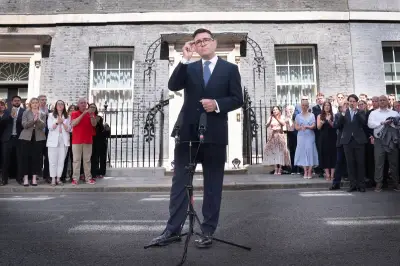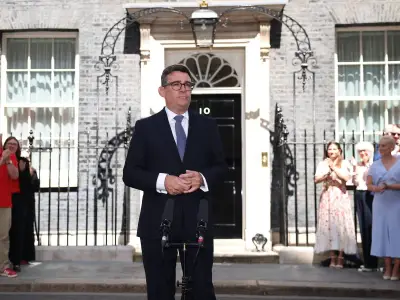
Andy Burnham must legislate for a national care service by the end of this Parliament if he is serious about reforming adult social care, an expert said.
The new Prime Minister has warned the NHS “will collapse” without such reform, but has declined to put a timeline on introducing care reforms.
In his first major interview since entering No 10, Mr Burnham said system change “takes time” but insisted he will expend “whatever political capital I have” on fixing a problem that has long plagued previous governments.

Political capital pledged
Asked about creating a new social care system, he told the BBC: “I would not want to leave office without having brought in the substantial change, the new system of social care that you describe. I can’t put a timeline on it, right here, right now. If we don’t do it, the NHS will collapse under the weight of trying to care for people who’ve not really needed to end up in the NHS system.”
Sarah Woolnough, chief executive of The King’s Fund health charity, told the Press Association the Prime Minister must act decisively before a general election.
She said: “I think if he’s really serious then he could, with a large majority, introduce a new system before the end of the Parliament, and he could bring forward some measures.”
While introducing a universal system for adult social care based on NHS principles would need a staged approach to ensure funding and staffing for the long term, she suggested there are steps Mr Burnham can take to lay the groundwork.
She told PA: “What I mean by getting the mechanism in place is you could pass legislation to say: ‘This is what a national care service will look like, these are the principles,’ and you could make some moves. You could allocate some money. You could set up an agency or a body if you need to, you could issue instructions to local authorities to behave in a certain way. So you could do quite a lot of the groundwork to say: ‘This is what it is, this is how it will run out over the coming years.'”
Cost estimates and warnings
The Health Foundation think tank has estimated that if the state covered the costs of everyone currently receiving adult social care services in England, an NHS-style social care system would cost £18.5 billion extra a year by 2035. This is on top of current costs that amounted to £28.7 billion in 2024/25.
This is described as a “broad estimate” and assumes everyone who currently funds their own care would be eligible for publicly funded care but does not include likely additional costs of people with unmet care needs who come forward due to the policy change.
Speaking to the BBC, Mr Burnham said the NHS will never get back “to good waiting time standards until we fix social care”.
But health organisations have welcomed Mr Burnham’s “willingness to confront the issue” and apparent “clear determination”, while cautioning against framing the argument as social care needing to be fixed to save the NHS.
Nuffield Trust think tank deputy director of policy Natasha Curry said: “It is right to recognise that the NHS and social care are deeply interconnected, but the case for fixing social care extends far beyond protecting the NHS. There is a moral imperative to ensure older and disabled people can live independently with dignity, and a compelling economic case too. Millions of people have unmet care needs, while unpaid carers and disabled adults are too often prevented from working, participating in their communities and planning for their futures because the support they need simply isn’t there. Better social care would undoubtedly help some patients leave hospital more quickly, but we should avoid suggesting that fixing social care alone will fix the NHS. Delayed discharges have multiple causes, and the bigger prize is preventing more people from reaching hospital in the first place by ensuring they receive the care and support they need to stay healthy and independent.”
Background and political context
Unlike NHS care, social care is not free at the point of use, and high costs sometimes mean people are forced to sell their homes to pay for what they need. People with savings worth more than £23,250 are not entitled to help with the cost of care from their local council.

Reform of the social care system is unfinished business for Mr Burnham, who set out plans for change while he was health secretary in Gordon Brown’s administration. His 2010 plans to overhaul social care for the elderly with the creation of a national care service for England were scuppered by the Conservatives, who claimed Labour would levy a “death tax” to pay for it.
Tory leader Kemi Badenoch has written to Mr Burnham to challenge him to rule out tax rises or increased borrowing to pay for social care reform. The Prime Minister is expected to make an intervention on social care in the coming days.
Baroness Louise Casey is leading a review into the adult social care system and has previously confirmed she will launch what she has described as a “challenging” conversation with the country – asking who should get social care, what people should pay, and what role the state should play to inform the major review.
Royal College of Nursing (RCN) general secretary and Professor Nicola Ranger said: “The nursing profession will be encouraged by the Government’s attempts to finally grasp the nettle and the RCN is ready to support them to get this right. One of the key issues that urgently needs to be fixed is funding reform, including how funding for social care is accessed. Patients frequently spend long periods of time waiting to be discharged because the funding required to move them elsewhere cannot be obtained, despite there being the capacity to take them in social care. Any policy announced this week, must fix the silos between health and social care that make the system less effective.”