
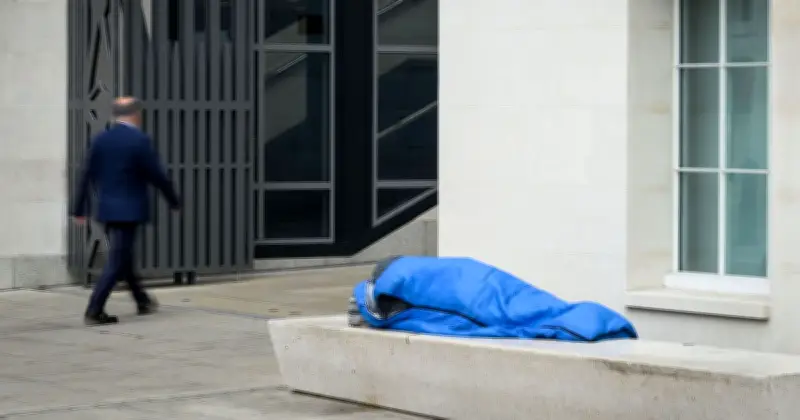
Around a fifth of London’s new rough sleepers are people who had last been in asylum accommodation, according to new data. The findings show the asylum system remains “a significant route onto the streets of the capital”, researchers from the Combined Homelessness and Information Network (Chain) said.
There were 4,978 people on London’s streets in the year to March, with information recorded about where they were last settled. Of those, 21% or 1,037 people reported that they had been staying in asylum support accommodation. This was up 10% from 944 in the previous 12-month period, and accounted for a higher overall proportion from 18% previously.
Rough Sleeping in Hounslow Rises by Over Half
Rough sleeping in Hounslow rose by more than half year-on-year, with researchers saying this “appears to be related to an especially high number of people being seen rough sleeping there after leaving asylum support accommodation”. There was a rise of 177 people rough sleeping in the borough, from 336 in the year to March 2025 to 513 in the year to March 2026 – an increase of 53%. This was both the largest rise in proportion and numbers of all the London boroughs, researchers said.
Overall Numbers Fall Slightly
Overall, 12,938 people were on the streets of the capital in the year to March. This was down 2% from 13,231 in the previous 12 months. It was also the first year-on-year fall since 2017 when the figure stood at 7,484 – aside from 2021-22 when the number fell by almost a quarter likely because of the government’s Everyone In initiative which took people off the streets during the coronavirus pandemic.
Figures once again showed a majority of those rough sleeping were not UK nationals, although the proportion who were rose slightly. UK nationals were the single biggest nationality group, making up 49% of all those rough sleeping in the latest 12-month period – an increase from 47% in the previous year. Almost a fifth (18%) of rough sleepers were from somewhere else in Europe. This fell from 21% in 2024/25 and researchers said the decrease in the overall total “appears to be primarily driven by the reduction in the number of EEA (European Economic Area) nationals”.
Nationalities and Asylum Links
People whose nationality was recorded as ‘rest of the world’ – covering Africa, Asia, the Americas, and Australasia – accounted for 31% of the total rough sleepers. The most commonly recorded single nationalities, after UK, were Romanian (6%), Eritrean (6%), Polish (4%), Indian (3%), and Sudanese (3%). Researchers said the higher numbers of people seen sleeping rough from the ‘rest of the world’ category “are at least partially driven by the continuing trend of people experiencing rough sleeping following departure from asylum support accommodation”.
Campaigners Welcome First Fall in Nearly a Decade
Campaigners said the first fall in rough sleeping in London for almost a decade – excluding a year during the pandemic – shows local efforts to tackle the issue can work. Homeless Link, the national membership body for frontline homelessness services which manages the Chain data, said the slight fall in the total provides early evidence that devolved approaches can lead to positive change. Describing the reduction as “extremely encouraging”, Homeless Link’s director of social change, Fiona Colley, said: “The Mayor of London’s Rough Sleeping Plan of Action set out strong proposals for change, and it is working. Just as Andy Burnham is advocating for further devolution and the role of the regions in shaping their own futures, this is early evidence that when committed services are supported by local political leadership and robust policies, positive change is indeed possible. Now London’s efforts must be backed up by action on the national strategy, with all of government held accountable for preventing homelessness.”
Mayor’s Office Responds
London’s mayor Sir Sadiq Khan has pledged to end rough sleeping in the capital for good by 2030, previously vowing to prioritise prevention by extending a network of homelessness hubs which provide 24/7 support to those most at risk of sleeping rough. A spokesperson for the Mayor’s office said: “Rough sleeping in London has fallen for the first time in a year unaffected by Covid since 2017. While there is still much to do, a 2% reduction in the number of people seen rough sleeping is clear movement in the right direction. It also shows how the Mayor’s Rough Sleeping Plan of Action, launched last year, is having an impact.” In 2025, Mr Khan’s office said the plan was backed with £17 million secured from Government which would include refurbishing up to 500 empty homes, with the aim of helping hundreds of people at immediate risk of rough sleeping. Despite this year’s fall, the latest figure remains 60% higher than the 12 months to 2017 when there were 8,108 people seen rough sleeping on the capital’s streets.




