
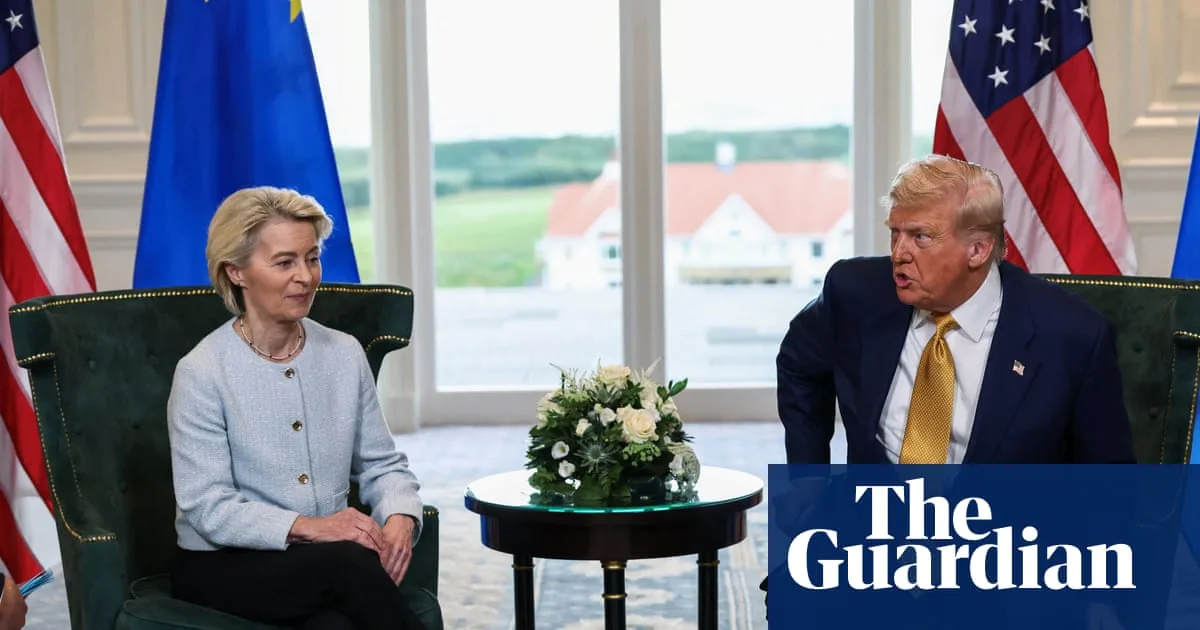
US President Donald Trump has backed down from his threat to impose steep tariffs on European car imports, giving the EU until 4 July to ratify a trade deal struck last year. Trump warned that failure to implement the agreement, which would reduce most US import tariffs to zero, would result in 'much higher' duties.
In a post on Truth Social, Trump expressed impatience with the EU's pace of ratification, stating he had spoken to European Commission President Ursula von der Leyen and agreed to wait until America's 250th Independence Day. The climbdown came after six hours of formal talks in Brussels between MEPs, member states, and the Commission.
The EU has been pressing Trump to honour the deal agreed at his Scottish golf course last summer, despite a US Supreme Court ruling that invalidated his earlier 'liberation day' tariffs. However, the European Parliament has twice suspended ratification due to Trump's threats to take over Greenland and raise tariffs.
German MEP Bernd Lange, chair of the European Parliament's trade committee, indicated a deal is close, saying MEPs would work 'expeditiously' to finalise the agreement. EU Trade Commissioner Maroš Šefčovič reported 'considerable progress' in talks, with the next triologue scheduled for 19 May. MEPs are pushing for the inclusion of steel exports, currently taxed at 50%.
Von der Leyen confirmed 'good progress' towards ratification by early July, adding that both sides remain committed to implementation. The 27-member EU and the US agreed last July to set tariffs on most European goods at 15%, but Trump has been dissatisfied with the speed of implementation.
Cyprus, holding the rotating EU presidency, said it wants to maintain 'positive momentum' in talks. The deal still requires approval from EU member states before it can take effect.




