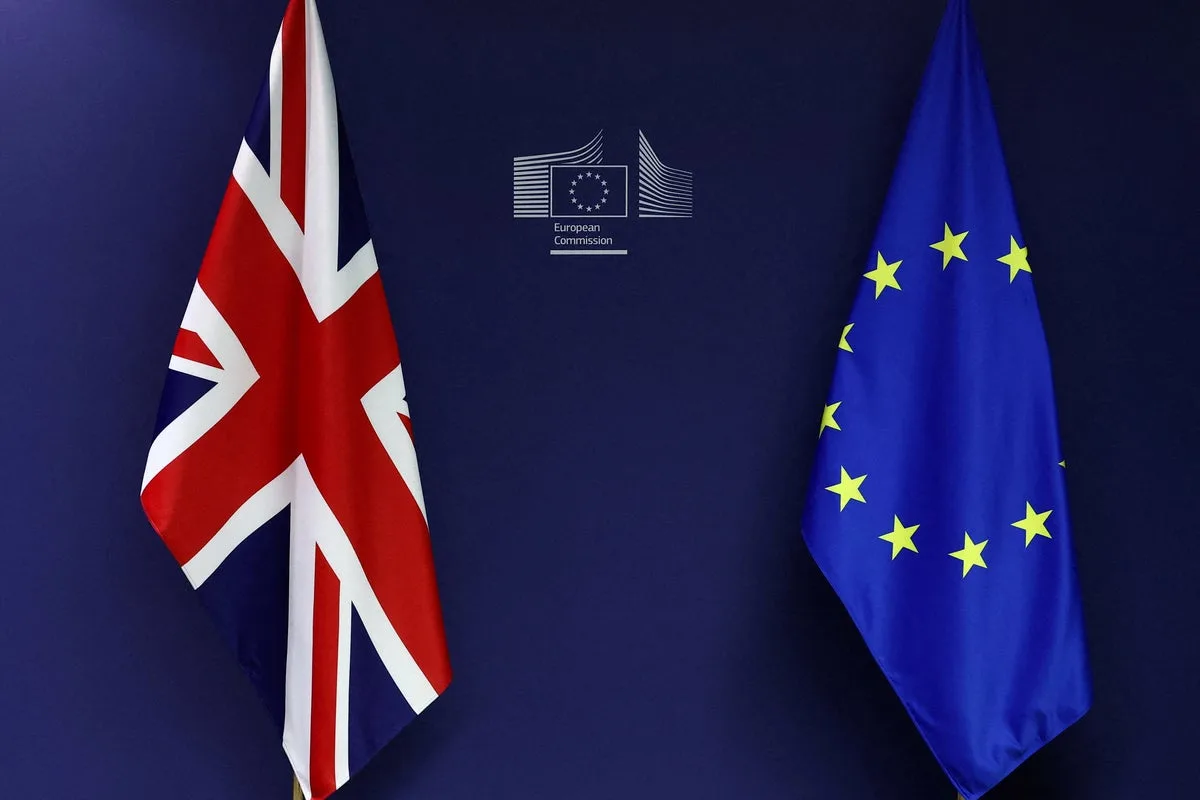
One of the arguments against Britain seeking to rejoin the European Union is often phrased as a question: “What makes you think that the EU would want us?” Sandro Gozi, the chair of the EU delegation to the EU-UK Parliamentary Assembly, has an answer to that. He told The Independent that the EU would see a British application to rejoin as a “major victory for the European project”.
EU Perspective on UK Rejoining
Mr Gozi is right. Just as the more candid leaders of the EU admitted that the UK’s departure from the club was a setback for the dream of a more united Europe, so all believers in that vision should welcome the return of the wayward partner, however exasperating we have been. Mr Gozi insisted that, far from wanting to put obstacles in the way of Britain rejoining, an application would be fast-tracked.
“It could be done more quickly than for other candidate countries because there is the institutional memory there from when the UK was a member,” he said. “And there is also already some level of alignment between the UK and EU.”
Negotiations and Conditions
There would be difficult negotiations over the terms of any re-accession, in which the EU side would certainly start from the position of declaring that Britain could not be given the same rebate on its contribution to EU funds that it enjoyed before 2016. But all such negotiations have arrived at a mutually acceptable compromise before, and would do so again. Mr Gozi would like Britain to adopt the euro as a condition of membership, but in practice it seems unlikely that this would be required as long as Czechia, Denmark, Hungary, Poland, Romania and Sweden keep their own currencies.
Public Opinion in the UK
The real issue is whether the British people want to rejoin, and how the strength and depth of that commitment should be measured. Opinion polls suggest that a large majority now say that leaving the EU was a mistake, and that a majority would vote to rejoin if there were a referendum on the issue. But the findings are sensitive to question wording, and less positive results are obtained if respondents are reminded of EU law allowing free movement of people or of the likely level of British financial contributions.
That is why Sir Keir Starmer was right to take a cautious approach to the issue at the last election, committing a Labour government to staying out of the single market and a customs union. The vote in the EU referendum must be respected, and the bar to re-opening the question must be set high. In The Independent’s view, the referendum decision could be overturned only if it were undeniable that there was an overwhelming and sustained majority for doing so. We are not there yet.
Political Developments
But next month it will be 10 years since the British people voted by a relatively narrow margin to leave, and the Labour Party is justifiably beginning to think about what its position might be at the next election. Andy Burnham and Wes Streeting, two of the contenders for the office of prime minister, have said that they want to rejoin, although Mr Burnham has said he is “not advocating” it in the current by-election in Makerfield. Still, there is now a debate taking place about what Labour’s policy should be after its 2024 manifesto expires at the next election. That is encouraging.
We intend that The Independent shall be at the forefront of that debate, in all parties, making the case that Britain should, step by step, remove the barriers to trade that we mistakenly erected. We can then work towards renewed membership of an enlarged EU as a long-term aim. If that is what the British people increasingly want, then artificial barriers should not be put in the way.
Dispelling the Myth
One of those barriers is the self-disparaging view that the EU would be hostile to our rejoining. We are grateful to Mr Gozi for dispelling that myth. If Britain ever did become a member again, it would benefit all the peoples of Europe.






