
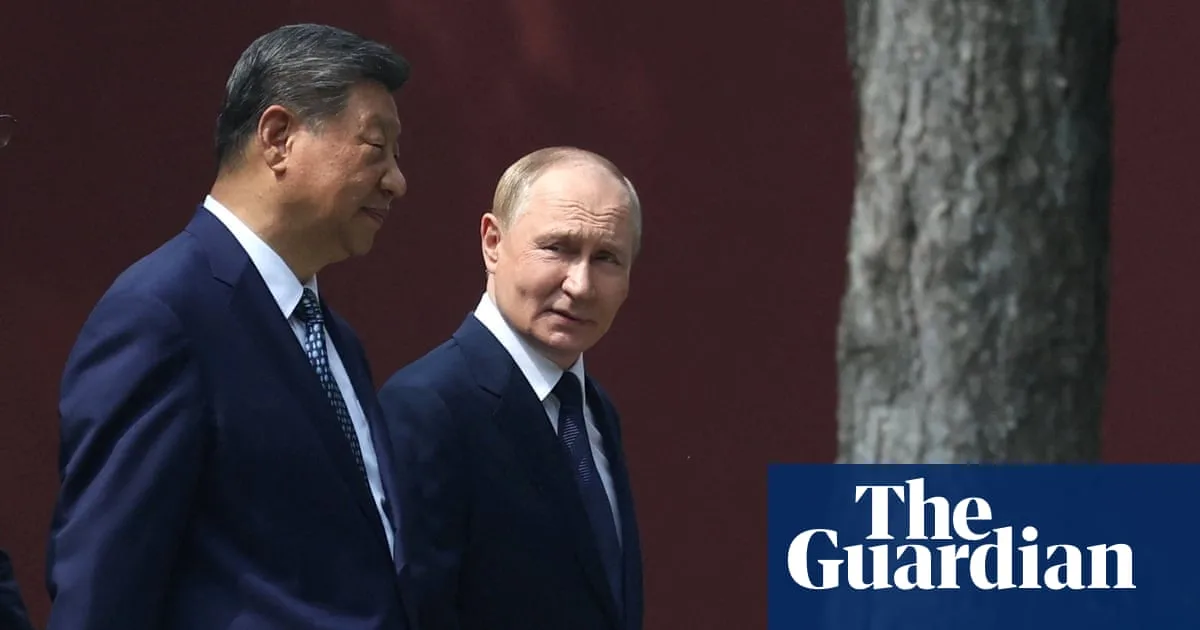
Chinese President Xi Jinping and Russian President Vladimir Putin exchanged congratulatory letters on Sunday ahead of Putin's visit to Beijing, which comes four days after US President Donald Trump left China following a high-stakes summit. The visit marks the 30th anniversary of the Sino-Russian strategic partnership, with Xi stating that bilateral cooperation has ‘continuously deepened and solidified’, according to Chinese state media.
Putin is scheduled to arrive in Beijing on Tuesday evening and meet Xi on Wednesday morning, Kremlin aide Yuri Ushakov confirmed. The two leaders are expected to discuss all areas of bilateral relations, including the proposed Power of Siberia 2 gas pipeline, which Russia has been pushing China to approve. The pipeline would add 50 billion cubic metres of capacity to the existing network.
An article in the state-run Global Times said the back-to-back visits by the US and Russian leaders show that Beijing is ‘fast emerging as the focal point of global diplomacy’. The publication noted that it is ‘extremely rare in the post-cold war era for a country to host the leaders of the US and Russia within a week’.
China's deepening ties with Russia have raised concerns in the West, particularly since Moscow's full-scale invasion of Ukraine in 2022. Beijing's economic and diplomatic support has helped sustain the conflict, according to analysts. Bilateral trade has soared to record levels, with China buying more than a quarter of Russia's exports, including crude oil worth hundreds of billions of dollars, which has provided Moscow with revenue for the war.
During Trump's visit last week, the Ukraine war and Sino-Russian relations were not prominent topics. Instead, talks focused on trade, Taiwan, and the Middle East. Xi warned Trump about the potential for conflict over Taiwan if not handled properly. Trump said he had not decided whether to approve a multibillion-dollar arms sale to the self-governing island. Some analysts suggest that Taiwan could be a subtext of the Xi-Putin meeting, with Beijing potentially seeking more fossil fuel deals to ensure energy security in the event of a future conflict.




