

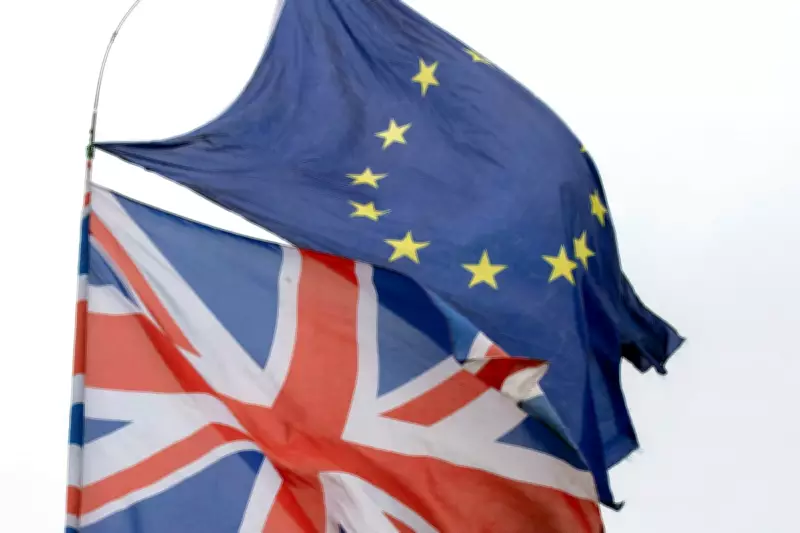
More than 70% of people in Northern Ireland, including a majority of Leave voters, agree that Brexit has been more of a failure than a success, according to a new opinion poll from Queen's University Belfast. The research, conducted by LucidTalk, also indicates that two-thirds of residents believe Brexit has made the break-up of the United Kingdom more likely.
Key Findings on Brexit and the Windsor Framework
The poll, the 15th in the 'Testing the Temperature' series, surveyed 1,050 respondents between April 17-20, 2026. It reveals declining public understanding of the Windsor Framework, the post-Brexit deal aimed at reducing trade frictions between Great Britain and Northern Ireland.
- 72% agree that Brexit has been more of a failure than a success for Northern Ireland, including 60% of Leave voters.
- 66% believe Brexit has made the break-up of the UK more likely; only 19% disagree.
- 48% do not agree that the 2016 Brexit referendum was based on a fair democratic process, while 40% agree.
- 46% now view the Windsor Framework as 'on balance a good thing for Northern Ireland', the lowest level since June 2021.
- Confidence in the Framework as a tool for managing Brexit's effects has fallen to 46%, down from 61% in summer 2024.
- Views on its impact on Northern Ireland's relationship with the rest of the UK remain negative: 44% negative vs 28% positive.
- Economic perceptions are more positive: 45% believe it has had a positive effect, while 37% say negative.
- 57% believe the Framework offers unique economic opportunities, down from 68% in summer 2024.
Trust and Political Divisions
The survey highlights deep distrust in UK government: 76% distrust a Conservative-led government and 70% distrust a Reform-led government to protect Northern Ireland's interests in EU-UK relations. The SDLP is the most trusted party on the Windsor Framework (38%), while the TUV is the most trusted unionist party (30%) but also the most strongly distrusted (50%).

Professor David Phinnemore commented: 'The poll provides further evidence that understanding of the Windsor Framework is declining. In part, this is due to complexity, but also fewer voters believe reliable information is available. As the UK and EU negotiate new agreements, it will be important that these are clearly and reliably explained to avoid further damaging trust.'
Professor Katy Hayward added: 'Ten years after the referendum, one in two voters still see their Leave/Remain identity as very important. This constitutes an additional layer of division. The need to manage this with compromise explains the region's unique post-Brexit arrangements and why most Leavers and Remainers believe Brexit has been a failure for Northern Ireland.'
Wider Attitudes on EU and Human Rights
The poll also shows a preference for closer EU ties: 59% oppose further loosening of UK-EU ties, and 57% support the UK rejoining the EU, with strong gender and Remain/Leave divides. Nearly three-quarters (73%) support Ireland using its EU Council Presidency to improve EU-UK relations. Additionally, 58% oppose leaving the European Convention on Human Rights, while 36% support such an exit.
The poll has a margin of error of +/- 2.3%.






