
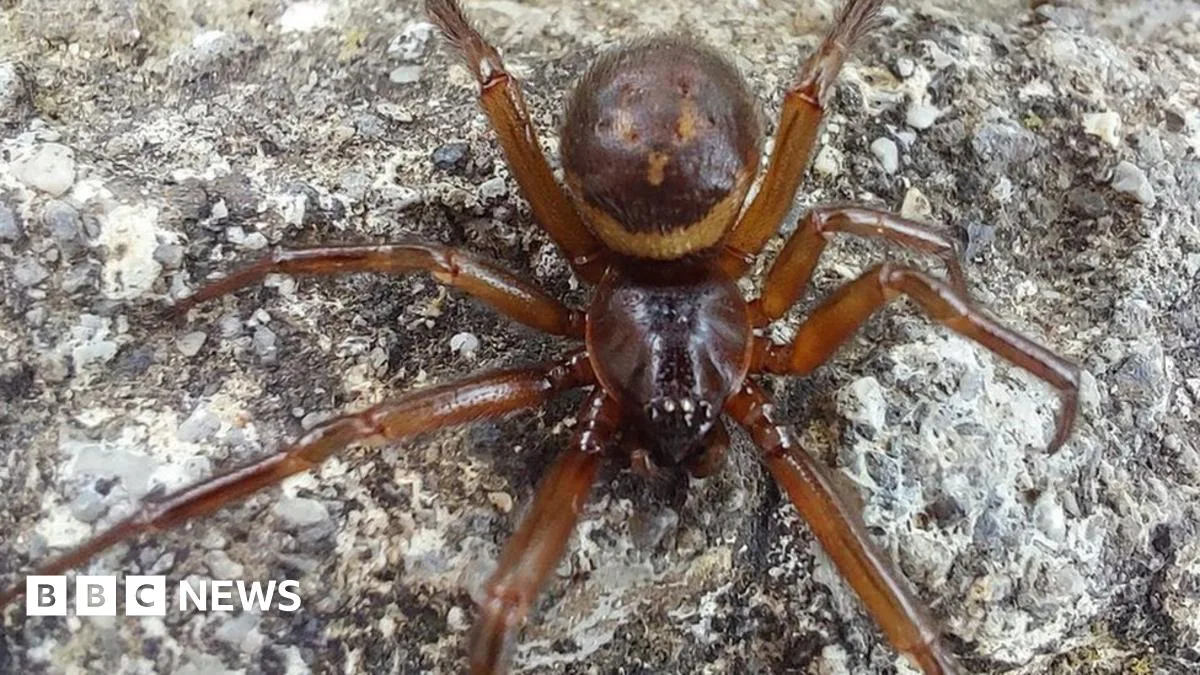
A mother has issued a warning about false widow spiders after her 15-week-old son was bitten and required hospital treatment. Sarah Jane Dennelly's son Charlie was bitten at their home in Shanagarry, County Cork, Ireland. The baby suffered swelling and severe distress, leading to a visit to the emergency department.
Ms Dennelly described the incident as traumatising. 'Charlie was lying on his mat and all of a sudden he went apocalyptic - he had a real bout of purple screaming,' she said. She discovered three bites on his leg and a false widow spider behind his ear. The effects of the venom lasted 11 hours.
The warning comes after a study by NUI Galway's Ryan Institute found that false widow venom is 230 times stronger than that of native Irish spiders. The research also revealed that the spiders can adapt their attacking behaviour, targeting vulnerable body parts of prey, and have a 95% success rate in battles against other spiders, shrews, and bats.
Dr Michel Dugon, senior author of the study, said the noble false widow is highly invasive and has a chemical arsenal stronger than native spiders. 'They can kill more prey using less venom,' he explained. The species, originally from Madeira and the Canary Islands, has spread rapidly in Ireland, particularly along the east coast.
Ms Dennelly urged people to be aware of the spiders but not to kill them indiscriminately. 'It's about having an awareness and not interacting with them,' she said. The research team plans to further study the species' impact on native ecosystems.




