

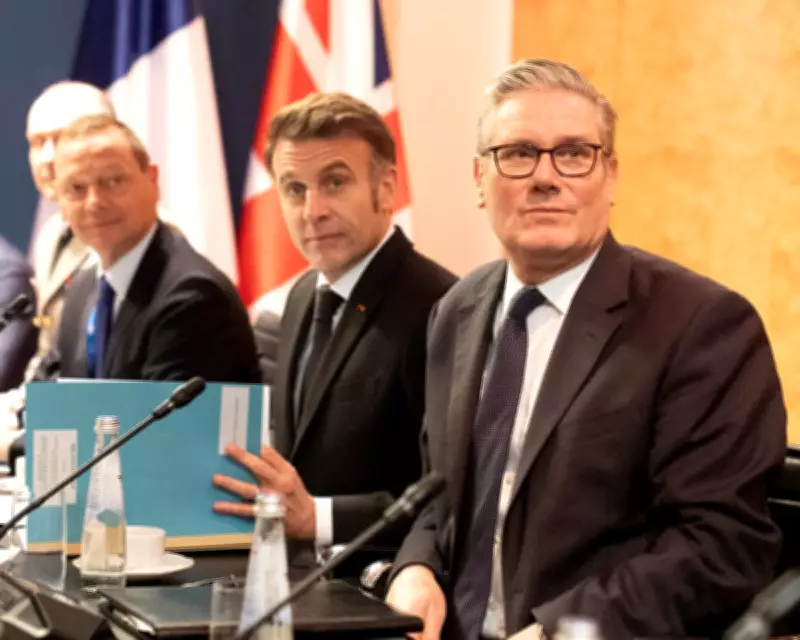
Ten years on from the referendum, Brexit still shapes British politics, shattering the two-party duopoly and dividing the nation. Keir Starmer's struggle to remain prime minister after Labour's recent electoral drubbing in England, Scotland, and Wales underscores this enduring divide.
The Unfulfilled Promise of Brexit
Voters took politicians at their word after the decision to leave the EU. The slogan "Take back control" resonated because it tapped into the public mood in many parts of Britain. For years, the UK's economic model had favoured the better-off, with globalisation enriching London and the south-east while leaving northern towns hollowed out by deindustrialisation and austerity.
However, taking back control also meant Britain could no longer use the EU as an excuse for inaction. Politicians had become adept at blaming Brussels, but after Brexit, that excuse no longer held. The UK had to solve its own problems, free from EU regulations and able to set its own trade policy. It could have followed the example of east Asian economies by rebuilding manufacturing through tariffs, subsidies, and capital controls. But without using these freedoms, nothing would change, and the public's anger would be directed at Westminster.

Financial Services: A Rare Success
Ironically, the one sector that has benefited from Brexit freedoms is financial services. Both former chancellor Jeremy Hunt and current chancellor Rachel Reeves adopted a lighter-touch regulatory regime, giving this powerful sector a clear strategy that has worked. The City is thriving, but this is the exception.
Voters of all ages believe their government should do more after nearly two decades of flatlining living standards. Across the UK, from London to northern Scotland, they have concluded that neither Labour nor the Conservatives are up to the job. Neither party has convinced voters they have a plan to get Britain out of its mess.
Punishment at the Ballot Box
The punishment has been swift and brutal. The Tories won a landslide in 2019 but suffered a record defeat in 2024. Less than two years after Labour's own landslide, massive losses last week resulted from the government being squeezed by the Green Party on the left and Reform UK on the right.
The Greens and Reform are opposites, but both are untainted by failure. The Greens did well in Remain-voting areas, while Reform UK cleaned up in Brexit-voting regions. Those eyeing Starmer's job should note that things may worsen as the impacts of conflicts in Iran and Lebanon are felt, with growth slowing and inflation rising.
Starmer's Triangulation Strategy
Starmer's latest reset earlier this week was an exercise in triangulation. He seeks closer relations with the EU without rejoining the single market or customs union, let alone pledging another referendum. This strategy is doomed to fail, not least because Starmer is to the public what kryptonite is to Superman.
Logically, there are only two coherent approaches. One is to use Brexit's opportunities to experiment with new policies. With its massive majority in 2024, Labour had the chance but showed no real inclination. The other approach is to reverse Brexit, which Starmer seems to think has damaged the economy. If so, he should campaign to rejoin rather than tinkering with exchange schemes for young EU citizens.
The Unchanged Arguments
For Brexit supporters, the arguments remain unchanged. The EU, far from challenging the US and China, is struggling. Germany and France, the EU's two largest economies, are in serious trouble, stifled by neoliberal dogma and red tape. For opponents, the EU is still the UK's biggest trading partner, making frictionless trade essential. Donald Trump's isolationism only strengthens the case for closer EU cooperation.
Starmer is trying to ride both horses at once. His middle way aims to win back Labour defectors to the Greens while telling Reform voters there will be no Brexit sellout. But this approach offers the worst of all worlds: accepting limits on Britain's manoeuvrability with no demonstrable benefit. It will please neither remainers nor leavers and will not disguise the government's own mistakes, of which there have been far too many.






