

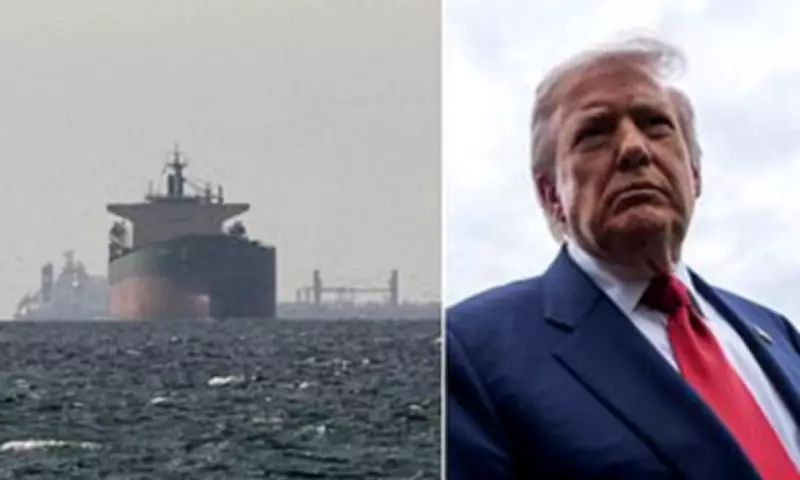
The fragile ceasefire in the Iran war has again come under threat after a cargo ship caught fire when struck by an unknown projectile off the coast of Qatar. This incident occurred as Kuwait's military reported detecting and dealing with 'several hostile drones' in its airspace at dawn, marking the first such breach since the ceasefire took effect in April.
Details of the Naval Attack
According to the United Kingdom Maritime Trade Operations Centre (UKMTO), the strike caused a small fire on the cargo ship, which was subsequently extinguished. The attack took place 43 kilometres northeast of Qatar's capital, Doha. There were no reported casualties, and no details were provided on the ownership or origin of the vessel. No group has claimed responsibility for the attack.
Qatar condemned the incident as a 'serious escalation' that threatens the security of maritime traffic and vital supplies in the region. This attack is the latest in a series of assaults on ships in the Persian Gulf over the past week.

Escalating Tensions
On Friday, the United States struck two Iranian oil tankers, claiming the vessels were attempting to breach its blockade of Iranian ports. In response, Iran's Revolutionary Guard Navy reiterated its warning on Sunday that any attack on Iranian oil tankers or commercial vessels would be met with a 'heavy assault' on a US base in the region and enemy ships.
US President Donald Trump has repeatedly threatened to resume full-scale bombing if Iran does not accept an agreement to reopen the Strait of Hormuz and roll back its nuclear programme. Iran has largely blocked this critical waterway for global energy since joint strikes by the US and Israel on February 28 launched the war, causing a global spike in fuel prices and rattling world markets.
Drone Incursions in Kuwait
In Kuwait, Defence Ministry spokesman Brig. Gen. Saud Abdulaziz Al Otaibi confirmed that hostile drones entered Kuwaiti airspace early Sunday. Forces responded 'in accordance with established procedures,' but there were no immediate reports of casualties. These incidents are the latest threats to the month-old ceasefire, which the Trump administration insists remains in effect.
Sticking Points in Negotiations
The ceasefire has faced difficulties, with Iran restricting traffic through the Strait of Hormuz and the US maintaining a blockade of Iranian ports. Washington is awaiting Iran's response to a new proposal for a deal to end the war, reopen the strait, and roll back Iran's nuclear programme. A major sticking point is the fate of Iran's stockpile of highly enriched uranium.
The UN nuclear agency reports that Iran possesses over 440 kilogrammes of uranium enriched up to 60 per cent purity, a short technical step from weapons-grade levels. The Isfahan nuclear complex, which was bombarded by US-Israeli airstrikes during the 12-day war last year and faced less intense attacks in this year's war, is believed to hold the majority of this material.
In an interview with Iranian state media, Brig. Gen. Akrami Nia, a spokesman for the Iranian military, stated that forces were on 'full readiness' to protect nuclear sites. He mentioned the possibility that adversaries might attempt to steal the uranium through infiltration or heliborne operations, though he offered no further details.
Earlier this week, air defences in the United Arab Emirates intercepted two Iranian ballistic missiles and three drones, leaving three people injured. Kuwait had previously reported dealing with Iranian missiles and drones during the war, including a wave of drones on April 8 that targeted vital infrastructure.






