
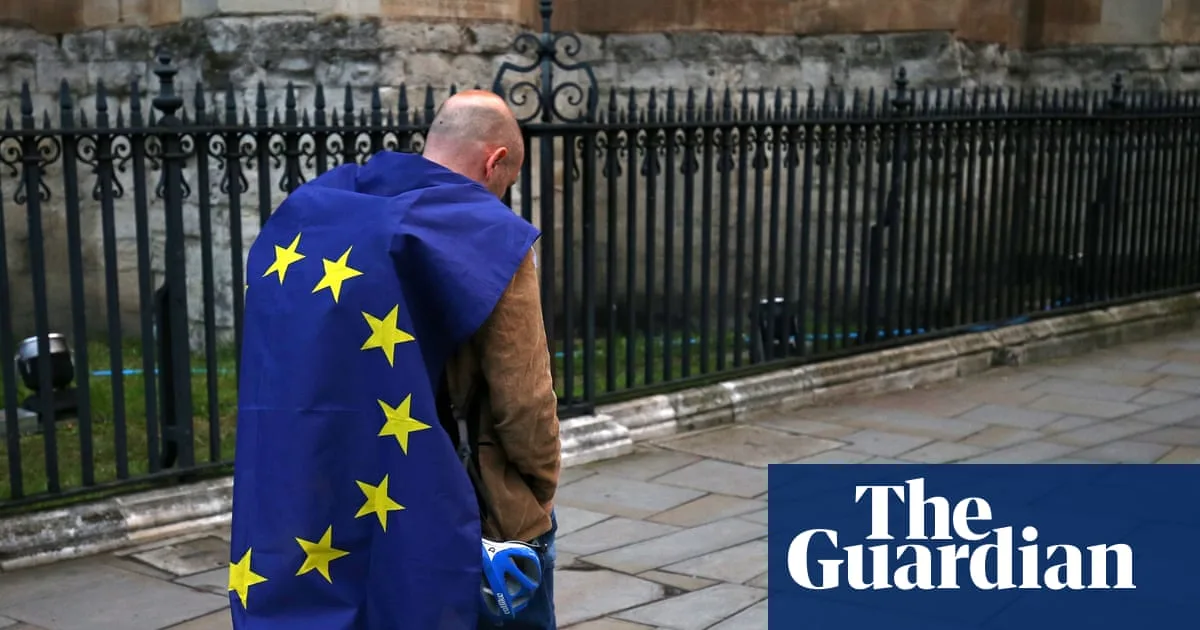
Ten years after the UK voted to leave the European Union, the bloc has not only survived but thrived, with countries queuing to join. On 23 June 2016, Nigel Farage declared the EU “finished” and “dead”, but no other member state followed Britain out the door. Instead, the Brexit experience has served as a stark warning, with Germany’s former Europe minister Michael Roth noting that “leaving the club is no longer seen as a solution”.
The EU has been buoyed by new membership bids, driven by Russia’s invasion of Ukraine and US threats to seize Greenland. Detailed accession talks have begun with Moldova and Ukraine, while western Balkan prospects look brighter than ever. Iceland plans a referendum on resuming talks, and support for membership is growing in Norway. This has pushed the UK down the EU’s list of priorities, according to former European Commission adviser Heather Grabbe.
Former European Council President Charles Michel expressed sadness at Brexit but acknowledged it made EU decision-making easier, particularly on defence. The creation of the European Peace Facility, originally worth €5bn and now €17bn, was one example. Michel noted that the UK and EU have remained united on Ukraine and Russia sanctions, but he missed British influence on economic policy and tech regulation.
Some Eurosceptics also regret Brexit. Nicola Procaccini, co-leader of the European Conservatives and Reformists, said: “We miss them, but at the same time we respect the decision of the British people.” He argued that conservative forces now have momentum, citing the EU’s tough new deportation law. However, key EU leaders like Germany’s Friedrich Merz and France’s Emmanuel Macron are in weak positions, making it hard to claim a firm ideological shift.




