
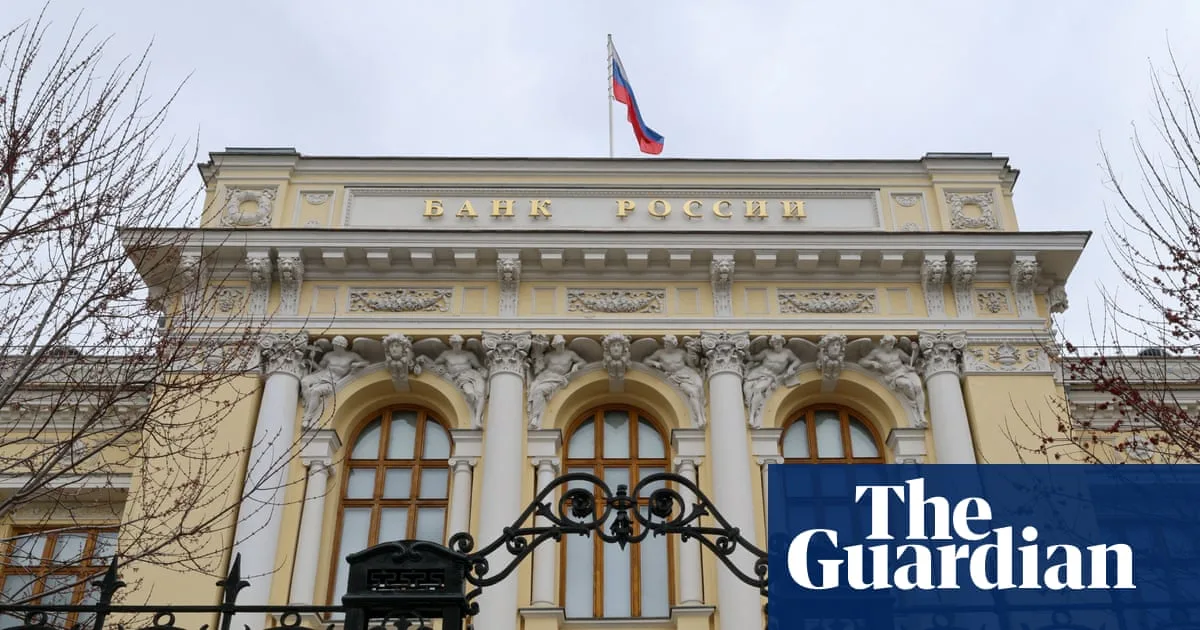
Russia has instructed its major banks, including the central bank and Sberbank, to shoot down Ukrainian drones themselves and cover the associated costs, according to a new law passed by the Russian parliament. The move comes as Moscow struggles to defend key sites across its vast territory against Ukrainian attacks, which have forced Russia to concentrate its air defences in areas like Moscow, leaving other regions vulnerable.
Anatoly Aksakov, head of the State Duma's financial committee, told RBC news outlet that banks would operate defence systems and arm staff without special forces involvement, handling expenses independently. Alexander Shokhin, head of Russia's most powerful business lobby, informed President Vladimir Putin on Monday that companies were ready to purchase heavier weapons and electronic systems for self-defence against drones.
Meanwhile, nearly 50 countries at the United Nations condemned what they described as Russian threats to diplomatic institutions and embassies in Kyiv. A joint statement signed by European nations, Japan, South Korea, and others said such threats were unacceptable. The European Union also criticised the move, stating it had no plans to relocate its staff. Germany and Norway summoned Russian ambassadors to deliver reprimands.
Russia announced on Monday a campaign of systematic strikes on Kyiv, targeting the capital's decision-making centres, and urged foreign citizens and diplomats to leave the city. Ukraine dismissed the threats as blackmail and encouraged allies to ignore the warning, which most have done.
In other developments, the Czech Republic's initiative to supply large-calibre ammunition to Ukraine has secured contracts for around one million rounds in 2026, the Czech defence ministry announced. The project delivered about 1.5 million rounds in 2024 and 1.8 million last year. It nearly collapsed when Prime Minister Andrej Babis formed a government with anti-Ukrainian partners in December 2024, but continued under pressure from foreign allies. The initiative matches donor countries with Czech arms traders, funded partly by yields from frozen Russian assets. Financing of nearly €1 billion has been secured so far this year.




