

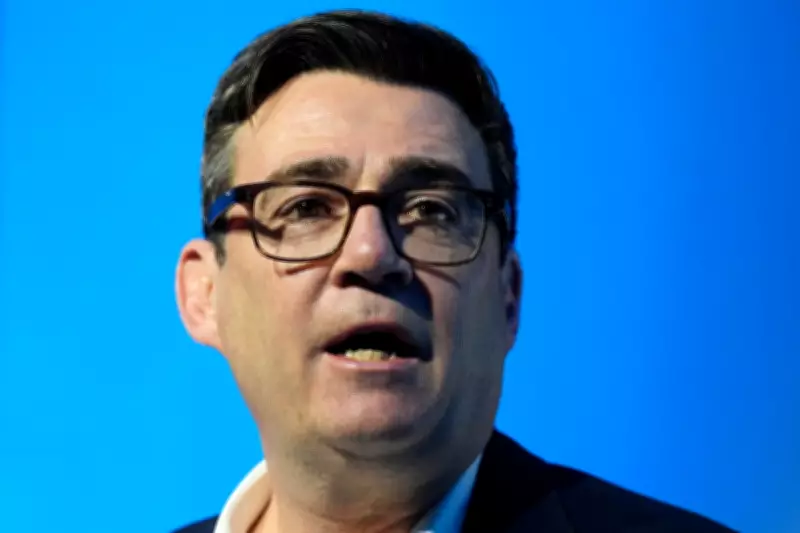
Andy Burnham, the Mayor of Greater Manchester, is poised to abandon his previous call to reverse Brexit as he prepares to stand in the upcoming Makerfield by-election. The strategic shift is widely seen as an attempt to smooth his path back to Westminster and position himself for a future Labour leadership contest.
Strategic Pivot on Brexit
According to sources close to Burnham, he will no longer advocate for overturning the 2016 referendum result but will instead push for a close and constructive relationship with the European Union. This marks a significant departure from his earlier stance, which had been a cornerstone of his political identity.
The by-election was triggered by the resignation of Labour MP Josh Simons, who vacated the seat specifically to allow Burnham to stand. The move has sparked intense speculation about Burnham's ambitions, with many viewing it as a calculated step toward a potential run for the Labour leadership.

Voter Sentiment Divided
A recent YouGov poll indicates that voters are split on whether Burnham has the makings of a future prime minister. The poll, conducted ahead of the by-election, reveals that while Burnham remains a popular figure in Greater Manchester, his national appeal is less certain. The results show 42% of respondents believe he could become a credible prime ministerial candidate, while 38% disagree, and 20% remain undecided.
Burnham's decision to drop the Brexit reversal call is likely aimed at broadening his appeal among Leave-voting constituents in Makerfield, a historically Labour seat that backed Brexit in 2016. The constituency, located in Greater Manchester, has a strong working-class identity and a significant number of voters who supported leaving the EU.
Path Back to Westminster
Burnham has served as Mayor of Greater Manchester since 2017, a role that has kept him out of the House of Commons. However, the Makerfield by-election offers him a route back to national politics. If elected, he would re-enter Parliament after an eight-year absence, potentially positioning himself as a key figure in the Labour Party's future.
The by-election is expected to take place in June, with Burnham widely tipped to win the Labour nomination and the seat itself, given Labour's strong historical performance in Makerfield. However, the contest will be closely watched as a test of Burnham's electoral appeal and the effectiveness of his new, more centrist stance on Europe.
Political analysts note that Burnham's shift on Brexit could help him avoid the pitfalls that have plagued other Labour figures who have struggled to reconcile the party's pro-European base with Leave-voting constituencies. By focusing on a pragmatic approach to EU relations, Burnham may be seeking to occupy a middle ground that could prove crucial in any future leadership bid.






