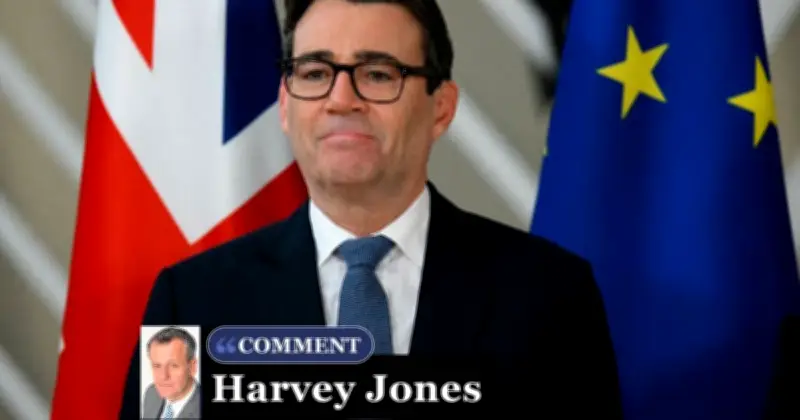
Andy Burnham's push to align Britain more closely with the European Union has reignited claims that the country is being dragged back into Brussels' orbit, with critics arguing it betrays the 17.4 million people who voted Leave. The move, which includes aligning food and farming rules, linking carbon markets and introducing youth mobility, has been described as a "stitch-up" and a "total betrayal of democracy" by commentators.
Writing in the Daily Express, Harvey Jones said Burnham claimed the reset was what Britain wanted, but "didn't actually ask" and went ahead anyway. The agreement includes a termination clause designed to protect the EU if a future government tries to reverse it, with reports suggesting Britain could face the cost of reinstating border controls and infrastructure if it walks away in the first 10 years.
Cost and Control Concerns
The final bill is unknown, but it could run to hundreds of millions a year, possibly a billion. Critics argue Britain will have a "voice in the room" but no vote on the rules, and that Burnham, described as a "compulsive people pleaser," will mostly agree with Brussels.
Norwegian Prime Minister Jonas Gahr Støre has warned against such an arrangement, saying: "If you left the EU because there was too much Brussels, don't take the Norwegian version." Norway is outside the EU but belongs to the European Economic Area, adopting most EU legislation without a vote on those laws.
Economic Performance Compared
The criticism comes as latest figures show UK GDP grew by 0.7% in the third quarter, leaving the economy 1.9% larger than a year ago. That outpaced the Eurozone average of 0.4%, with Germany managing just 0.2%, Italy flatlining at 0.0% and France contracting by 0.1%. Only the US, up 0.8%, grew faster among major Western economies.
Jones noted this isn't all down to Brexit but "shoots down claims that Britain is doomed without Brussels." He also highlighted Europe's problems, including France's debt, Germany's motor industry being "driven off the road by China," and Italy's economy stuck in first gear.
Sector Risks and Future Plans
Closer alignment could threaten Britain's approach to gene editing and precision breeding, which has opened opportunities to develop more resilient crops and tackle disease. The UK's AI sector, described as the third biggest behind the US and China, benefits from a lighter-touch regulatory system, while Brussels' ambition to become an AI regulatory superpower risks crushing the EU's start-up culture.
The financial services industry is operating without being bound by EU rule-making and is determined to keep it that way. Burnham has made clear this is only the start, with rejoining the EU next and talks planned for next year.