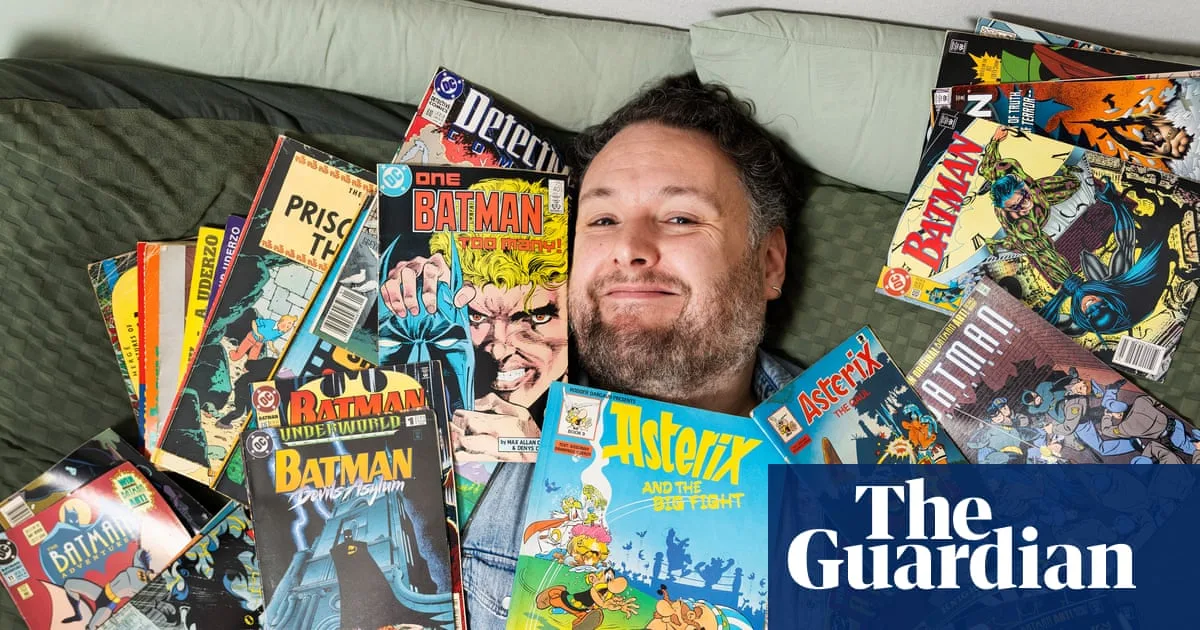
Swapping Doomscrolling for Comic Books Improved My Mental Health

After a long day of looking at screens for work, Joel Harley used to go to bed and stare at his phone until he fell asleep. When not doomscrolling news headlines, he would crash out to hateful comments on social media or revisit workplace dramas via mobile versions of Teams and Slack. He was always plugged in.

A Ritual of Negativity

It was a ritual that would start well before bedtime. As the evening wound down, he would surf algorithms for hours on end, barely paying attention to whatever television programme was on in the background, only half-listening to conversations around him. Whether it was the incessantly dystopian news cycle, toxic opinions on pop culture, or posts railing against obtuse LinkedIn speak, there was always another online scab to pick.

When sleep did arrive, it would be restless and anxiety-ridden. With his brain swimming with fears of various apocalypses and the vitriol of online agitators, it is no wonder his dreams were full of the same. After one feverish night too many, he realised that he had to make a change. In a quest to shrug off his phone's insidious hold, he began to search for something that would better occupy his attention. Books seemed like the natural solution, and he quickly turned to comics.

Wide Pickt banner — collaborative shopping lists app for Telegram, phone mockup with grocery list

Rediscovering a Childhood Passion

Harley had been a voracious comic book reader as a youth, growing up in the early 1990s on a diet of the Beano and Dandy, before graduating to The Adventures of Tintin and Asterix. From there, he moved on to his father's 2000 AD collection – which, to a young teenager, held a rather illicit thrill due to its intensely violent strips. He then devoured anything he could get his hands on: Preacher, The Sandman, Watchmen, Batman – he had read the lot.

But as an adult in his 30s, he was not the devout reader he once had been. That changed in late 2024, when he finally decided to ditch doomscrolling. Spurred on by the online furores that surrounded the imminent second term of Donald Trump, he realised that he needed to preserve his mental health and make new routines before he became entirely consumed with fear and anger. And who knows more about self-care than your inner child?

The Benefits of Comic Books

Instead of reaching for his phone in the evenings, Harley picked up a comic instead. Reading them as an adult restored a sense of childlike wonder that transcended his anxieties. He found his quality of sleep started to improve. His dreams were more fanciful and less marked by the banal terrors of day-to-day life.

He began to wake up feeling revitalised, free of the residual negativity from the previous night's miserable doomscrolling. Inspired by the colourful imagery and ideas he found in comic books, he was able to channel a newfound sense of creativity into his own work as a journalist. He also felt less of an urge to check in on work channels after he left the office, as this had become valuable comic book time.

Improved Attention Span

Harley had not realised how his attention span had suffered due to a decade of switching from app to app at the blink of an eye. This soon got better – a result of taking the time and effort to read a lengthy comic series or graphic novel to the end. It also came with a sense of accomplishment, rather than the self-loathing he usually felt when he realised he had just spent the last hour on Reddit.

As someone whose mind tends to spiral when left to its own self-sabotaging devices, comic books offered a form of escapism that allowed his mind to tackle fears of the apocalypse, dictators and an AI uprising in a safe environment. Dystopian sci-fi and extreme horror comics may not seem like cosy bedtime reading, but they felt like a healthier outlet compared with the unhelpful fearmongering of online commenters.

A New Routine for Self-Care

Rediscovering his love for comic books is not about burying his head in the sand by cowering in imaginary universes. It is carving out some time for self-care in a world that has become increasingly demanding of our headspace. Leaving behind his evenings glued to his phone has boosted his mood, his creativity and general outlook on life. He let his inner child back out and has not looked back since.

Pickt after-article banner — collaborative shopping lists app with family illustration