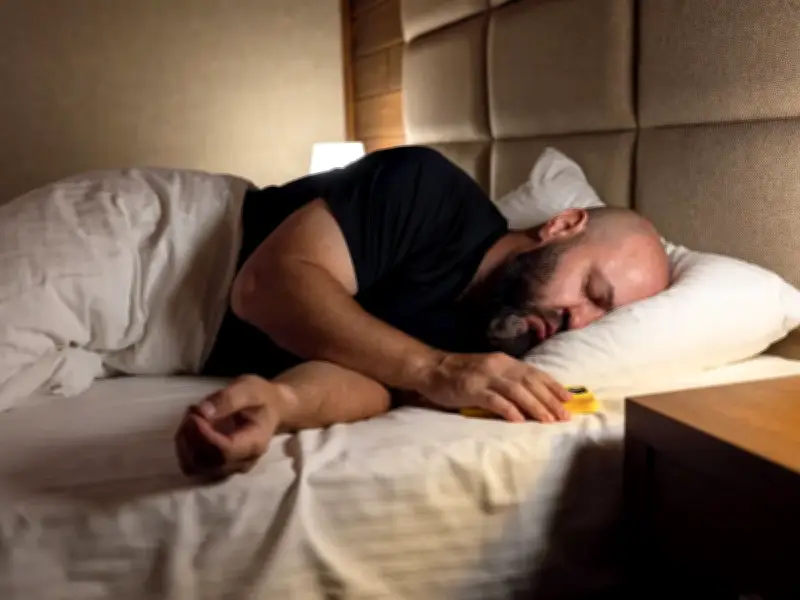
Side sleeping may help reduce the risk of Alzheimer's disease, according to sleep consultant Dr Allie Hare, who says emerging research suggests the brain's waste clearance system works more efficiently in that position.
Side sleeping and brain health
Dr Hare, a Tatler Top Doctor for Sleep, working with experts at Emma Sleep, said: "Side sleeping is by far the most common position, accounting for around three-quarters of our time asleep and it is generally the position associated with the fewest health problems. Side sleeping keeps the airway more open and keeps the spine in a neutral position, which can help with neck and back pain."
She added: "Side sleeping is also advised in later pregnancy, from 28 weeks onwards. Interestingly, there is also emerging research suggesting that the brain's 'waste clearance' system, which removes proteins linked to Alzheimer's disease during deep sleep, may work more efficiently when we sleep on our side."
Back and stomach sleeping effects
Dr Hare explained that sleeping on the back is the position most likely to cause snoring and worsen obstructive sleep apnoea (OSA), as gravity allows the tongue to fall backwards and narrow the airway. She noted that in up to half of people with OSA, breathing pauses occur at least twice as often on their back as on their side, a condition referred to as 'positional' sleep apnoea.
Lying flat can also make night-time heartburn and acid reflux worse, though back sleeping spreads weight evenly across the spine and, with a pillow under the knees, can help some people with lower back pain.
Stomach sleeping and general advice
Dr Hare said stomach sleeping is the least common position and the least recommended, as it means keeping the head turned to one side for long periods, which puts strain on the neck.
She advised: "Whichever position you favour, however, a supportive mattress and pillow that keep your head, neck and spine aligned will help you wake without aches and pains. If you find yourself tossing and turning a lot, or your bed partner notices loud snoring or pauses in your breathing, it is worth speaking to your GP."
She concluded: "Ultimately, getting enough good-quality sleep and treating any underlying sleep disorder matters far more than which way you lie."