Health Optimisation Tools Making Us Miserable and Lonely

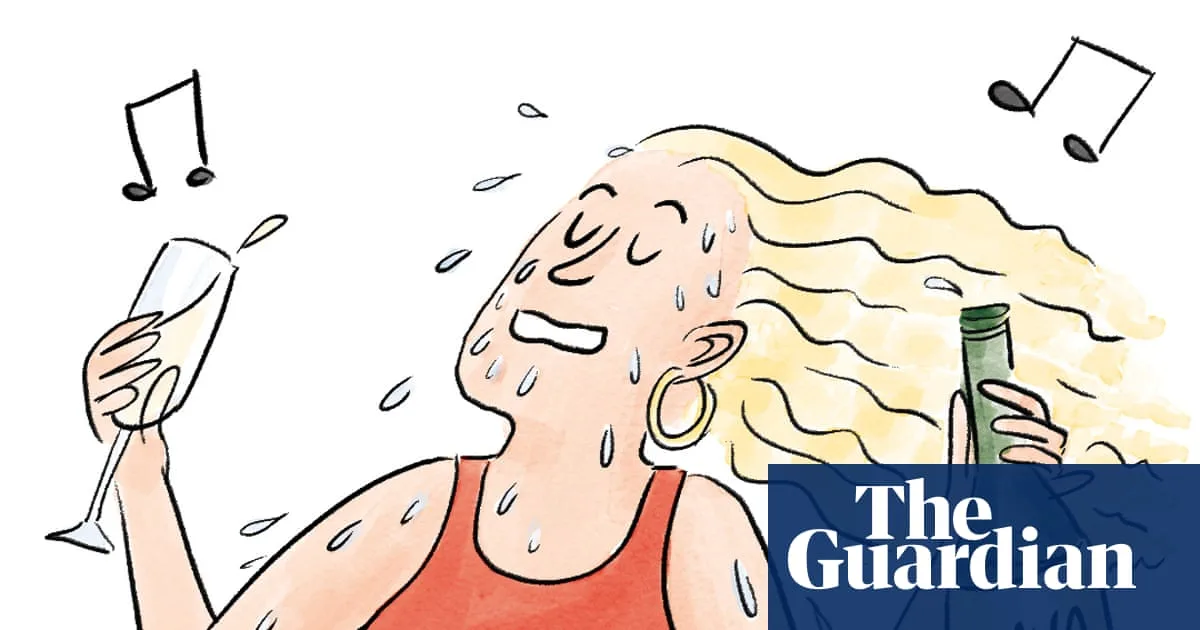
Is there anything more miserable-looking than Steven Bartlett's perfectly optimised life? As the Diary of a CEO presenter gets lambasted over his two glasses of wine panic that ruined his tracking data, Rosamund Hall explains why health optimisation tools are backfiring and making us increasingly unhappy – and even lonely.

This time last week, I was enjoying lunch at a simple seafront restaurant in northern France. Families gathered over towers of seafood, old and young alike tucking into cockles, crabs and crevettes with chattering happiness. Nobody was taking photos, and everyone, except the children, was drinking wine. L'art de vivre, I'm happy to report, was alive and well at every turn.

It was a relief. A welcome comfort against the relentless algorithmic noise we're all constantly fed about "optimisation" and "wellness". From where I was sitting with my pot of moules marinières and a glass of Muscadet, everyone looked pretty well to me. More importantly, they looked relaxed, happy and in touch with what really matters in life – connection with family and friends.

Wide Pickt banner — collaborative shopping lists app for Telegram, phone mockup with grocery list

But it's also the kind of scene that might have entrepreneur and podcaster Steven Bartlett of Diary of a CEO fame running for the hills, measuring his gait, cadence and VO2 max as he went, obviously. Just as I was contemplating my excellent life choices, he was lamenting his as he'd "ruined three days" of his life. What had he done? Was it a messy night full of patchy memories? Something worse? No, it was this: "I had a couple of glasses of wine, I didn't get drunk, it ruined three days of my life because of the domino effect it caused. I got worse sleep that night, I ate more poorly the next day because my dopamine system or cortisol system or whatever was all messed up. Then I podcasted worse and I didn't go to the gym the day after, and I could track all of this on my Whoop [wearable tech], hashtag ad, hashtag sponsor, investor... whatever."

Really? Big whoop, Steven.

The fallout from this post has been swift, severe and also hilarious. Broadcaster Greg James took to Instagram and said his issue was how the optimisation obsession was making us more miserable. In an anti-Bartlett rant, he pleaded: "I've been railing against this for years. Not the alcohol thing, fair enough if you want to give up alcohol, it can ruin lives, I get that. My issue is this endless optimisation and measuring of everything, to the point where it starts to make you feel a bit miserable if you don't quite hit your own targets."

"Not everything has to be like work. You can be on, you can be off… This is my reminder to waste a day; optimisation is killing fun. We have to absolutely rail against that." The thousands of people commenting underneath agreed. "I spent 5 years 'ruining my life' at uni and it was genuinely the best years of my life", said one, "that's why I don't wear those watches. I just live in the moment and get on with it"; "Life is for living, not tracking!" and finally "Let's be more Greg and never Mr Bartlett".

The obsession Bartlett represents is a sweeping global and largely online trend of people consumed by "optimisation": a seemingly unending pursuit of maximising human potential. This isn't about self-improvement or building better and healthier routines. It's a highly competitive, obsessively monitored and quantified endeavour, fixated on turning the mind, body and soul into a sleekly performing machine. "Biohacking". "Healthspan". All with the implicit suggestion that we humans are simply a problem to be solved with the right data set.

Have we really lost the simple joy of life for life's sake? The joy of a glass of wine with someone you love. The meandering conversations that unfold over the course of a long meal, the very threads that have woven the fabric of society together for thousands of years. Steven might not want to hear it, but wine has been a building block of civilisation for over eight millennia. Your Whoop tracker has been around for just over 10 years. How did we arrive at a place where charting every detail of our lives feels entirely normal, where life itself has become one long performance review? It feels like neo-prohibitionist puritanism dressed up in expensive athleisure. The only difference is that this time you're not a sinner; you're just performing at a "suboptimal" level. Oh, lord, give me strength.

Pickt after-article banner — collaborative shopping lists app with family illustration

Greg James is right. This isn't about the wine. The deeper issue is that we've lost sight of what makes us human. At our core, we are creatures of joy, connection and pleasure who can endure challenges and hardship, and we thrive on these pillars. We learn from them. It feels like neo-prohibitionist puritanism dressed up in expensive athleisure. The only difference is that this time you're not a sinner; you're just performing at a 'suboptimal' level.

We are the first generation that needs an app to tell us we're tired and how we've slept. A friend became so consumed by her Oura ring and its sleep data that she has now spiralled into a vicious cycle of worsening sleep, the device dominating the very rest it was supposed to protect. We are slowly losing the ability to listen to our own bodies; to respond to their rhythms across the natural ebbs and flows of weeks, months, and seasons. Wellness culture promised it would help us live longer. What it has actually delivered is more anxiety to fill the extra time with.

And the experts agree. Brad Stulberg, author of The Way of Excellence responded to Bartlett by saying, "This optimisation stuff can make you super fragile." And he should know, having interviewed hundreds of people at the peak of their game, Olympians, authors and entrepreneurs, asking them "How often do you feel perfect?" with no one ever responding 100 per cent. Not once. And this is echoed by a recent conversation I had with Olympic champion Jessica Ennis-Hill, speaking about the launch of her mid-strength wine Seven Summers: "I think that your greatest achievements and the best parts of you come out when you're happy, and that comes from having all areas of your life as balanced and in harmony as you can". For Ennis-Hill, that could involve a long walk with a friend, a BBQ with loved ones, and even, at her peak in the off-season, a glass of wine with friends.

Stulberg goes on to say, "living an excellent life is not about optimising a score on a screen or never having a glass of wine. It's about showing up consistently over a long period of time, expecting the ups and downs and messiness of life". Because life is messy, and imperfect and therefore at times exultingly joyous.

It is no coincidence that alongside an obsession with personal goals, we are also seeing a stark rise in loneliness, which the World Health Organisation has declared a "global public health concern". Nobody sits down with their mates for a lovely evening of biohacking. In fact, I had one friend who started actively avoiding big nights out with her friends because, like Steven, it would knock her data out of whack from calories, to sleep and heart rate. The glorious, inherently risky business of real socialising, the slightly rich food, the dessert you didn't "need", the extra bottle opened because you're so entwined in a long-overdue conversation, the late night that follows. All of this is human. Controlled, scheduled, optimised lives are, at heart, a very expensive form of withdrawal from society. And like my friend enslaved to her sleep data, you cannot be fully present when you are perpetually monitoring. In the end, it took her the misery of a lonely winter to realise that while her heart rate might have been top-notch, she was losing her mind to the slow burn of depression and anxiety.

Author Steve Magness, who writes about mental health and physical performance in his books Do Hard Things and Win the Inside Game, says that "being obsessed with something seems like a prerequisite for success, that the hard work and the grind is what will get you there. That's an illusion. Hard work absolutely matters. But so does recovery, so does having friends, family, hobbies and other outliers. There's a reason Nobel Prize-winning scientists are 3x as likely to have a hobby. We need a break." More importantly, he emphasises that "the best routines are nearly invisible. They don't scream 'look at me!' They don't require a 27-stop morning ritual. They quietly remove friction, lower resistance and make the hard stuff easier to do. We are sold an elaborate version that just makes us fragile."

Life needs us to be resilient, for the time when you really have no sleep because your baby will wake every two hours and only sleep on you for a year. For when you're up through the night waiting in A&E with a family member but still have to show up for work the next day. We adjust and move on. Just like we've been doing for time immemorial, and you don't need a device to tell you that. Unmeasured pleasure can become a quiet, deliberate act of resistance, which leads to true inner resilience. Allow joy in, without any particular outcome in mind. A good glass of wine asks only that you sip, taste and be present, for no reason other than pleasure. A long walk with no destination. Setting the table properly on a Tuesday. Opening the "special occasion" bottle on a random Thursday, just because. Watch your happiness levels soar.

The blue zones – areas of the world like the Nicoya peninsula and Greece's Ikaria that have some of the longest lifespans in the world – have understood this long before the term existed to describe these areas: embedding community, connection, regular movement, slow food and a little wine into daily life, without a supplement or Oura ring in sight. The ancient Greek philosopher Epicurus valued ataraxia, tranquillity, and believed the highest good was the prudent pursuit of pleasure. I think it's time we connected to that belief instead of holding truth in our devices.