In this week's Well Enough newsletter, Harry Bullmore explores Dan John's five-step kettlebell system for building strength and fitness. The system combines simple movements, loaded carries, and smart progression into an effective, scalable full-body training plan suitable for any fitness level.
Introduction to Kettlebell Training
Kettlebell training is a versatile and cost-effective way to improve all facets of fitness, including strength, mobility, muscle, and cardiovascular health. Coach Dan John, who has been training people since 1979, has developed a five-step method that can be adapted to any fitness level. This method is now ready to be shared.
Step One: Master the Three Fundamental Exercises
John's philosophy is that everyday fitness boils down to a simple three-part formula: strength training, walking, and caloric correctness. The first priority is to establish regular strength training sessions. Next, incorporate daily walking, and finally, consume an appropriate number of calories for your activity levels. Aim to include protein, fibre, and fruits or vegetables with each meal.
John views the body as a system of interconnected movement patterns rather than isolated muscles. The five basic human movements are push, pull, hinge at the hips, squat, and loaded carry. These can all be addressed with just three exercises: the kettlebell swing, goblet squat, and press-up. Beginners can substitute the kettlebell swing with a glute bridge if needed.
Step Two: Add Loaded Carries
Loaded carries involve picking up a weight and carrying it, either at your side, shoulder, or overhead. According to John, loaded carries offer the most bang for your buck of any exercise. Simply adding them to your routine will yield significant benefits.

Step Three: Incorporate Two Kettlebells
Using two kettlebells expands your exercise options. The key exercises are the double kettlebell clean, double kettlebell front squat, and double kettlebell press. John describes this as the best thing you can do with kettlebells. Training with two kettlebells develops what John calls armour (muscle), anaconda (internal pressure and stability), and arrow (powerful movement), building a fit and robust body.
Step Four: Take Your Training Outside
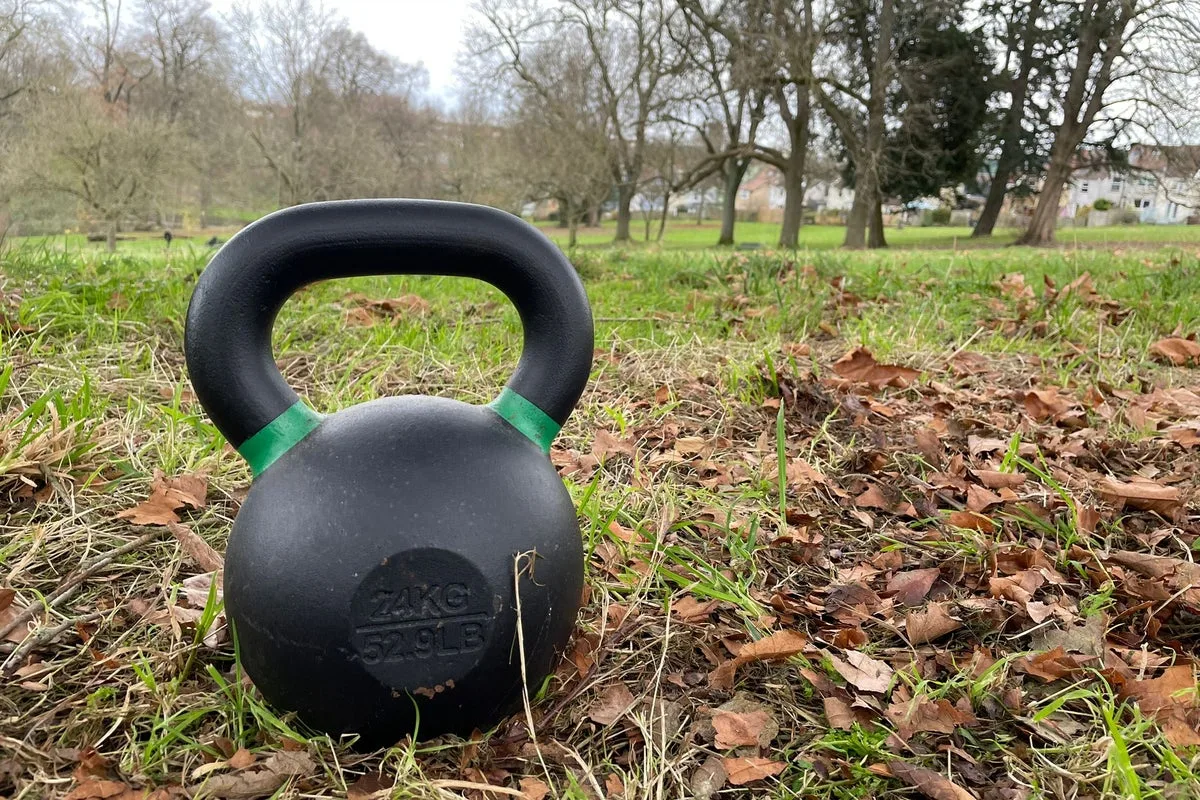
Exercising outdoors combines the health benefits of nature with your workout. Carrying your kettlebell to a park serves as a warm-up and covers your loaded carry for the day. Outdoor training also forces adaptation, which is the core reason we exercise. Whether dealing with uneven ground, weather, or other disruptions, you learn to adapt like a jazz performer.
Step Five: Combine Everything into a Plan
With the constituent parts in place, you can create a personalised exercise plan. John encourages intuitiveness, as no one knows your body better than you. Mix mobility days, sweat days, and strength days, all using the same kettlebell. Always leave something in the tank; consistency over 365 days beats one incredibly hard session followed by inactivity.
The kettlebell's beauty lies in its simplicity: it sits in the corner like a doorstop but transforms into an entire gym when needed. This accessibility fosters consistency, the key to any successful fitness transformation. Grab a kettlebell and get into the swing of things.