

India's Indigenous Dengue Vaccine Reaches Critical Final Trial Phase
In a significant scientific advancement, India is moving closer to developing its first indigenous single-shot dengue vaccine, with final-stage human trials now underway. The breakthrough comes as dengue continues to infect between 100 and 400 million people worldwide each year, according to World Health Organization estimates, causing thousands of fatalities.
The Human Cost Behind the Statistics
While official figures from India's National Centre for Vector Borne Diseases Control recorded 113,450 infections and 95 deaths in 2025, these numbers fail to capture the profound personal tragedies behind each case. Shahnawaz Malik, a 42-year-old journalist, experienced this firsthand when dengue claimed his wife, Simin Akhter Naqvi, in October 2024.
"The struggle has increased," Malik reveals, having relocated from Delhi to his hometown near the Indo-Nepal border following his wife's death. Naqvi, an associate professor of economics and activist, was just 39 when she succumbed to dengue shock syndrome, leaving behind a four-and-a-half-year-old son.

Her illness followed a typical pattern: beginning with fever and body aches, progressing through days of persistent symptoms, then suddenly deteriorating into organ failure and internal bleeding. Despite receiving standard medical advice and hospital care, her condition proved fatal within days.
Two Decades of Scientific Persistence
Meanwhile, at Panacea Biotec, one of India's oldest vaccine manufacturers, researchers have been working toward this moment since 2002. "Whether to work on a dengue vaccine or not – this is a decision that any organisation needs to take," explains Harshet Jain, a board member, emphasizing the scale of the challenge with over 400 million global infections annually.
The scientific hurdles have been substantial. Dengue exists in four distinct serotypes, and infection with one provides only temporary protection against others. Worse, subsequent infections can trigger antibody-dependent enhancement, potentially making later encounters more dangerous rather than less.
Dr. Syed Khalid Ali, Panacea's chief scientific officer, notes that "that concern of dengue was lingering around for a long time, and it had an impact on everything." Current vaccines like Qdenga and Dengvaxia require multiple doses and have limitations regarding prior infection status and serotype coverage.
A Promising Single-Dose Solution
Panacea's candidate, named DengiAll, represents a potential game-changer. Based on weakened dengue strains developed by the US National Institutes of Health over two decades, the vaccine requires just one dose and can be administered to people without prior dengue exposure. Early trials showed over 80% seroconversion across all four serotypes, indicating balanced immune response.
The phase three trial, supported by the Indian Council of Medical Research, began in August 2024 with over 10,000 volunteers across India. Researchers are carefully monitoring participants through multiple monsoon seasons, with regulatory approval potentially arriving around 2027 if data remains positive.
"Any vaccine in the world, minimum it takes 12 years," explains Kumar Gaurav, Panacea's senior general manager for regulatory affairs. "Then it goes to 20 years, 22 years. It is not a long time for a novel vaccine or innovative vaccine, not at all."
Beyond Vaccination: A Comprehensive Approach
Even as vaccine development progresses, experts emphasize that immunization alone cannot eliminate dengue. Dr. Ali stresses that "you need vaccination at its centre, and if you build other public health measures around it, that would be the most effective way."
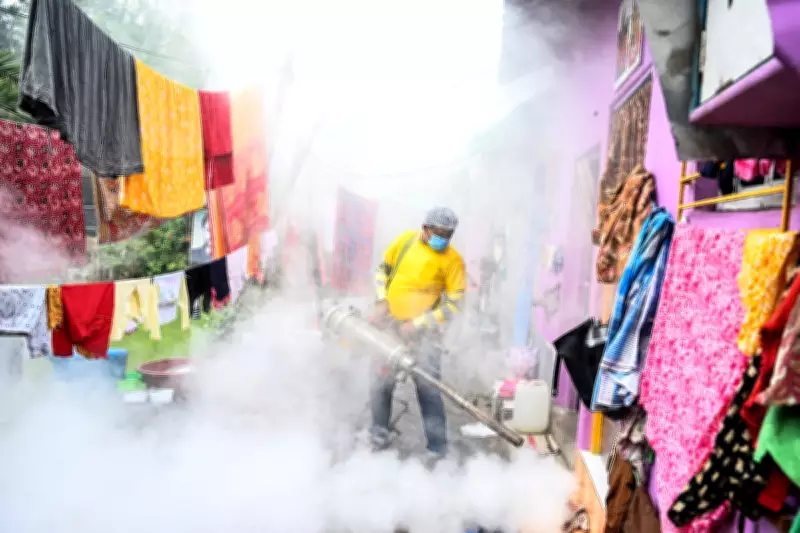
This reality resonates painfully with families like Malik's, who experienced systemic failures in mosquito control measures. "One thing I found hard to digest was that my wife died because a mosquito bit her," he reflects, highlighting the gap between scientific progress and ground-level public health implementation.

The vaccine's formulation offers practical advantages for widespread distribution, remaining stable for three years at standard refrigeration temperatures – crucial for regions lacking ultra-cold storage infrastructure. As India continues its methodical march toward vaccine approval, the hope remains that future generations might be spared the devastation that dengue continues to inflict on families worldwide.





