
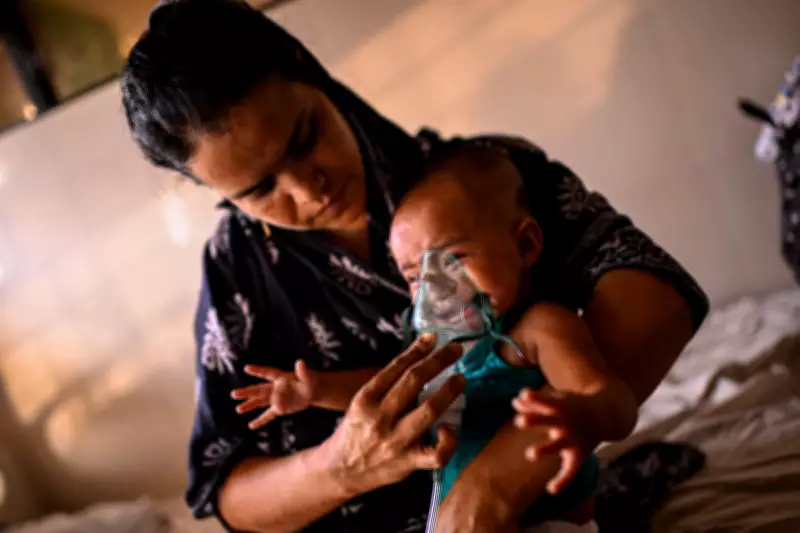
Bangladesh Launches Emergency Measles Vaccinations Amid Deadly Outbreak
Bangladesh is conducting emergency measles-rubella vaccinations while attempting to contain an ongoing outbreak that has killed more than one hundred children in less than a single month. The government, in partnership with the World Health Organization, the United Nations children's agency UNICEF, and the Gavi vaccine alliance, began working to vaccinate children aged six months to five years old in eighteen high-risk districts on Sunday. This initiative will expand nationwide in phases starting from next month, according to a joint statement released by the authorities.
Alarming Surge in Cases and Critical Immunity Gaps
More than nine hundred cases of measles have been confirmed among seventy-five hundred suspected cases reported since March fifteenth, according to official data from the South Asian nation of over one hundred seventy million people. A UNICEF official stated the agency was deeply concerned about the sharp rise in cases, which is putting the youngest and most vulnerable children at serious risk. Rana Flowers, the agency's representative in Bangladesh, emphasised that this resurgence highlights critical immunity gaps, particularly among zero-dose and under-vaccinated children. Infections among infants under nine months, who are not yet eligible for routine vaccination, are especially alarming.
Political Blame and Historical Context of Vaccination Disruptions
Bangladesh's health minister, responding to questions in Parliament on Monday, asserted that the new outbreak was caused by the mismanagement and failures of past governments. He claimed the previous government of ousted Prime Minister Sheikh Hasina and an interim government headed by Nobel Peace Prize laureate Muhammad Yunus failed to make proper decisions regarding vaccine stockpiles, causing shortages affecting vaccines for measles and six other diseases. The vaccination campaign for measles was disrupted during Bangladesh's recent political upheavals. Hasina was ousted in a mass uprising in 2024, and Yunus led an interim administration that transferred power to an elected government after an election in February.
Public Health Advice and Medical Recommendations
Authorities are advising parents to go to hospitals whenever someone is suspected to have measles. F. A. Asma Khan, deputy director of the Infectious Diseases Hospital in Dhaka, urged caution, stating that they should avoid taking medicine from shopkeepers unnecessarily. If a child has a fever, especially a high fever of one hundred one, one hundred two, three, or four degrees Fahrenheit, or higher than thirty-eight point three degrees Celsius, they should not rely on medicine from local shops. Instead, they must take the child to a hospital as soon as possible, because medical officers are capable of providing proper basic treatment.
Measles Characteristics and Vaccination Imperatives
Measles is a highly contagious airborne disease causing fever, respiratory symptoms, and a characteristic rash, and it can sometimes have severe or fatal complications, especially in young children, according to the World Health Organization. Vaccination is crucial to preventing the spread of measles, but the WHO says ninety-five percent of the population has to be vaccinated in order to stop the disease from spreading effectively.
Historical Progress and Persistent Disparities in Immunisation
Since the launch of a massive immunisation campaign in 1979, Bangladesh has made remarkable progress, raising the coverage of fully immunised children from just two percent to eighty-one point six percent. However, UNICEF warned last year that while Bangladesh has made strong strides to increase immunisation coverage, stark disparities persist across different regions and communities, highlighting ongoing challenges in achieving universal vaccination protection.




