

AMA Steps In as US Government 'Abdicates' Vaccine Review Responsibility
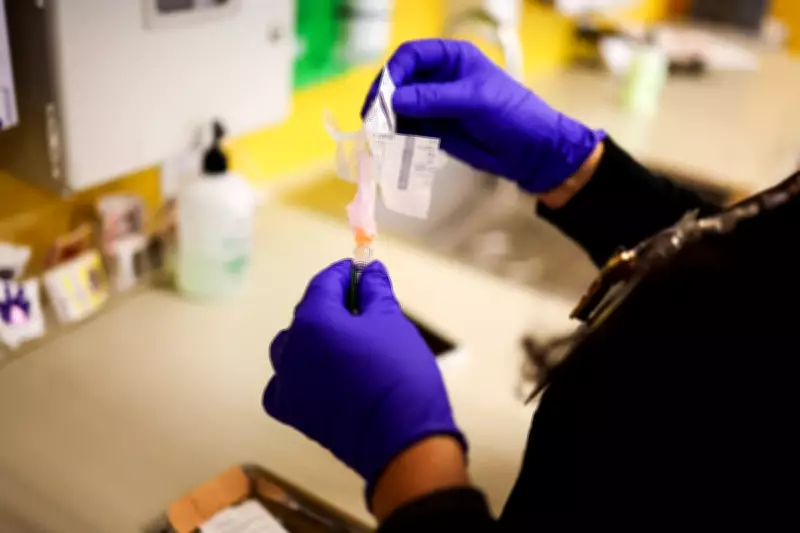
A medical assistant prepares a flu vaccine for administration at a clinic in Chicago, Illinois, on 31 December 2025. This scene underscores the ongoing importance of immunisation efforts amidst growing concerns over federal oversight.
Filling the Government Void
The American Medical Association (AMA), the largest medical organisation in the United States, has announced it will help conduct a comprehensive review of respiratory vaccine safety and effectiveness. This move comes as federal health agencies and advisory committees have ceased making vaccine recommendations without presenting new data to justify these decisions.
"They are filling a void that the government created," stated Ezekiel Emanuel, vice-provost for global initiatives at the University of Pennsylvania, during a press briefing on Tuesday. Emanuel criticised the US government for having "abdicated" this responsibility under Robert F Kennedy Jr, the secretary of the US Department of Health and Human Services (HHS), who has long been known as an anti-vaccine critic.

Collapse of the Traditional System
For decades, vaccine recommendations fell under the purview of the Advisory Committee on Immunization Practices (ACIP). This committee regularly convened to examine evidence on vaccines and provide guidance to the US Centers for Disease Control and Prevention (CDC). States, local health departments, healthcare providers, and patients relied heavily on this evidence-based framework to shape policies and make informed decisions.
"That system has now effectively collapsed," the AMA declared in an official statement. Although ACIP is scheduled to meet in late February, the committee chair has indicated that all vaccine recommendations are under scrutiny, despite decades of robust evidence supporting the safety and efficacy of routine childhood immunisations.
Recent Controversies and Misinformation
The most recent ACIP meeting was marred by misinformation, featuring over sixty false or misleading statements. During this session, the committee voted to discontinue the universal recommendation that all newborns receive the hepatitis B vaccine at birth. Previous meetings have seen similar decisions, including ending recommendations for flu vaccines containing the preservative thimerosal (thiomersal) and for the MMRV (measles, mumps, rubella, and chickenpox) vaccine.
In January, the HHS halted full recommendations for one-third of routine childhood vaccines without consulting ACIP or seeking public input. Additionally, officials have restricted the development of new and updated vaccines. Reports indicate that Vinay Prasad, the top US vaccines regulator, overruled scientists at the US Food and Drug Administration (FDA) to impose restrictions on Covid-19 shots and refused to review a potentially more effective flu vaccine from Moderna.
The Stakes of Vaccine Effectiveness
The urgency of maintaining effective vaccine protocols is highlighted by recent statistics. Nearly three hundred children died from influenza last year alone. "With a good flu vaccine, we still lose 30,000 to 40,000 Americans a year," noted Shaughnessy Naughton, president of 314 Action, an organisation dedicated to electing Democratic scientists and doctors. "Think about what happens if we have none. That is a threat when you have a health secretary that is so hostile to evidence and science."
The Vaccine Integrity Project's Role
The AMA will partner with the Vaccine Integrity Project, based at the University of Minnesota's Center for Infectious Disease Research and Policy (CIDRAP). In August, this project released a review of more than 16,000 studies on flu, Covid-19, and respiratory syncytial virus (RSV) vaccines, concluding that these shots have strong safety records and are crucial for preventing illness and death. Medical bodies like the American Academy of Pediatrics and the American College of Obstetricians and Gynecologists have used this evidence to issue vaccine guidance.

The Vaccine Integrity Project has also recently examined the evidence supporting the birth dose of the hepatitis B vaccine and is currently reviewing data on HPV vaccination. "Why are they doing this?" Emanuel asked rhetorically. He answered, "Because the US government is not doing a scientifically based analysis of impending infections. It's just that simple. This is a testament to the problems we've had over the last year."
Moving Forward with Monthly Reviews
The medical organisations plan to meet monthly, inviting other professional groups to help formulate key questions and develop a framework for evaluating evidence. Questions may include whether an additional dose of the RSV vaccine is necessary. Sandra Adamson Fryhofer, an AMA trustee, emphasised in the statement that the AMA has a "duty" to ensure the American public has access to an evidence-based process for regularly reviewing vaccines.
This initiative represents a significant shift in how vaccine safety and effectiveness are assessed in the United States, as professional medical bodies step in to uphold scientific standards in the face of governmental withdrawal.





