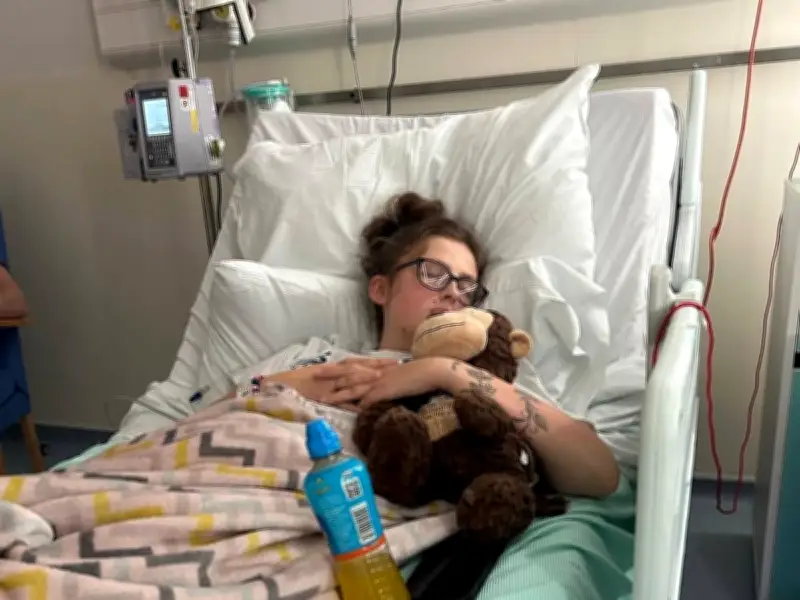
Gracie Mae Cooper, a 19-year-old from Congleton, Cheshire, was diagnosed with a rare form of ovarian cancer after mistaking severe stomach pains for period pain. Just months ago, she was thriving in a childcare apprenticeship, but within two weeks of symptoms appearing, she received a devastating diagnosis.
From Cramps to Cancer Diagnosis
Gracie experienced intense stomach pains that made her barely able to move. She visited her doctor, who initially suspected period pain but referred her to Royal Stoke Hospital for a gynecological exam. An ultrasound revealed a cyst on one of her ovaries. While most ovarian cysts are benign, further tests showed the cyst was a germ cell cancer, a rare form that primarily affects teenagers and young adults.
"I remember this moment like it was yesterday, I first thought, 'Oh my god I'm going to die, I'm too young for this,' as I'm sat in the hospital waiting for results," Gracie recalls.
Treatment and Travel Burden
Gracie has begun chemotherapy to shrink the tumor before surgery. She will undergo four cycles over three to six months, followed by monitoring scans. The treatment requires her to travel from Congleton to London—a 185-mile, four-hour journey each way—costing £80-90 in fuel per trip and £400 per week for accommodation.
"Having to travel all that way to get treatment is not fun, as I'm thinking if anything goes wrong I'm four hours away from help," she says. The financial strain has been significant, prompting her family to start a fundraising campaign.
Impact on Life and Career
The diagnosis forced Gracie to pause her beloved childcare apprenticeship. "I really loved my apprenticeship as this was my life, I really loved looking after the kids," she says. She received handmade cards from the children she cared for, highlighting the emotional toll of stepping away.
Separation from family has been the hardest part. "I think that's been the worst part about it all, knowing I can't see my family for long periods at a time," she says, noting it worsened her mental health.
A New Perspective
Despite the challenges, Gracie has gained a renewed determination to live life fully. "It has made me more determined to do more things I haven't done before and experience what life is made for," she says. She plans to spend more time with family and take holidays when possible.
Her sister has been her biggest support, along with her entire family. Gracie hopes her story encourages others to seek medical advice if something feels wrong. "(Don't) feel alone as there are a lot of people that give support," she says. "But more importantly it is to get checked if you think something is off as this will save your life, yes it's scary but it's better to be safe than sorry."