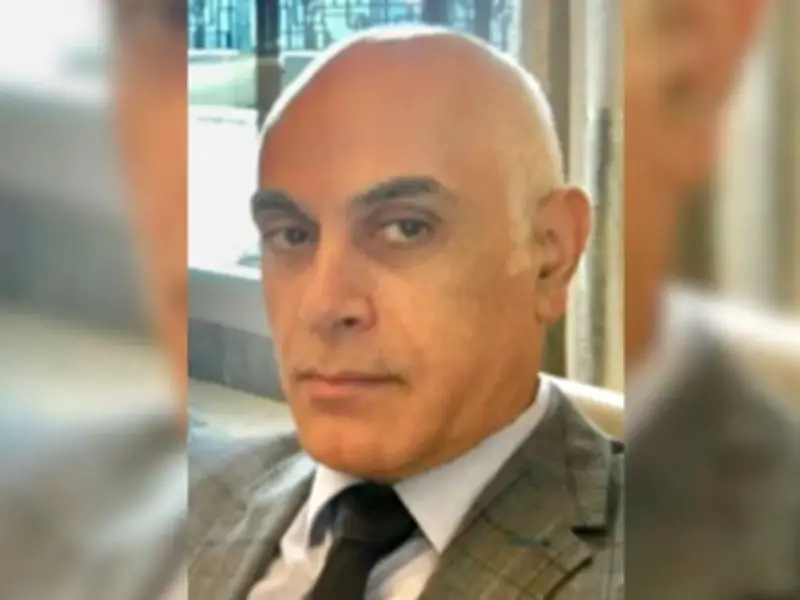
A doctor who admitted removing two women's ovaries without their consent is facing a fresh fitness-to-practise hearing after his regulator successfully mounted a High Court challenge.
Dr Ali Shokouh-Amiri was found guilty of misconduct in February 2025 by the Medical Practitioners Tribunal, which issued him with a warning but ruled that his fitness to practise was not impaired.
Allegations at Guernsey hospital
While working at the Princess Elizabeth Hospital in Guernsey, Dr Shokouh-Amiri faced allegations of behaving in an inappropriate or sexually motivated manner towards four patients, as well as accusations of dishonesty and failing to ensure a chaperone was present.

The gynaecologist admitted removing two women's ovaries without their consent — including in one instance where there was no identified medical necessity — but contested the remaining allegations.
The Medical Practitioners Tribunal found that claims Dr Shokouh-Amiri had hugged and kissed a patient were proven, yet ruled this did not constitute misconduct, while other allegations relating to inappropriate and sexually motivated behaviour were found not to have been proved.
High Court challenge
Separate proven allegations — among them the unauthorised removal of ovaries and suggesting to a patient that she join him at the gym — were deemed to amount to misconduct by the tribunal. Despite this, the panel concluded that his fitness to practise was not impaired and that there was a low risk of Dr Shokouh-Amiri causing unwarranted harm to patients.
The General Medical Council (GMC) lodged an appeal against the tribunal's ruling at the High Court in late 2025. In a ruling delivered on Friday, Mr Justice Morris sided with the GMC, determining that the tribunal had reached "wrong or unjust" conclusions regarding five separate allegations.
The judge preliminarily indicated the matter should be referred back to the Medical Practitioners Tribunal to reconsider those allegations, alongside whether Dr Shokouh-Amiri's fitness to practise was compromised.
Judgment details
Within the 70-page judgment, Mr Justice Morris observed that the tribunal's reasoning was "at times very brief and at other times makes little sense".
The judge subsequently stated: "The tribunal, at various points, made clear errors of fact, failed to consider important evidence, did not explain why it did not believe Patient F's evidence, and made statements which contradicted the evidence, and at times statements which did not make sense."
Mr Justice Morris rejected aspects of the GMC's challenge concerning how the tribunal assessed propensity in Dr Shokouh-Amiri's situation. He stated: "Even if the allegations in relation to Patient F are proved, I do not accept that they alone could have tipped the balance in relation to Patient A and Patient D. Any propensity arising from findings in relation to Patient F should not be permitted to bolster those weak, and unchallenged, cases."
A GMC spokesperson commented: "We welcome the High Court's decision to allow our appeal. The court agreed that the tribunal made errors when considering the very serious allegations against Dr Ali Shokouh-Amiri, with the judgment noting that at various points, clear errors of fact were made and the tribunal failed to consider important evidence. We will continue to challenge tribunal decisions where we believe the outcome is insufficient to protect the public."