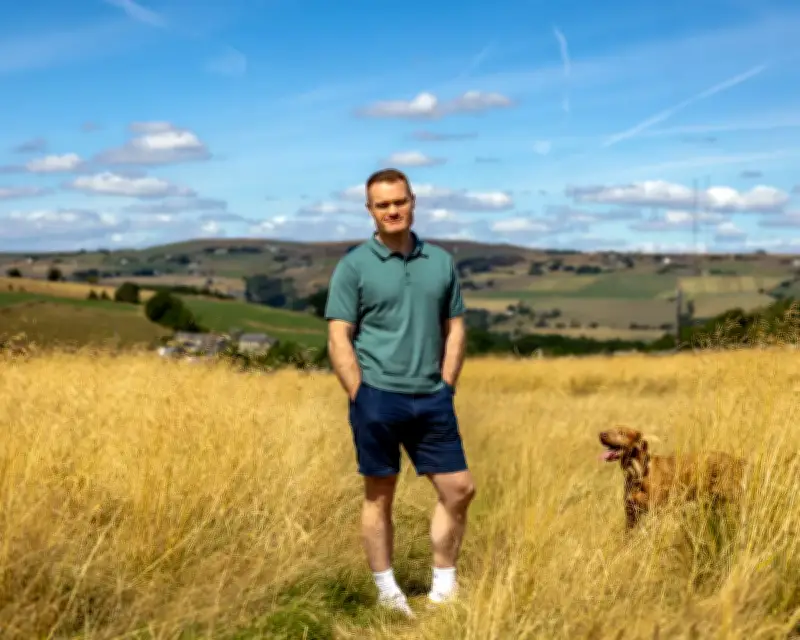
Tom Park-Paul, a healthy 34-year-old, experienced a brain haemorrhage in May 2017 that required three neurosurgeons and a risky 16-hour operation. During the surgery, the piece of his skull that had been removed was accidentally dropped on the floor, an incident he now finds hilarious.
A sudden collapse at the gym
While using a chest press at the gym, Park-Paul felt a pop, which he described as a sigh in his body. He went limp but felt no pain. His left leg was numb, and although he thought he was having a stroke, he wasn't slurring and his eyes and arms seemed fine.
He spent hours in A&E at St Thomas' hospital in London. Staff theorised he had a bruised spine and discharged him, but MRI images of his brain went missing and were never tracked down.
A partner's intervention
At a follow-up appointment, his partner, Luke, an ICU nurse, argued with the consultant. Luke demanded a scan, which revealed a massive bleed on the brain. Park-Paul was sent to specialists at King's College hospital, and blood thinners that had been prescribed might have killed him.
Tests confirmed an arteriovenous malformation (AVM) – a mass of tangled blood vessels – had ruptured near the part of the brain controlling motor function in his limbs. The consultant neurosurgeon rated it 4 out of 6 on the Spetzler-Martin grading system, typically considered too risky to remove, but agreed to operate given Park-Paul's youth.
The 16-hour operation
The surgery took place in July and lasted more than 16 hours. Afterwards, Luke was told it had gone well, but the doctor sheepishly declared: “There's something we have to declare. We're really sorry, but we dropped his skull.”
The piece of skull was cleaned and dosed with extra antibiotics to prevent infection. Park-Paul learned of the incident days later when he was woken from his induced coma, but he didn't care, finding it hilarious that his skull had been on the floor.
Recovery and gratitude
Recovery was difficult, involving relearning how to walk and months of exhaustion. He still has loss of proprioception in his left foot, meaning he can't control it without looking at it and can't drive manual cars.
Park-Paul says he's never felt sorry for himself and is just grateful. He and Luke got engaged weeks after surgery and married in 2021. The AVM turned out to be bigger and more complex than first thought, and the consultant neurosurgeon now uses his case as evidence that larger AVMs can be removed successfully.