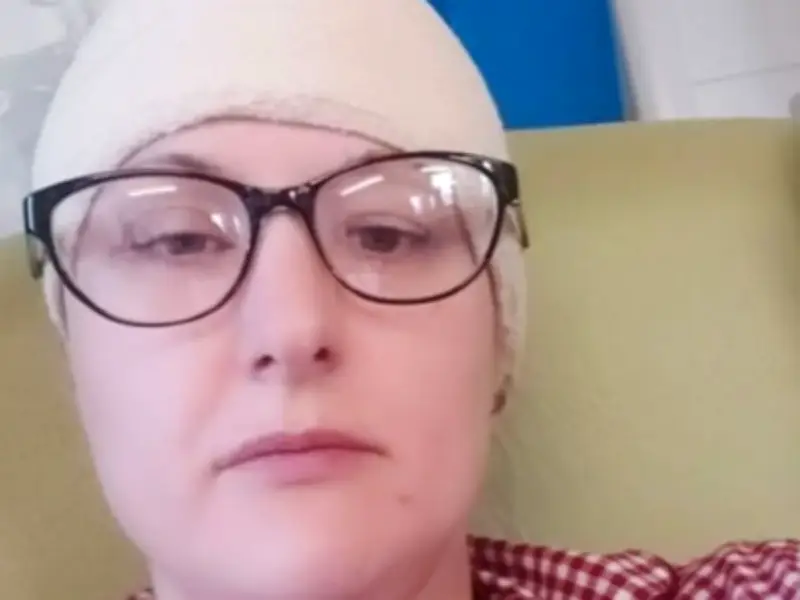
Emma Chegwyn, a 37-year-old from Aberdeen, has shared how random hearing loss led to the discovery of a "giant" brain tumour, describing herself as "lucky to be alive" after undergoing two life-saving surgeries.
In 2021, Chegwyn began struggling to hear customers while working at a restaurant, initially attributing the problem to earwax. A year later, she was diagnosed with a 4.5cm acoustic neuroma.
Diagnosis and Immediate Threat
Chegwyn was told she would die if she did not have surgery straightaway. The neurosurgeon who diagnosed her immediately banned driving, flying, and contact sports, stripping away her independence.
She recalled: "I felt confused about this strange hearing loss and really wanted to know what was causing it. I remember being unable to understand medical staff who were wearing face masks due to COVID-19 and suddenly realising that up until then, I'd been lip reading. I felt anxious, stressed and just wanted some answers."
"My balance was deteriorating. I kept stumbling and dropping things at the restaurant where I worked. If I bent down to pick up a fallen fork, I would feel sick. I had to learn how to pick up items without looking at them," she added.
Second Surgery and Its Aftermath
An acoustic neuroma is a non-cancerous tumour that grows slowly on the vestibulocochlear nerve, pressing against the hearing, balance, and facial nerves. Symptoms include hearing loss, tinnitus, dizziness, and facial issues.
Chegwyn underwent debulking surgery in October 2022 to remove as much of the tumour as possible. She had to relearn how to walk and was forced to quit her job, but by January had managed to rebuild her life.
However, in mid-2023, she received news that the tumour was growing again, and surgery was deemed too risky. She endured six weeks of radiotherapy, after which she experienced balance issues, severe dry eye, and difficulty opening her mouth wide enough to eat certain foods.
Current Challenges and Awareness Work
In February this year, a further MRI scan showed the tumour had grown to 5cm. Chegwyn said: "I was told I was lucky to be alive." She underwent a second life-saving surgery in April, but the surgeon aborted the procedure mid-operation to prevent a fatal brainstem stroke because the tumour was larger and more attached than scans had shown.
The surgery left her with nerve damage, facial palsy, and mobility and speech issues. Despite now relying on a Zimmer frame or stick to walk, Chegwyn is taking part in Brain Tumour Research's 99 Miles in November challenge to raise awareness of the disease and the need for better treatments.