
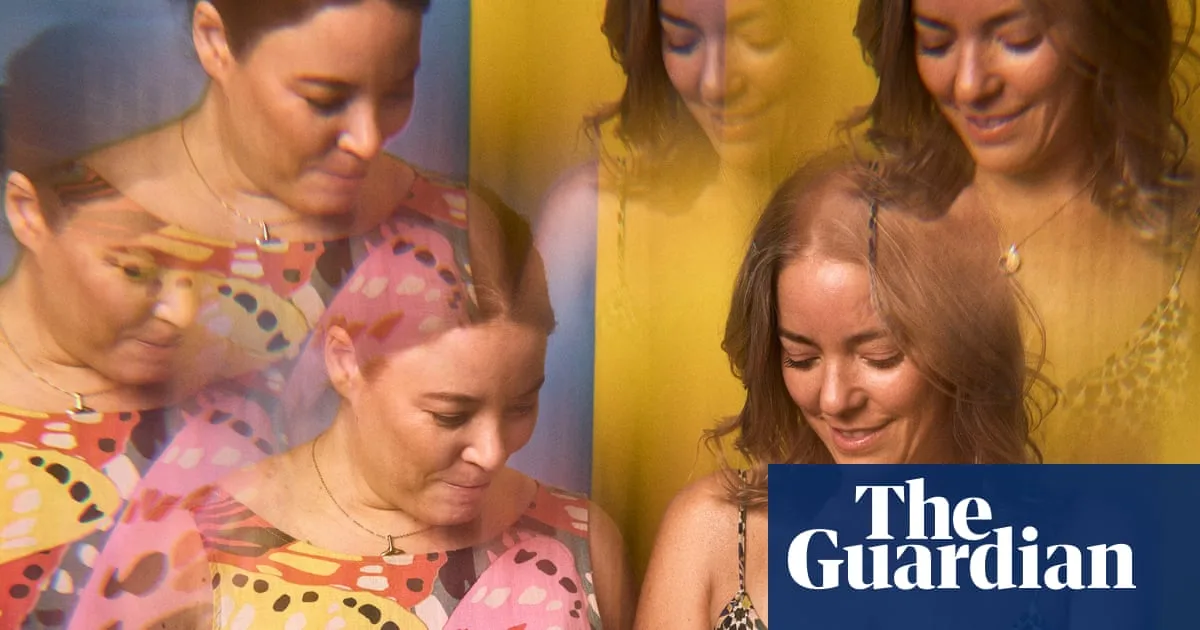
Identical twins Helen Besgrove, a marketing executive, and Kirsty Neal, a GP, have both lived with synaesthesia for as long as they can remember. For them, sounds, smells, words and even personalities come with a visual component – appearing as colours and textures in their mind's eye. 'We don't know any different,' they say, explaining that their perception of the world is inherently coloured.
The sisters' experiences are not always identical. While both associate colours with words and people, the specific shades often differ. Helen describes a glass of chardonnay as having 'swirls of custardy oil', whereas Kirsty sees the same wine as 'fuzzy or blobby'. Similarly, a close friend's personality appears 'poo brown' to Helen, but Kirsty sees it as 'yellow and blue with a brown stripe in the middle'. These differences caused frequent arguments as children, particularly during a family car trip to Queensland when the twins and their mother spent hours debating the colour of the word 'Queensland'.
It was not until the age of 19 that they discovered a name for their condition. Helen was in a radio production class at Macquarie University when she heard a description of music as 'silver' – she blurted out that it was a strong yellow. The narrator explained this was synaesthesia, prompting Helen to call her mother and sister immediately. Soon after, they were recruited by cognitive neuroscientist Anina Rich, who was studying synaesthetes and took special interest in the twins.
Although they completed their research with the university 15 years ago, the sisters continue to learn about their condition. Helen recently realised during a wine tasting that not everyone perceives certain wines as 'spiky'. Her synaesthesia also helped her excel in a blind coffee tasting competition at Nespresso, where she worked, earning a place in a global final in Switzerland. 'I just walked in and was able to differentiate straight away,' she said.
For Kirsty, synaesthesia has enhanced her memory and her work as a doctor. She and Helen were both skilled spellers from age three and could say words backwards with ease. Kirsty can visualise pages from textbooks in her mind, aided by colour-coded notes, which helps her recall medical facts during patient consultations. She also has mirror-touch synaesthesia, meaning she can feel a patient's pain or symptoms when seeing them – a unique sensitivity in her profession.




