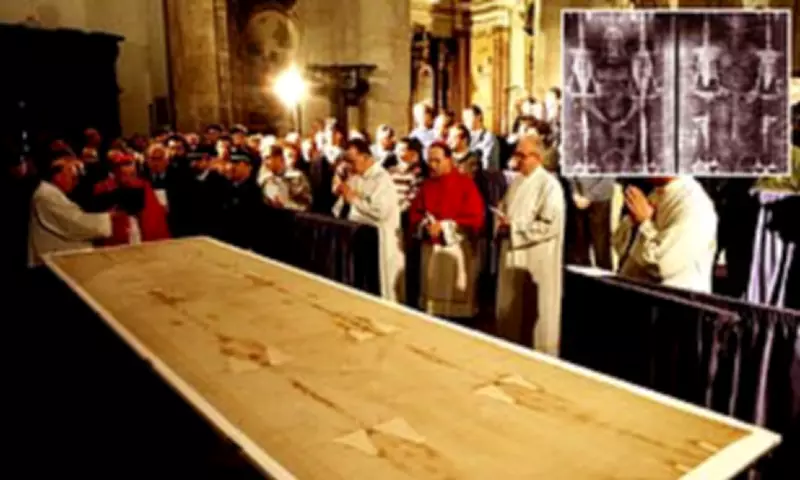
Scientific Team Challenges Sculpture Theory for Shroud of Turin
The Shroud of Turin, venerated by many as the burial cloth of Jesus Christ, has remained at the centre of intense scientific and religious controversy for over a century. Recent claims suggesting the mysterious image was formed through medieval artistic techniques have been robustly challenged by a team of specialists, reigniting the enduring debate about the relic's authenticity.
Digital Reconstruction Theory Faces Scrutiny
Last year, Brazilian 3D designer and researcher Cicero Moraes, renowned for historical facial reconstructions, declared the Shroud a 'masterpiece of Christian art.' Using digital software, Moraes compared how cloth drapes over a human body with a low, flat sculpture, concluding the image could only have been produced by contact with a sculpture—a theory some have labelled a Medieval fraud.
Now, a team of scientists has systematically debunked this hypothesis, highlighting numerous methodological flaws in Moraes' digital reconstruction. The critical issues identified include reversed left and right features, a body height inconsistent with commonly accepted estimates, reliance on a single 1931 photograph despite the availability of recent high-resolution images, and the use of generic cotton rather than the Shroud's authentic linen material.

Key Characteristics Undermine Artistic Theory
More fundamentally, the experts argue that the bas-relief theory fails to account for two defining features of the Shroud. First, the extreme superficiality of the image, measuring less than a thousandth of a millimetre in depth. Second, the multiple independent confirmations of bloodstains present on the cloth. According to the researchers, these characteristics are virtually impossible to replicate using medieval artistic techniques available during the proposed timeframe.
'Moraes' claim is not new, but this hypothesis cannot be evaluated while ignoring the Shroud's key characteristics, such as the presence of blood, the extreme superficiality of the image, and the absence of any image beneath the bloodstains,' the researchers wrote in their study published this month.
Historical Credibility and Methodological Concerns
The latest study was conducted by three specialists—Tristan Casabianca, Emanuela Marinelli, and Alessandro Piana—who have dedicated years to researching the Shroud. Beyond technical criticisms, they challenge the historical credibility of Moraes' theory, arguing that he links unrelated artworks across different eras to speculate about medieval artistic creation.
Critically, none of the cited examples depict a naked, post-crucifixion Christ shown both front and back, which represents the Shroud's most distinctive feature. The researchers noted that while the digital reconstruction could have been informative if accurate, it was plagued by methodological shortcomings.
They questioned why Moraes relied exclusively on a 1931 photograph instead of utilising newer high-resolution images, noting that multiple photographic sources would have produced a more reliable model. Additional concerns were raised regarding the failure to account for fabric thickness, density, and weave structure—factors crucial for accurate simulation.
Ongoing Carbon Dating Controversy
The debate extends beyond artistic theories to include ongoing controversies surrounding the Shroud's age. In 1988, scientists removed a 10 mm by 70 mm piece from the corner of the Shroud for carbon dating, with results indicating manufacture between 1260 and 1390 AD—placing it firmly in the Middle Ages, centuries after Jesus' crucifixion.
However, Marinelli previously told Daily Mail that 'the sample was not representative of the full cloth because it is different from one corner to another.' She and colleague Casabianca obtained raw data from the 1988 research, discovering significant variations in results between laboratories.
For instance, Zürich's estimates ranged from 595 to 733 years, Oxford's from 730 to 795 years with discrepancies up to 55 years, and Arizona's from 591 to 701 years with differences up to 59 years. While these variations still place the cloth in the Medieval period, Casabianca argues they raise serious doubts about the dating's reliability.

'The lack of precision seriously affects the reliability of the 95 percent,' suggesting it was no more than 41 percent according to their analysis. 'We can say with confidence that the 1988 radiocarbon dating process led to a failure,' stated Casabianca, an independent researcher based in France.
Broader Implications for Shroud Research
Moraes has defended his findings, insisting the project was a technical experiment examining how cloth deforms around human forms. Yet this clash underscores a larger reality in the ongoing Shroud debate: while cutting-edge digital tools may offer new insights, sweeping claims still require robust historical and scientific validation.
The February study also noted that similar bas-relief theories were examined and rejected in the early 1980s, while French scientist Paul Vignon explored cloth distortion effects as early as 1902. Given the numerous variables involved, the critics concluded that a more rigorous sensitivity analysis would be necessary to properly test the bas-relief hypothesis.
As research continues, the Shroud of Turin remains an enigmatic artifact that bridges scientific inquiry and religious devotion, with each new theory subjected to intense scrutiny from multiple disciplines.