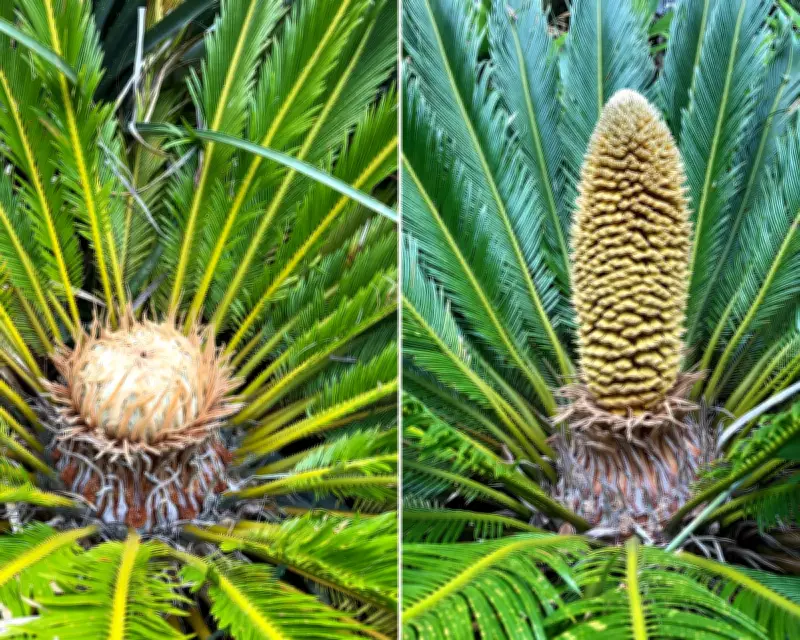
Ancient Seed Plants Heat Up for Sex to Lure Pollinating Insects
In a groundbreaking discovery, scientists have revealed that the oldest known seed plants, cycads, employ a remarkable reproductive strategy: they generate heat to attract pollinating insects. This finding, published in a recent study, sheds new light on the evolutionary history of plant reproduction and offers insights into how ancient species adapted to ensure their survival.
Cycads: Living Fossils with a Hot Secret
Cycads are often referred to as "living fossils" because they have existed for over 300 million years, predating even the dinosaurs. These ancient plants, which resemble palms or ferns, have long fascinated botanists due to their primitive characteristics and slow growth rates. However, their reproductive mechanisms have remained somewhat mysterious until now.
The new research demonstrates that during their reproductive phase, cycads produce significant amounts of heat, a phenomenon known as thermogenesis. This heat is not a byproduct of metabolic processes but is actively generated to create a warm environment that attracts specific insects, such as beetles, which act as pollinators.

The Science Behind the Heat
Thermogenesis in cycads occurs in their reproductive structures, particularly the cones. Scientists used thermal imaging and temperature sensors to monitor these plants in their natural habitats and controlled environments. They found that the cones can heat up by several degrees Celsius above the ambient temperature, creating a microclimate that is appealing to insects.
This heat generation is thought to serve multiple purposes. Firstly, it helps to volatilize aromatic compounds, releasing scents that further attract pollinators. Secondly, the warmth provides a comfortable environment for the insects, encouraging them to linger and transfer pollen between plants. This strategy is similar to that used by some modern flowering plants, but its presence in cycads suggests it is an ancient adaptation that has persisted through millions of years of evolution.
Evolutionary Implications
The discovery of thermogenesis in cycads has significant implications for our understanding of plant evolution. It indicates that the use of heat to attract pollinators is not a recent innovation but rather a primitive trait that may have been present in the earliest seed plants. This challenges previous assumptions that such complex reproductive strategies only evolved later in flowering plants.
Moreover, this finding highlights the resilience and adaptability of cycads. Despite their ancient lineage, they have developed sophisticated mechanisms to interact with their environment and ensure successful reproduction. This adaptability may explain why cycads have survived multiple mass extinction events, including the one that wiped out the dinosaurs.
Conservation and Future Research
Cycads are currently facing threats from habitat loss, climate change, and illegal trade, with many species classified as endangered. Understanding their reproductive biology, including thermogenesis, is crucial for conservation efforts. By protecting these ancient plants, we preserve not only unique species but also valuable insights into the history of life on Earth.
Future research will likely explore the genetic and biochemical pathways involved in thermogenesis in cycads. Scientists are also interested in comparing this mechanism with those in other plants to trace its evolutionary origins. Additionally, studying how climate change might affect this heat-based pollination could inform strategies to safeguard cycad populations in a warming world.
In summary, the revelation that cycads heat up for sex to attract pollinating insects adds a fascinating chapter to the story of plant evolution. It underscores the ingenuity of nature and reminds us of the hidden wonders that ancient species still hold.