
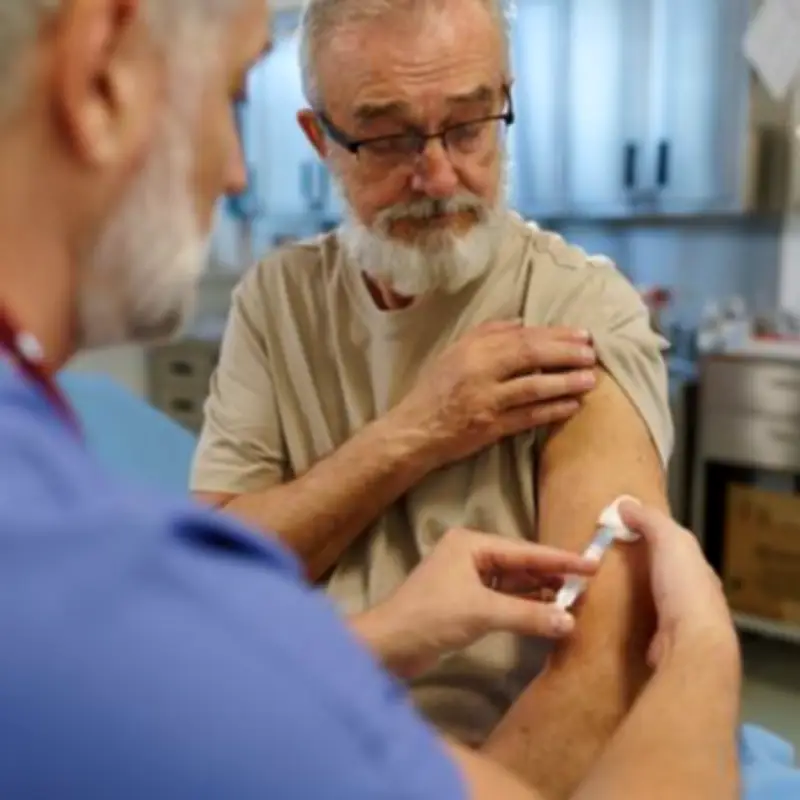
A groundbreaking cancer prevention vaccine developed by the University of Oxford in collaboration with pharmaceutical company Moderna is set to be tested this summer. The vaccine targets individuals with Lynch syndrome, a genetic condition that significantly increases the risk of developing bowel, ovarian, and other cancers.
How the vaccine works
The mRNA-4194 jab is designed to train the immune system to recognise and eliminate pre-cancerous cells before they develop into full-blown cancer. This marks Moderna's first venture into cancer prevention using its mRNA technology. Experts at Oxford believe the approach could eventually be adapted to prevent other cancers as well.
Lynch syndrome affects approximately one in 300 people in England, equating to around 175,000 individuals, yet only 5% are aware they have the condition. The syndrome is linked to a higher risk of bowel, womb, ovarian, stomach, pancreatic, kidney, and skin cancers. In England, around 1,100 bowel cancers annually are attributed to Lynch syndrome, which increases the lifetime risk of bowel cancer by about 80%.
The Intercept-Lynch trial
The new study, named Intercept-Lynch, is part of a scientific collaboration between the University of Oxford and Moderna, with backing from Cancer Research UK. In the first phase, patients will receive the jab, and researchers will analyse immune responses, determine the optimal dose, and assess safety. The second phase, expected to begin in 2027, will involve multiple centres across the UK, including Oxford.
Professor David Church, Cancer Research UK senior cancer research fellow at the University of Oxford and lead investigator of the trial, explained that people with Lynch syndrome inherit a faulty copy of a gene essential for DNA repair. This leads to an accumulation of mutations, making cells more likely to become cancerous. The vaccine aims to make these mutations visible to the immune system, stimulating it to attack abnormal cells and prevent cancer formation.
Professor Church described the mRNA jab as an "instruction manual" for the body to target pre-cancerous cells. He noted that booster doses might be necessary, but the vaccine could be "transformative" in preventing cancer in Lynch syndrome patients, including those who have already had one type of cancer.
"People with Lynch syndrome are at risk of cancers over their entire lives," Professor Church said. "It's very common, for instance, for a woman to have a first cancer of her womb, and then some years later have a bowel cancer, or vice versa. The targets we've chosen for the vaccine were selected based on their sharedness across multiple cancer types in Lynch syndrome, so we think they should provide broad protection if the vaccine works."
Regarding applicability to other cancers, Professor Church added: "In terms of proof of principle that we can train the immune system to recognise these cancer-associated alterations and enhance the immune response against them to prevent these pre-cancers or prevent the progression of pre-cancer to cancer, that proof of principle should give us insights that are generalisable."
David Berman, chief development officer at Moderna, said: "By applying mRNA technology earlier in the patient journey, we aim to harness the immune system when it can have the greatest impact. We are proud to bring this innovation to the UK, building on our long-standing collaboration with leading UK institutions to advance mRNA research and development."




