

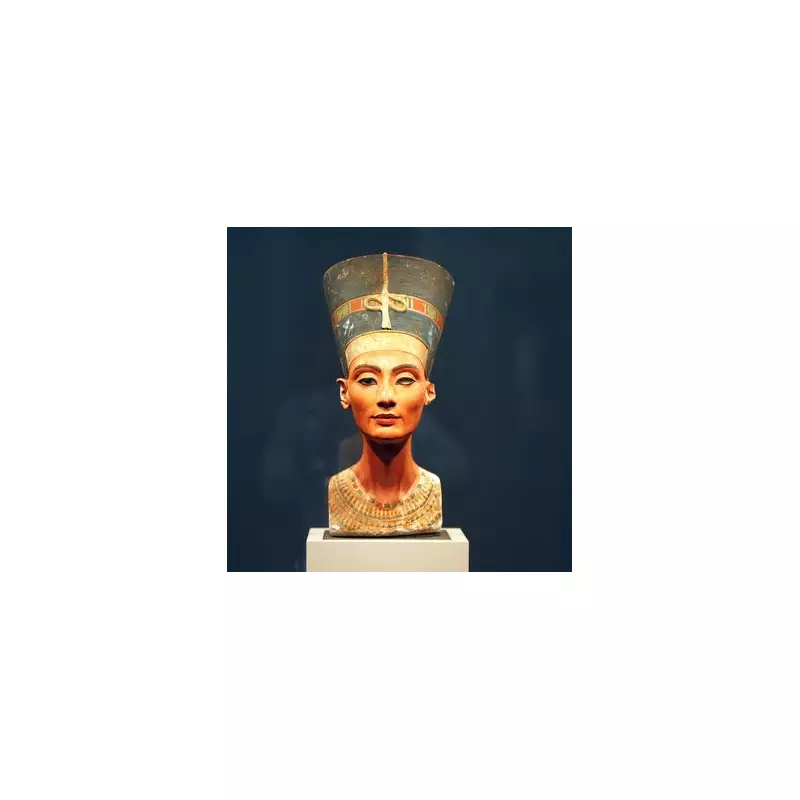
In a development that could rewrite ancient Egyptian history, legendary archaeologist Dr Zahi Hawass has announced he is closing in on the long-lost tomb of Queen Nefertiti. The famed Egyptologist and former Minister of Tourism and Antiquities made the bold prediction during the documentary about his career, 'The Man with the Hat', stating this discovery would be the perfect culmination of his professional life.
The Search for Egypt's Most Important Queen
Dr Hawass, now 78, expressed his conviction that finding Nefertiti's burial site would represent the crowning achievement of his decades-long career. "If I made this discovery, I think I would be happy to end my career with the most important discovery of the most important queen of Egypt - Queen Nefertiti," he declared with evident passion.
The potential discovery carries immense historical significance, as it could finally resolve one of Egyptology's most enduring mysteries: whether Nefertiti actually ruled as pharaoh following her husband Akhenaten's death in 1336 BC. Historical evidence has long suggested she performed acts traditionally reserved for pharaohs, including smiting enemies, yet her true role during a period of intense religious upheaval remains unknown without definitive archaeological proof.

Targeted Excavations in the Eastern Valley
Hawass and his dedicated team have been conducting meticulous excavations in the eastern section of the Valley of the Kings, strategically positioned near the burial site of Hatshepsut, another powerful female pharaoh who ruled between 1479 and 1458 BC. While acknowledging he currently lacks concrete evidence, the archaeologist revealed he has developed a strong intuition about the location.
"There is one area now that we are working in the east valley, near the tomb of Queen Hatshepsut," Hawass explained to Live Science. "I'm hoping that this could be the tomb of Queen Nefertiti ... this discovery could happen soon."
The archaeologist's confidence stems from years of systematic work in the region, where he previously discovered two tombs designated KV 65 and KV 66. He believes the ongoing excavations will help create a comprehensive map of the area, potentially pinpointing the precise location where Nefertiti's tomb may have been concealed for millennia.
Previous Near-Misses and Recent Breakthroughs
This is not the first time Hawass has believed himself close to solving the Nefertiti mystery. In 2022, he suggested that one of two mummies he uncovered in the Valley of the Kings might belong to the famous queen, though this claim was never substantiated according to art news outlet Artnet.
More recently, Hawass-led excavations achieved a significant breakthrough while examining a 4,400-year-old tomb believed to belong to a previously-unknown prince named Userefre. The team uncovered a monumental pink granite door measuring an impressive 4.5 metres high and 1.15 metres wide - the largest such structure ever discovered in Egypt.
Although resembling a functional entrance, this remarkable door does not actually open. Experts believe it served as a symbolic portal allowing the souls of the deceased to travel to the afterlife, holding profound spiritual significance for ancient Egyptians.
Dr Melanie Pitkin from Cambridge University explained the purpose behind these false doors: "Family members and priests would come to the tomb where the false door was standing, and they would recite the name of the deceased and his or her achievements and leave offerings. The ka of the deceased would then magically travel between the burial chamber and the netherworld. It would come and collect the food, drink, and offerings from the tomb to help sustain it in the afterlife."
As Hawass continues his methodical search, the archaeological community watches with bated breath. The discovery of Nefertiti's tomb would not only validate Hawass's lifetime of work but would provide unprecedented insights into one of ancient Egypt's most fascinating and powerful figures.






