The Heartbreaking Story of Punch the Monkey and Its Psychological Parallels
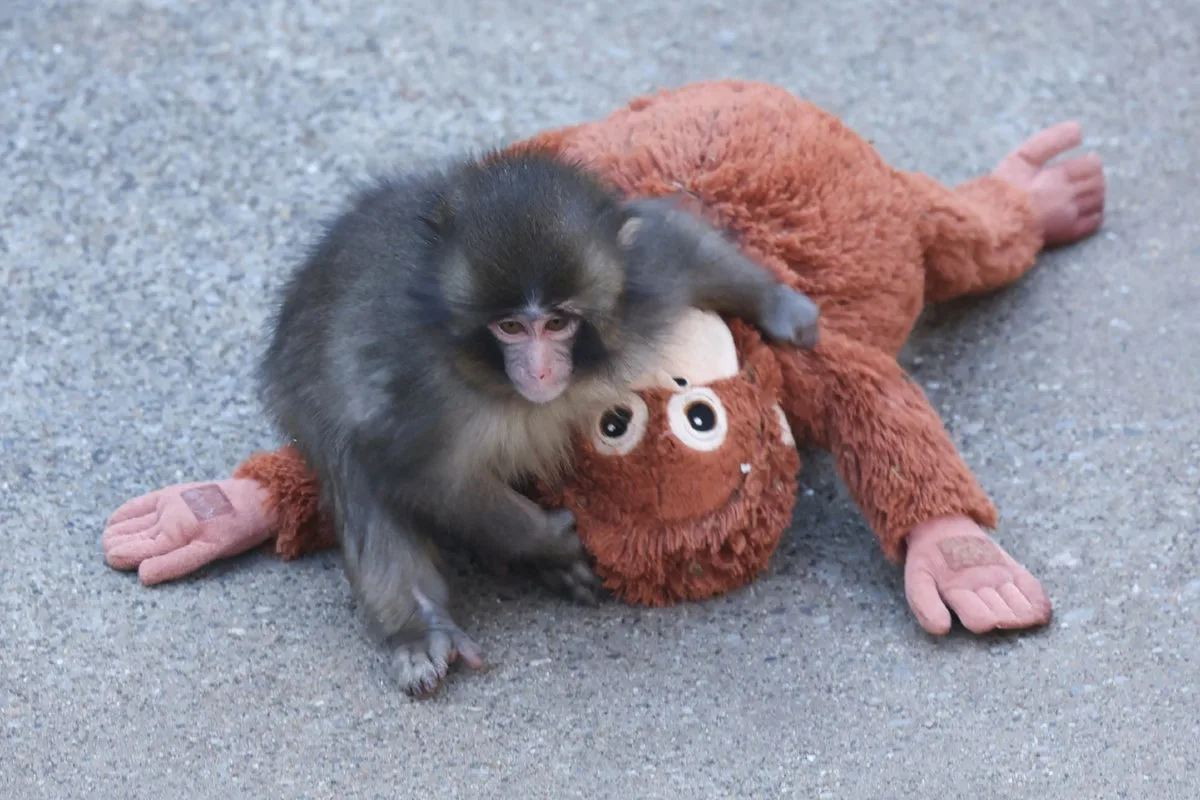
A baby macaque monkey named Punch has become an international sensation through viral videos showing his desperate search for companionship. After being abandoned by his biological mother and rejected by his troop, zookeepers at Ichikawa City Zoo in Japan provided the infant primate with an orangutan plushie as a substitute maternal figure. The footage of Punch clinging to the soft toy has resonated with millions worldwide, but this emotional narrative connects to a much deeper psychological legacy.
The Historical Context: Harry Harlow's Controversial Experiments
Punch's attachment to his inanimate companion directly recalls the famous psychology experiments conducted in the 1950s by American researcher Harry Harlow. These studies fundamentally challenged prevailing behaviorist theories and established crucial foundations for modern attachment theory. Harlow's work positioned the emotional bond between parent and child as absolutely essential for healthy development, rather than mere physical sustenance.
Harlow's experimental design was both simple and revolutionary. He separated rhesus monkeys from their mothers at birth and placed them in enclosures containing two surrogate "mother" options. The first was a wire cage shaped like a monkey that provided food and drink through a small feeder. The second was a monkey-shaped doll wrapped in soft terry towelling that offered comfort but no nutritional value.
Challenging Behaviorist Dogma
At the time, behaviorism dominated psychological thinking, suggesting that infants formed attachments primarily to those who satisfied their biological needs like hunger and thirst. According to this theory, the monkeys should have preferred the wire mother that provided nourishment. However, Harlow's results contradicted this assumption dramatically.
The infant monkeys spent significantly more time clinging to the soft terry towelling mother, demonstrating a clear preference for emotional comfort over physical sustenance. This finding completely overturned the behaviorist paradigm and established that primates, including humans, require warmth, kindness, and emotional nourishment to form healthy attachments.
Foundations of Modern Attachment Theory
Harlow's discoveries became the cornerstone of attachment theory, which now informs countless aspects of child development, psychology, and parenting practices. The theory distinguishes between secure attachment—formed when caregivers provide consistent emotional nourishment, care, and attentiveness—and insecure attachment, which results from cold, distant, abusive, or neglectful caregiving.
Just as Harlow's monkeys demonstrated, human infants require more than just physical nourishment to thrive. They need loving interaction, warmth, and emotional security to develop properly. This principle explains why children can receive adequate food and shelter yet still suffer developmental challenges when deprived of emotional connection.
Punch's Unintentional Replication
While the Japanese zoo was not conducting a formal experiment, Punch's situation inadvertently mirrors Harlow's controlled studies in a natural setting. The baby macaque, having lost his biological mother, formed a strong attachment to the soft orangutan plushie provided by zookeepers. Although there was no "wire mother" alternative offering food, Punch's behavior clearly demonstrates the primate need for comforting, soft, safe spaces.
The seven-month-old male macaque has essentially chosen emotional nourishment through his plushie companion, echoing the preferences shown by Harlow's laboratory monkeys over seventy years earlier. This natural occurrence validates the enduring relevance of Harlow's findings beyond controlled experimental conditions.
Ethical Considerations and Modern Perspectives
Contemporary views on primate rights have evolved significantly since Harlow's era. Most of the world now recognizes primates as having rights approaching human equivalence, making Harlow's experiments appear cruel and unethical by modern standards. Researchers today would not separate human infants from their mothers for such studies, and similar ethical considerations now apply to primate research.
Despite these ethical concerns, Harlow's work remains foundational to developmental psychology. The public fascination with Punch's story highlights how these scientific principles continue to resonate decades later. The viral monkey videos have inadvertently created a teachable moment about the universal need for emotional connection.
The Universal Need for Emotional Nourishment
Punch the monkey represents more than just another internet animal celebrity. His story serves as a powerful reminder that emotional nourishment is fundamental to wellbeing across species. Humans, like primates, require soft spaces, safe environments, and loving connections to thrive.
Warmth and affection prove far more crucial for healthy functioning than physical nourishment alone. This principle, first demonstrated through controversial experiments and now reflected in a viral zoo story, continues to shape our understanding of attachment, development, and what it means to provide genuine care.