

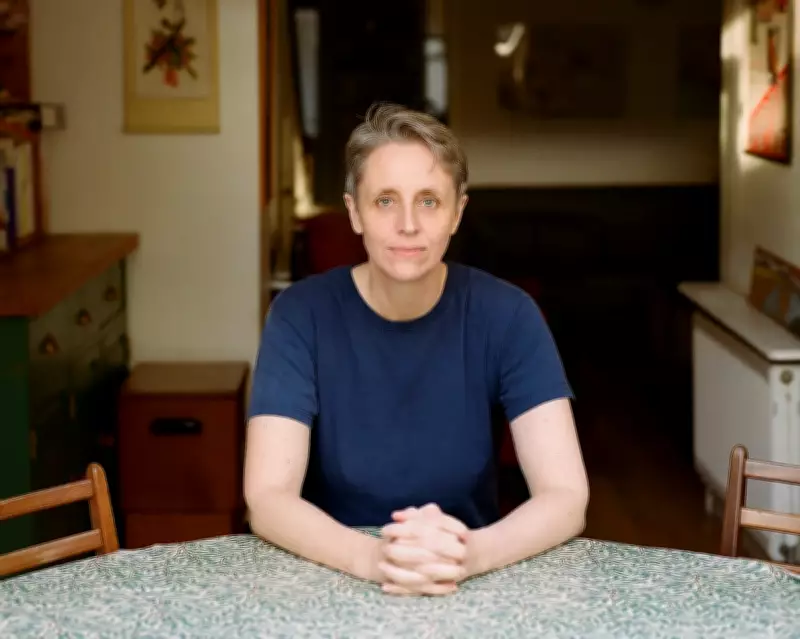
Philosopher Kathleen Stock's Measured Case Against Assisted Dying Legislation
In her new book Do Not Go Gentle, philosopher Kathleen Stock delivers a clear and cogent argument against state-sanctioned assisted dying. While her immediate focus is the End of Life Bill currently before the House of Lords, her opposition extends to the principle in general. This is a polemic, but a notably polite and reasoned one. Stock expresses hope that by the end of her work, readers will share her objection to what she terms the "institutionalisation of death."
Swimming Against the Current of Public Opinion
Stock begins from an unpopular position. Polls over recent years consistently show approximately three-quarters of Britons support assisted dying for terminally ill individuals. However, Stock has never shied away from challenging prevailing views. In 2021, she resigned from the University of Sussex following protests by some staff and students over her views expressed in Material Girls, where she argued that biological sex is binary and immutable, and should form the basis of laws protecting women rather than gender identity.
The title Do Not Go Gentle is taken from Dylan Thomas's 1951 poem urging his ailing father not to accept death without resistance. Stock clarifies that she is not an unfeeling ascetic who believes bodily suffering is somehow beneficial. Instead, her core objection centers on the practical consequences of establishing rules and protocols for managing assisted death. She argues that once such systems are in place, special pleadings and lobbying for extensions will inevitably follow almost immediately.

International Evidence of Slippery Slopes
Stock presents substantial evidence to support her concerns. Canada introduced Medical Assistance in Dying (MAID) in June 2016, initially restricting eligibility to individuals with a "reasonably foreseeable" natural death. Since then, the criteria have expanded to include those with serious and incurable but not necessarily terminal diagnoses. Legislation has also been passed—though implementation is delayed until 2027—to permit MAID for individuals whose sole underlying condition is mental illness.
In Benelux countries, it is already legal for doctors to assist the death of individuals suffering unbearably from psychological illnesses without underlying physical deficits. More alarmingly, laws that initially restricted euthanasia to adults have evolved to permit euthanasia for extremely ill infants and children in some jurisdictions.
Focusing on Typical Cases and Systemic Pressures
Stock approaches these extreme cautionary tales in her characteristically measured manner, avoiding sensationalism. She concentrates instead on more typical and imaginable scenarios, such as a person with a terminal physical diagnosis seeking assisted suicide. While this might initially appear an obvious good, Stock contends that if patients had automatic access to expert palliative care and effective pain relief, they might not feel compelled to seek an artificial death.
She highlights that hospice treatment in Britain is patchy, expensive, and relies on an insecure combination of charitable donations and NHS funding. This raises a critical question: can we be certain that assisted dying is not being proposed as a means to relieve the state of additional financial burdens?
Broader Societal Implications and Vulnerabilities
This analysis can be extended considerably. Evidence from Canada indicates that disabled individuals who are not terminally ill are now seeking death because necessary services for maintaining a decent life at home are unavailable. Furthermore, there are scenarios where family members might pressure elderly relatives to end their lives early to avoid care home costs or hasten inheritance distributions.
While this might sound like alarmism, Stock reminds readers of the numerous annual court cases involving mortgage, pension, and benefit fraud. People are not always good or kind, and she urges society not to endorse a system based on muddled thinking that places vulnerable individuals—a category that will eventually include most of us—at risk of coercion.
Do Not Go Gentle by Kathleen Stock is published by The Bridge Street Press (£22).






