

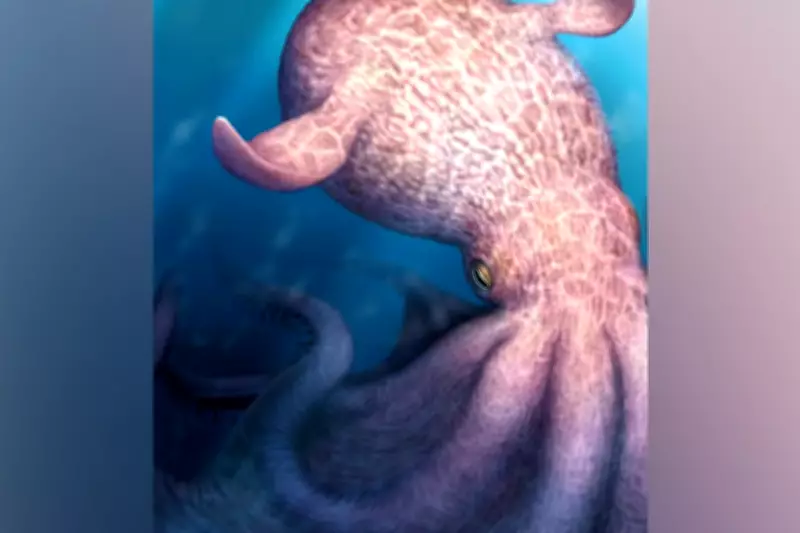
New fossil discoveries suggest that a kraken-like octopus the size of a lorry prowled Earth's oceans during the age of dinosaurs. Paleontologists have long believed that sharks and giant marine reptiles dominated Cretaceous seas, including 11-metre-long mosasaurs and 12-metre-long plesiosaurs. However, recent findings indicate that early octopuses could have been equally formidable, with one specimen potentially reaching 19 metres in length—comparable to a lorry or two double-decker buses.
Digital Fossil Mining Reveals Giant Jaws
Researchers from Hokkaido University employed a novel technique called "digital fossil mining" to re-examine 15 large fossil jaws previously attributed to early octopus relatives. This method involves grinding away ultra-thin layers from the fossil-bearing matrix, capturing high-resolution photos at each stage, and repeating the process thousands of times to generate a detailed 3D, full-colour model.
Applying this technique to late Cretaceous sediments from Hokkaido Island in northern Japan, one jaw was found to exceed that of a living giant squid, which can grow up to 12 metres. The study, published in Science, identified all fossils as belonging to two extinct octopus species: Nanaimoteuthis jeletzkyi and N. haggarti. The latter may have measured between 7 and 19 metres long, making it one of the largest invertebrates ever described.

Challenges in Sizing Soft-Bodied Creatures
Without complete specimens, confirming the size of these animals is challenging. Squids and octopuses have soft bodies that do not preserve well, leaving a sparse fossil record compared to other creatures. Often, only their chitinous beaks remain as evidence of their existence. Modern octopuses are renowned for their intelligence, demonstrating advanced problem-solving and learning abilities, and fossil evidence suggests early cephalopods possessed similar traits.
Yasuhiro Iba from Hokkaido University proposed that early octopuses were "huge, intelligent" carnivores, using their long tentacles to capture bony fish and sizable molluscs before crushing them with powerful beaks. Paleontologists noted extensive wear on the jaws, indicating these creatures crunched on hard shells and bones. Interestingly, some beaks showed more degradation on one side, leading Shin Ikegami to suggest this could represent the cephalopod equivalent of handedness, similar to humans being left- or right-handed. "This laterality is related to the complexity of the brain," Ikegami added.






