

Groundbreaking Fossil Discovery Reshapes Evolutionary Timeline
Scientists have made a revolutionary discovery in China that fundamentally alters our understanding of when complex animal life first emerged on Earth. The finding pushes back the timeline for sophisticated three-dimensional organisms by millions of years, challenging long-held assumptions about evolutionary development.
Unprecedented Fossil Collection Reveals Early Complexity
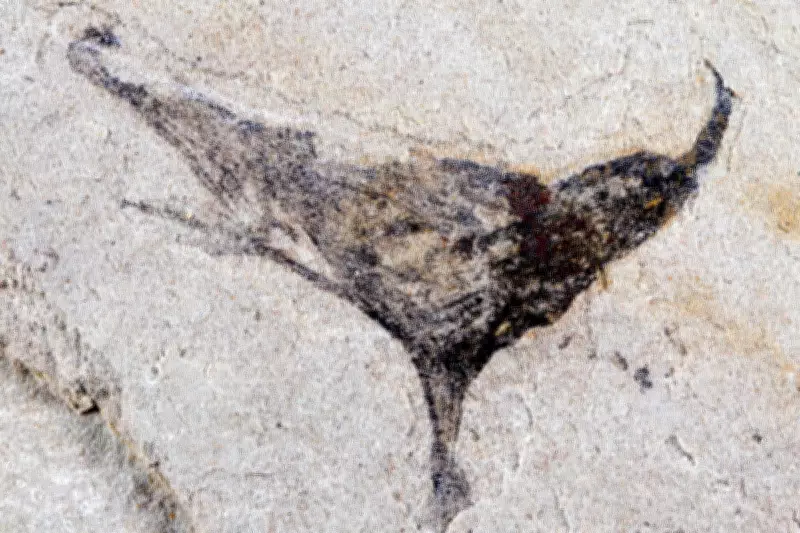
More than 700 remarkably preserved fossils unearthed in southwestern Yunnan province provide an extraordinary window into life approximately 539 million years ago, toward the conclusion of the Ediacaran period. This era was previously characterized by simple, two-dimensional organisms that existed without vertical movement in ancient oceans.
The newly discovered fossils, detailed in a study published in the journal Science, reveal creatures exhibiting sophisticated three-dimensional lifestyles, including the ability to navigate through water and engage in feeding behaviors. These traits were previously believed to have emerged at least four million years later during the Cambrian period, famous for its "explosion" of complex animal life.

Bridging the Evolutionary Gap
"This represents the first genuine window into how the modern animal-dominated biosphere formed and developed through this peculiar Ediacaran transitional phase," explained co-author and paleontologist Frankie Dunn of Oxford University's Museum of Natural History. "We witness a transformation from a two-dimensional world to one where animals have diversified remarkably quickly in geological terms."
The fossil site, located near a United Nations Chengjiang world natural heritage site along a roadside exposure, offers researchers the unique opportunity to "literally walk through geological time" according to Dunn. The location provides a crucial "snapshot" where evolutionary forces converged, containing both bizarre examples of earlier life forms that eventually disappeared and early precursors to modern animals.
Symmetry and Evolutionary Significance
A particularly significant aspect of the discovery involves the symmetrical body structures found in many fossils. Nearly all modern animal life exhibits bilateral symmetry with similar features on left and right sides, along with distinct heads and digestive systems. Before this discovery, scientists had only observed traces of this body type in fossil tracks without finding the actual organisms.
"Now we understand what created those tracks because we have the actual fossils for the first time," stated study co-author Ross Anderson, also from Oxford's Museum of Natural History.
Resolving Scientific Debates
The discovery helps settle the long-standing "rocks versus clocks" debate in paleontology. Genetic analysis had previously suggested that humans and starfish shared their earliest common ancestor during the Ediacaran period, but fossil evidence was lacking to confirm this timeline.
"What our new fossil site demonstrates is that perhaps the rocks and the clocks are in closer agreement than we previously believed," Dunn noted.
Emily Mitchell, a paleontologist at the University of Cambridge who was not involved in the research, commented that the study "makes a tremendous amount of sense because we knew there must have been a transitional stage between Ediacaran animals and Cambrian fauna, but until now we lacked concrete evidence."
New Questions and Theories Emerge
While some scientists have questioned whether there is sufficient evidence to definitively classify these as complex animal fossils, most experts contacted by The Associated Press agreed with the researchers' conclusions.
Now that scientists have established when this evolutionary explosion occurred, they are turning their attention to understanding how and why it happened. "I'm particularly interested in disentangling the feedback mechanisms between Earth and life, or between different life forms," Dunn explained. "Once you have Ediacaran organisms on the sea floor, does this inevitably lead to something resembling a Cambrian explosion? These are the fascinating questions we can now explore."

Broader Implications for Evolutionary Understanding
Life on Earth originated approximately 3 billion years ago, but required another 2.4 billion years before complex animals developed. According to Dunn, once they appeared, these organisms multiplied, diversified, and rapidly dominated their environments.
University of California at Berkeley paleontologist Charles Marshall, who was not involved in the research, suggested this rapid development likely occurred because Earth needed to accumulate sufficient oxygen levels while evolution implemented necessary genetic changes. "The Cambrian explosion appeared sudden because of the already rich developmental system that was in place," Marshall observed.
Duncan Murdock, curator of Oxford's museum where many study authors work, emphasized the transformative nature of this evolutionary leap: "What fundamentally changed across this period is how animals on the planet interacted with each other. Once animals appeared and began consuming one another while churning up sediment, they permanently altered the planet. The world we inhabit today is fundamentally built upon foundations established during the Ediacaran and Cambrian periods."





