

Dinosaur Skin Fossil Discovery Offers Unprecedented Cellular-Level Insight
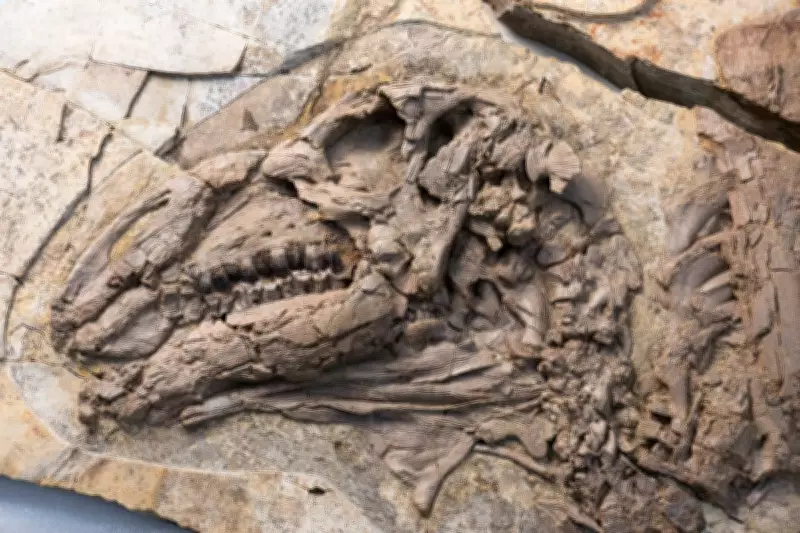
A remarkably preserved fossil unearthed in China has provided scientists with an extraordinary glimpse into the true appearance of dinosaur skin, revealing details at a cellular level that were previously unimaginable. The newly identified species, Haolong dongi, an iguanodontian dinosaur, dates back approximately 125 million years and features extensive areas of skin preservation alongside distinctive spikes never before observed in any dinosaur species.
Unparalleled Preservation of Skin and Spikes
Extensive areas of skin have survived on the 125-million-year-old fossil, with the microscopic tissue structure still clearly visible, offering unparalleled insight into dinosaur biology. Nicknamed the “spiny dragon,” this juvenile dinosaur was protected by large overlapping scales along its tail and was covered in spikes of varying sizes across its body. These structures had never been documented in any dinosaur species prior to this discovery.
Using advanced imaging techniques and histological analysis, researchers found that the spikes were cornified, meaning they were made of hardened keratin and preserved down to the level of individual keratinocyte nuclei. This level of preservation is rare and provides a unique window into the biological makeup of these ancient creatures.

Scientific Significance and Evolutionary Insights
“Finding skin preserved at the cellular level in a dinosaur is extraordinary,” said Pascal Godefroit, senior author of the study and a palaeontologist at the Institute of Natural Sciences. “It gives us a window into the biology of these animals at a level that we never thought possible.” The researchers believe the spikes may have served multiple functions, such as acting as a deterrent to predators, making Haolong dongi more difficult to swallow for smaller meat-eating dinosaurs that shared its environment. They may also have played a role in regulating body temperature or in sensory perception.
“This discovery shows that even well-studied groups like iguanodontian dinosaurs can still surprise us,” says Huang Jiandong, director of the research department at the Anhui Geological Museum and lead author of the paper. “The complexity of dinosaur skin is far greater than we imagined.” The species was named in honour of Dong Zhiming, a pioneering figure in Chinese dinosaur research.
Broader Implications for Paleontology
Scientists say Haolong dongi occupies a basal position in the evolutionary line that later led to hadrosaurs, the well-known duck-billed dinosaurs. Its unusual skin structures highlight the evolutionary experimentation seen among dinosaurs and underline the importance of continued fossil exploration. “Two centuries after the naming of Iguanodon, we are still rewriting the story of these iconic herbivores,” says Wu Wenhao, a co-author from Jilin University who first noticed the unusual structures in the fossil. “This fossil reminds us that nature’s experiments often leave behind spectacular traces.”
The study, which has been published in the journal Nature Ecology & Evolution, marks a significant milestone in paleontology, demonstrating that even after 200 years of research, new discoveries can fundamentally alter our understanding of dinosaur biology and evolution. This finding not only sheds light on the appearance and adaptations of Haolong dongi but also opens up new avenues for studying skin preservation and evolutionary traits in other fossilized species.






