

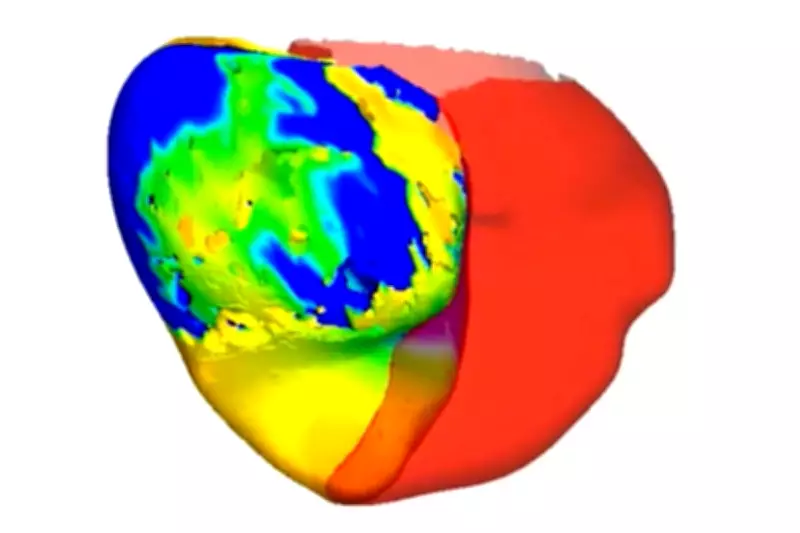
Digital Twin Technology Revolutionises Heart Treatment
In a groundbreaking medical advancement, scientists at Johns Hopkins University are creating highly accurate virtual replicas of patients' hearts. These digital "twins" allow doctors to test and refine treatments for life-threatening irregular heartbeats before performing procedures on the actual organ.
Clinical Trial Shows Promising Results
The first clinical trial of this innovative approach focused on ventricular tachycardia, a notoriously difficult-to-treat arrhythmia that causes sudden cardiac arrest and accounts for approximately 300,000 deaths annually in the United States. The Food and Drug Administration authorised the use of digital twin technology to guide treatment for ten patients in this initial study.
Results published in the New England Journal of Medicine demonstrated significant improvements over conventional treatment methods. More than a year after the procedures, eight patients experienced no arrhythmias, while two had only a single brief episode during their healing period. This represents a success rate exceeding the typical 60% achieved with standard ablation treatments.

How Digital Twin Hearts Work
Dr. Natalia Trayanova, a biomedical engineer at Johns Hopkins leading this pioneering research, explained that true digital twins differ from conventional 3D models by predicting how a real organ will respond to various treatments. Her laboratory develops colourful interactive models using advanced MRI scans and comprehensive patient data.
"We treat the twin before we treat the patient," Trayanova emphasised. "This allows us to ask crucial questions: Did the treatment work? And if it did, are there new complications that might require additional or different care?"
Addressing Ventricular Tachycardia
Ventricular tachycardia occurs when the heart's electrical system short-circuits in the ventricles, causing a dangerously fast heartbeat that prevents proper blood circulation. Trayanova described the condition visually: "You see this heart that is basically quivering."
While medication can provide some relief, the primary treatment involves ablation procedures where doctors thread catheters to burn misfiring heart tissue. However, this approach has traditionally involved significant trial-and-error, often requiring patients to undergo lengthy anesthesia while doctors determine optimal treatment targets.
Precision Targeting Through Virtual Simulation
The digital twin technology creates detailed visualisations of patients' ventricles, with colours swirling across computer screens to illustrate how electrical waves move through healthy tissue before becoming trapped in damaged areas. Trayanova compares this circular motion to "the swirl of a hurricane."
"It allows me to recreate the functioning of the patient's organ and then predict what is the best way to ablate," she explained. The technology identifies dysfunctional regions where electrical waves repeatedly encounter obstacles, enabling virtual ablation testing to determine optimal treatment approaches.
Improved Treatment Outcomes
For the clinical trial participants, Trayanova's team created customised ablation targets that cardiologists transferred to their surgical mapping systems. This precision targeting allowed doctors to focus specifically on problematic areas rather than searching broadly during procedures.
Dr. Jonathan Chrispin, a Hopkins cardiologist and the study's lead author, noted that all but two patients were able to discontinue their anti-arrhythmia medications following treatment. More importantly, he highlighted how targeted ablation could potentially make procedures "shorter, safer, and more effective" by minimising tissue damage.
Industry Recognition and Future Applications
Dr. Jeffrey Goldberger, a heart specialist at the University of Miami who experimented with earlier iterations of this technology fifteen years ago, praised the new findings: "This is what we envisioned." The research represents how medical professionals are increasingly exploring technologies originally developed for aerospace and other industries for healthcare applications.

The Johns Hopkins team now plans to expand their research through larger multi-hospital studies and has initiated a new trial applying digital twin technology to treat atrial fibrillation, a more common type of irregular heartbeat. Meanwhile, other researchers are investigating similar approaches for cancer care, suggesting broad potential applications for digital twin technology across medical specialties.
This research received support from the Howard Hughes Medical Institute's Department of Science Education and the Robert Wood Johnson Foundation, though the study authors maintain full responsibility for their findings and conclusions.





