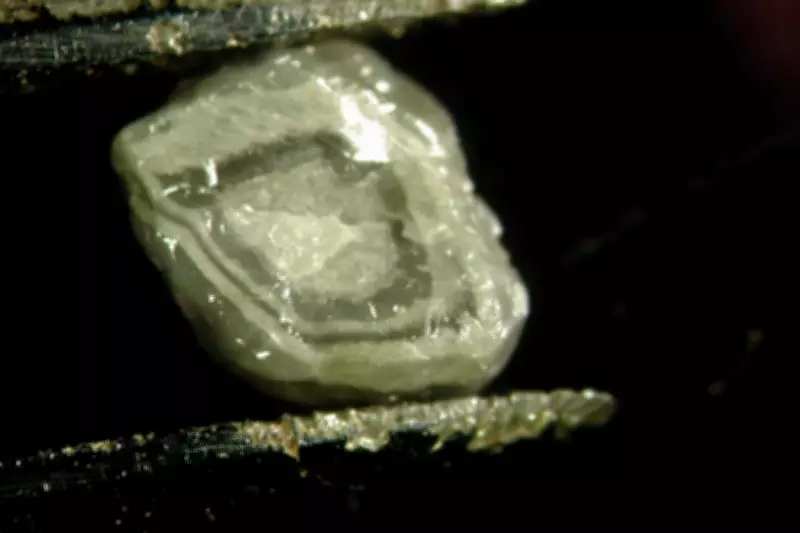
Chinese Research Team Achieves Breakthrough with Synthetic Hexagonal Diamond
In a landmark scientific achievement, researchers from China have created the first-ever bulk sample of hexagonal diamond in laboratory conditions. This newly synthesized material exhibits a hardness that slightly exceeds that of naturally occurring cubic diamonds, potentially opening doors to advanced technological applications.
The Elusive Nature of Hexagonal Diamonds
While cubic diamonds are widely recognized as Earth's hardest natural mineral and are extensively used in jewellery, precision cutting tools, and high-performance semiconductors, hexagonal diamonds have remained largely theoretical. These rare structures have only been identified at meteorite impact sites, with their actual existence and properties long debated within scientific circles.
"As no solid experimental evidence has been provided to prove its existence, the physical properties of hexagonal diamond remain largely unexplored," the research team noted in their study published in the prestigious journal Nature.

Laboratory Synthesis Through Extreme Conditions
Scientists from China's Henan Key Laboratory of Diamond Materials and Devices employed a sophisticated method to produce their millimetre-sized, phase-pure hexagonal diamond. They began with highly oriented pyrolytic graphite (HOPG), a highly ordered form of graphite, which they placed between tungsten carbide anvils.
The researchers then applied immense pressure of approximately 20 gigapascals—equivalent to about 200,000 times atmospheric pressure—while maintaining temperatures between 1,300°C and 1,900°C. This extreme pressure applied from the top of the stacked carbon layers facilitated the transformation into pure hexagonal diamond.
Verification and Mechanical Testing
To confirm the structural integrity of their creation, the scientific team utilized X-ray diffraction techniques. This method involves bouncing X-rays off atoms to precisely map their positions, providing conclusive evidence that the sample consisted of structurally pure hexagonal diamond.
Further validation came through advanced microscopy, which clearly revealed the unique hexagonal stacking patterns of carbon atoms characteristic of this material. The researchers then proceeded to test the mechanical properties by pressing a diamond tip into the sample to measure its resistance to scratching and denting.
Superior Hardness Characteristics
The testing revealed remarkable results: the hexagonal diamond sample demonstrated a hardness of approximately 114 gigapascals. In comparison, many natural cubic diamonds typically exhibit hardness values around 110 gigapascals. This indicates that the laboratory-created hexagonal diamond possesses slightly superior hardness properties compared to its natural counterpart.
"Bulk hexagonal diamond exhibits a slightly higher hardness than cubic diamond and high thermal stability," the scientists reported in their study. "These findings resolve the long-standing controversy on the existence of hexagonal diamond as a discrete carbon phase and provide new insight into the graphite-to-diamond phase transition, paving the way for future research and practical use of HD in advanced technological applications."
Implications for Future Technological Development
This breakthrough represents more than just academic curiosity. The successful synthesis of hexagonal diamond in bulk form could revolutionize multiple industries that rely on ultra-hard materials. From advanced cutting tools and industrial applications to potential uses in next-generation semiconductors and high-performance engineering components, this discovery opens numerous possibilities for material science innovation.
The research team's achievement not only confirms the existence of hexagonal diamond as a distinct carbon phase but also establishes a reproducible method for its creation under controlled laboratory conditions. This paves the way for further exploration of this material's properties and potential applications across various technological domains.