

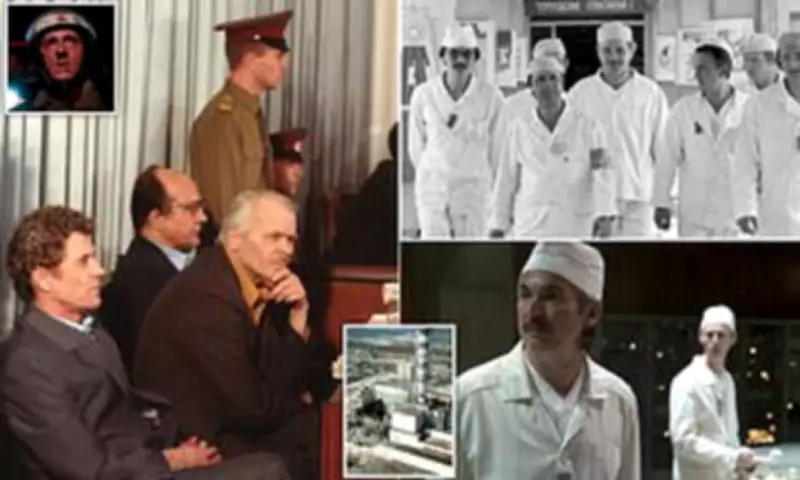
April 26 will mark four decades since the Chernobyl disaster, an event that remains etched in history as the most devastating nuclear accident ever recorded. In 1986, within the then Soviet-controlled territory of Ukraine, reactor number four at the Chernobyl nuclear power plant experienced a catastrophic explosion during a safety test that went disastrously wrong.
The Catastrophic Chain of Events
Plant engineers had intended to assess the reactor's behaviour during a simulated power blackout, unaware that the reactor was already in an extremely unstable condition. As power was reduced, turbines slowed, diminishing the water flow to the reactor. With insufficient cooling, the remaining water rapidly turned to steam, creating immense pressure that culminated in a massive explosion.
This led to the largest uncontrolled release of radioactive material into the environment from any civilian operation, contaminating nearly 50,000 square kilometres of land and affecting over 3.5 million people. The immediate aftermath saw approximately 30 fatalities, with 350,000 people evacuated from their homes. Tragically, 5,000 children and adolescents were later diagnosed with thyroid cancer, while poisonous radiation spread across numerous European nations, including significant areas of the United Kingdom.

Investigations and Lasting Impact
Official investigations determined that flawed reactor design protocols and inadequately trained personnel were responsible for the explosion, which violently ejected the reactor's 1,000-ton steel lid—equivalent to the weight of three Boeing 747 aircraft. The disaster's legacy was powerfully dramatised in the 2019 HBO and Sky mini-series 'Chernobyl', which meticulously documented the errors leading to the explosion and the subsequent cleanup efforts.
From scientists and engineers to politicians and employees, ten key individuals played pivotal roles in both the tragedy and its aftermath. Their stories continue to intrigue and haunt public consciousness decades later.
1. Anatoly Dyatlov: The Deputy Chief Engineer
As deputy chief engineer, Anatoly Dyatlov supervised the fateful test at reactor number four. He ordered power reduction to 200 MW, well below the 700 MW specified in the test plan, causing the reactor to stall unexpectedly. Authorities placed majority blame on him for violating basic safety protocols.
Described as bullying subordinates into taking unnecessary risks to complete a Moscow-ordered experiment, Dyatlov was convicted of gross safety regulation violations and sentenced to ten years in a Soviet labour camp. Released in 1990 under a general amnesty, he spent his remaining years attempting to clear his name, arguing that operators were scapegoated for designers of an inherently unstable reactor. Despite declining health from radiation exposure, he remained unrepentant until his death in 1995.
2. Viktor Bryukhanov: The Plant Director
Plant director Viktor Bryukhanov faced similar charges, receiving a ten-year sentence, though he was released after five years due to health concerns. He accepted professional responsibility but rejected criminal liability, attributing the explosion to technical flaws designed in Moscow and bureaucratic failures.
Bryukhanov waited three and a half hours after the initial explosions to alert authorities, only reporting roof fires while concealing the disaster's full extent. He lived in relative obscurity after prison, working in Ukraine's Economic Development and Trade Ministry before retiring in 2015. He passed away in 2021 at age 85, having suffered multiple strokes and Parkinson's disease.
3. Leonid Toptunov: The Senior Reactor Controller
Young engineer Leonid Toptunov was on duty during the explosion night, suffering severe radiation burns. He succumbed to acute radiation syndrome within weeks, dying on May 14, 1986, at just 25 years old. His family was informed that his death prevented prosecution.
In 2008, he was posthumously awarded Ukraine's 3rd degree Order for Courage. Colleagues described his dramatic physical transformation after the accident, with skin turning white and later developing radiation burns that proved fatal.

4. Yuri A. Laushkin: Senior Engineer and Inspector
Yuri A. Laushkin, a senior engineer and inspector at reactor number four, received a two-year labour camp sentence for negligence and unfaithful duty execution, despite pleading not guilty. According to reports, he had identified dangerous reactor problems during a 1983 inspection, predicting a serious incident would occur. He reportedly died in prison.
5. Vasily Ignatenko: The Firefighter
Twenty-five-year-old firefighter Vasily Ignatenko was among the first responders, attempting to extinguish graphite fires on the reactor roof where he received a lethal radiation dose. He died less than three weeks later alongside 27 fellow firefighters, though their efforts prevented the crisis from worsening.
His wife Lyudmila revealed that radiation sickness made proper burial impossible, so he was interred barefoot under concrete and zinc layers to protect the public from his still-radioactive body.
6. Nikolai M. Fomin: Former Chief Engineer
Chief engineer Nikolai Fomin was convicted alongside Dyatlov and Bryukhanov, receiving a ten-year labour camp sentence for gross safety violations creating conditions for explosion. His trial was delayed due to radiation sickness.
After accepting professional but denying criminal responsibility, Fomin was released early following a nervous breakdown and suicide attempt. His ultimate fate remains unclear, with many speculating he succumbed to radiation-related illness.
7. Boris V. Rogozhkin: Shift Director
Shift chief Boris Rogozhkin received a five-year labour camp sentence for safety rule violations, plus a concurrent two-year term for negligence, despite pleading not guilty.
8. Alexander P. Kovalenko: Chief of Reactor No. 4
Reactor superintendent Alexander Kovalenko was sentenced to three years in a labour camp for safety regulation violations, having pleaded not guilty at trial.
9. Boris Shcherbina: Deputy Chairman
Soviet politician Boris Shcherbina oversaw the government's disaster response, arriving 18 hours post-explosion to find local ministers avoiding responsibility. Initially underestimating the crisis and refusing protective gear, he later played crucial roles in evacuation and containment.
He delayed evacuations until radiation reached dangerous levels, but eventually organised the relocation of thousands. Shcherbina passed away in 1990, his legacy permanently shaped by his Chernobyl actions.
10. Maria Protsenko: Evacuation Leader
Pripyat's chief architect Maria Protsenko urgently advocated for immediate evacuation on the disaster night. When ordered to evacuate, she meticulously planned the escape of all 49,360 residents, coordinating buses and ensuring everyone's safety before being the last person to leave.
The entire town was evacuated within 36 hours, with an additional 67,000 people relocated from contaminated areas in subsequent months. Protsenko survived and lived in Ukraine until 2022, when she fled to Germany following Russia's invasion.
Forty years later, the Chernobyl disaster continues to serve as a sobering reminder of nuclear energy's risks and the human costs of technological failure. The fates of these ten individuals underscore the complex interplay of responsibility, tragedy, and resilience that defines this historic catastrophe.





