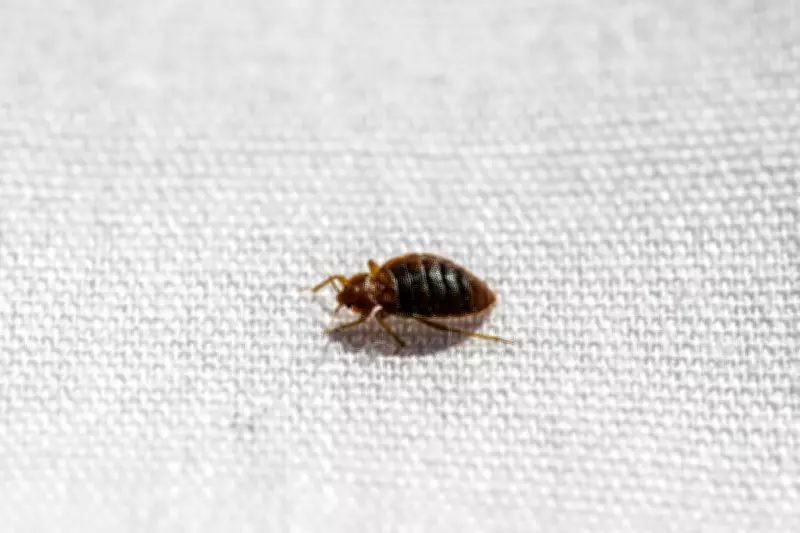
Accidental Lab Discovery Uncovers Bed Bugs' Deep-Seated Fear of Water
A remarkable laboratory mishap has led scientists to a groundbreaking discovery: bed bugs possess a profound and previously unknown aversion to water and moisture. This unexpected finding, detailed in a new study published in the Journal of Ethology, could pave the way for innovative strategies to combat the global resurgence of these notoriously difficult-to-eradicate pests.
The Global Bed Bug Resurgence and the Search for Solutions
Over the past two decades, bed bug populations have surged worldwide, largely due to the insects developing significant resistance to conventional chemical pesticides. The common bed bug, Cimex lectularius, is a blood-feeding insect that can rapidly infest homes and prove exceptionally challenging to eliminate. This resistance crisis has driven researchers to delve deeper into bed bug behavior, seeking alternative control methods that bypass their evolved defenses.
An Unplanned Revelation in the Laboratory
The pivotal discovery occurred entirely by chance during routine lab work at the University of California, Riverside. Researchers, led by entomologist Dr. Dong Hwan Choe, were maintaining bed bug colonies in small vials. An artificial feeder filled with blood was placed atop each vial, allowing the insects to climb and feed through a thin membrane.

"The membrane holding the blood was slightly damaged, causing blood to leak and soak into a piece of paper inside the vial that the bugs use for gripping," Dr. Choe explained. "I initially thought the bed bugs would be delighted to drink the blood from the paper. Instead, I witnessed something completely unexpected: they were actively avoiding the wet areas, refusing to even walk near them."
Scientific Confirmation of Moisture Aversion
Intrigued by this observation, the scientific team conducted controlled experiments to verify the phenomenon. They dampened paper in the vials with water and found the bed bugs exhibited the same avoidance behavior. Further rigorous testing confirmed that all bed bugs—regardless of sex, age, or life stage—consistently shunned wet surfaces.
The study documented that the pests often retreated from damp areas more quickly than they approached them, frequently executing "rapid U-turns" to escape moisture. This behavioral pattern was previously undocumented in scientific literature.
Why Water Poses a Grave Threat to Bed Bugs
Researchers note that this aversion aligns perfectly with the bed bug's physical anatomy. These insects have exceptionally flat bodies and small respiratory openings called spiracles along their abdomens.
"If a bed bug makes physical contact with a body of water, it can become trapped on the surface, which blocks its spiracles and prevents breathing," Dr. Choe elaborated. "Given water's strong adhesive properties, it represents a significant danger from the bed bug's perspective. Therefore, their extreme aversion to moisture is not surprising from an evolutionary standpoint."
Implications for Pest Control and Personal Protection
This discovery holds substantial promise for developing new bed bug management techniques. While traditional chemical methods are failing, leveraging the insects' innate fear of moisture could lead to non-toxic control alternatives.
Dr. Choe points to an immediate, simple application for individuals: "If you suspect bed bugs are on your person, taking a bath will effectively solve that particular problem. Of course, addressing an infestation in a room or on bedding requires more comprehensive approaches, but this insight opens new avenues for research."
The accidental lab finding underscores how fundamental scientific inquiry, even through unexpected events, can yield powerful insights. As bed bugs continue to spread globally, this understanding of their moisture aversion may become a critical tool in the ongoing battle against these resilient household pests.