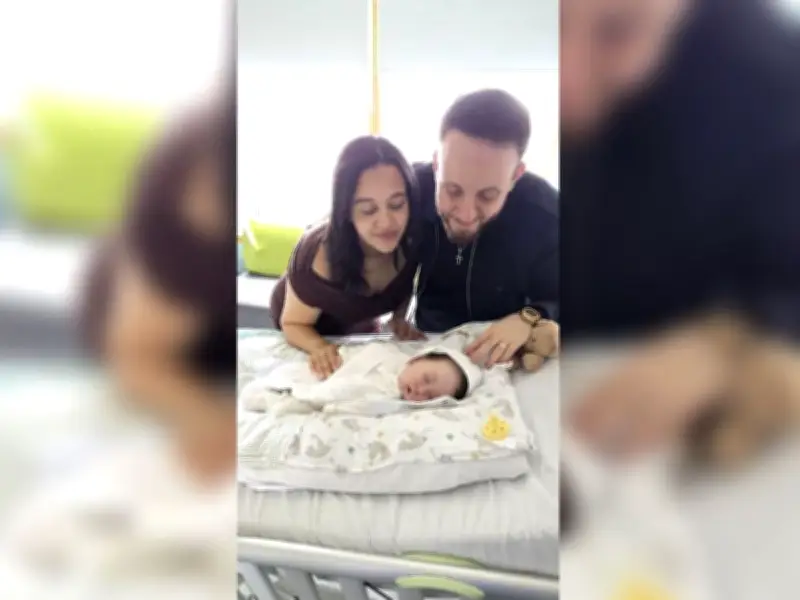
Theo Sulaiman, born on his parents' honeymoon, faces a daily struggle with a rare genetic condition that leaves him reliant on a ventilator and feeding tube. His family is now fighting for awareness and research funding.
A Traumatic Birth and Diagnosis
Charlotte, 27, and Yousif Sulaiman, 29, thought their pregnancy was normal until a 36-hour labour ended in an emergency C-section. Baby Theo was born "floppy" and struggling to breathe, rushed to the neonatal intensive care unit (NICU). Tests revealed X-linked Myotubular Myopathy (XLMTM), a severe neuromuscular disorder caused by mutations in the MTM1 gene.
Theo's grandmother, Lindsay New, 47, described the birth as "traumatic." She told the ECHO: "She was in labour for 36-hours; after 36-hours of pushing the hospital examined her and the baby was back-to-back. She was told she needed a C-section and with the pain she was in she said yes."

Daily Challenges and Medical Needs
Despite appearing smiley in photos, Theo, now three and a half months old, requires round-the-clock medical care. He is hooked to a ventilator every night, uses a suction machine because he cannot swallow, and had surgery for a feeding tube directly into his stomach. Lindsay said: "He smiles a lot, he's alert, but the photos are just showing the good, every day is a struggle. As soon as the pictures taken he's struggling with his breathing. My daughter is heart broken."
Theo has been in hospital since birth, with only a few days at home before being readmitted to Alder Hey due to frailty. His mother had to be trained in CPR, tube feeding, and managing secretions—skills she never expected to learn.
Family's Life Turned Upside Down
Charlotte, a law firm employee who had planned her life carefully, is now on a one-year leave. If Theo survives, he will need 24-hour care, forcing her to quit her job. The couple married in June last year, conceived Theo on their honeymoon, and were planning to buy a house. "Now everything's just been brought to a stop," Lindsay said.
Doctors warned the family that Theo might not survive beyond 18 months. "When Charlotte was told, she went into a daze, she couldn't take it in," Lindsay added. "The disorder is so rare there's nothing out there that can help. There's no cure and nobody has really heard about it. It's turned our world upside down."
Fundraising for Research
The family is raising funds for the Myotubular Trust, which supports research into XLMTM. Lindsay said: "Research brings hope so we're fundraising to help raise awareness and money to put towards vital research." They will participate in the Liverpool Hope Sponsored Walk on Sunday, September 13, and donations can be made online.
Symptoms of XLMTM include severe hypotonia (floppiness), respiratory insufficiency requiring ventilation, bulbar weakness affecting swallowing and feeding, and potential liver and gallbladder issues.