

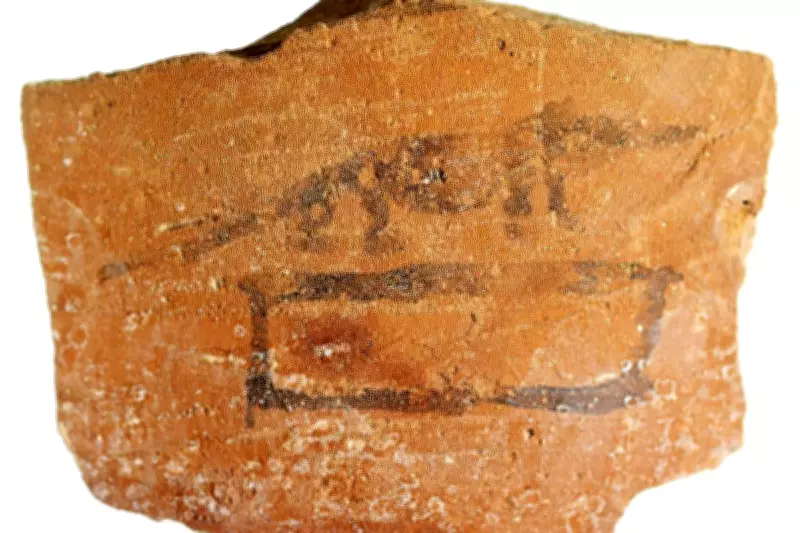
Treasure Trove of Broken Pottery Reveals Remarkable Details of Everyday Life in Ancient Egypt
An unprecedented analysis of inscriptions on over 42,000 shards of pottery from an ancient Egyptian archaeological site has provided fresh and detailed insights into the lives of ordinary people two thousand years ago. The inscriptions include fascinating notes on exercises by schoolchildren, religious texts, and even certificates for the quality of sacrificial animals, offering a vivid window into daily ancient society.
Unearthing a Vast Archive of Daily Life
More than 43,000 potsherds – ceramic fragments also known as ostraca – have been recovered from the Upper Egypt archaeological site of Athribis since 2005, with an astonishing 42,000 of them unearthed in just the past eight years alone. A majority of these fragments were used as writing material before the invention of paper, featuring scribbles that range from short, everyday notes to accounts, lists, or practice texts. This collection stands as one of the world's most extensive ancient archives of daily life, providing a rich tapestry of social history.
Athribis, located about 10 km (6.2 miles) west of the Nile, was a cult centre of the lion goddess (Ta-)Repit, consisting of a temple district, settlements, a necropolis, and limestone quarries. The site's extraordinary value became particularly apparent in 2018, when a 20-by-40-metre area was opened up west of its Temple of Ptolemy XII and extended to the southwest. Here, archaeologists discovered a large-scale deposit of over 40,000 potsherds in a 40-by-40-metre area, with 50 to 100 new ceramic fragments uncovered each day during excavations.

Diverse Inscriptions Spanning Over a Millennium
The ostraca serve as a rich source of social history spanning over a millennium, with the earliest texts being tax receipts from the 3rd century BC and the most recent ones dating from the 9th to 11th centuries AD. The majority of the ostraca were found written in Demotic script, the common administrative script during the Ptolemaic and Roman periods. A considerable number also had Greek inscriptions, highlighting the cultural interactions of the time.
"The ostraca show us an astonishing variety of everyday situations," said archaeologist Christian Leitz from the University of Tübingen. Inscriptions were found to include tax lists and short notes about everyday activities, such as exercises by schoolchildren, religious texts, and priestly certificates attesting the quality of sacrificial animals. Additionally, a significant number of the potsherds featured drawings and geometric designs, along with rare texts in hieroglyphic and Arabic script, adding layers of artistic and linguistic diversity to the find.
Insights into Ancient Astronomy and Astrology
Scientists are particularly excited to study these fragments further, as the Athribis site is well known for ancient horoscopes, featuring more than 130 such texts. Such inscriptions can be important sources for the history of ancient astronomy and astrology, offering clues about how people in antiquity understood the stars and their influence on daily life.
"This mixture is what makes the find so valuable. This everyday content gives us a direct insight into the lives of the people of Athribis and makes the ostraca an important source for a comprehensive social history of the region," Dr Leitz emphasized. The combination of mundane notes, educational exercises, and religious documents provides a holistic view of ancient Egyptian society, from economic transactions to spiritual practices.
Challenges in Digitisation and Future Prospects
While archaeologists expect to find many more ostraca in ongoing excavations, digitising the potsherds presents significant challenges. It requires specialised equipment, high computing capacity, and specially trained staff to accurately capture and catalogue the inscriptions. "In principle, it would be possible to accelerate the digitisation and cataloguing of the ostraca by using AI systems, but the effort required to train and maintain such a system, though appealing, would be high," Dr Leitz noted. This highlights the delicate balance between leveraging modern technology and managing the resources needed for such a vast archaeological project.

Overall, this treasure trove of broken pottery not only enriches our understanding of ancient Egyptian daily life but also underscores the importance of continued archaeological efforts in preserving and studying our shared human heritage. The findings from Athribis promise to keep revealing new details about the past for years to come.





