

Ancient Chinese Tools Rewrite Human Evolution Timeline
Complex prehistoric tools unearthed at an archaeological site in central China are fundamentally challenging long-standing assumptions about human development and technological advancement during the Pleistocene epoch. The remarkable discoveries at the Xigou site within the Danjiangkou Reservoir Region suggest our ancestors possessed far greater ingenuity than previously credited to populations in East Asia.
Revolutionary Findings at Xigou
Excavations have revealed compelling evidence of advanced stone tool use by early human ancestors dating back approximately 160,000 to 72,000 years ago. This period coincided with the presence of multiple large-brained hominin species in China, including Homo longi and Homo juluensis, with possible early Homo sapiens populations also inhabiting the region.
The research, published in the prestigious journal Nature Communications, demonstrates that human ancestors in this region were remarkably inventive. This directly contradicts the persistent academic view that early humans in China remained technologically conservative and less sophisticated than their African and European counterparts for extended periods.

Earliest Composite Tool Evidence in East Asia
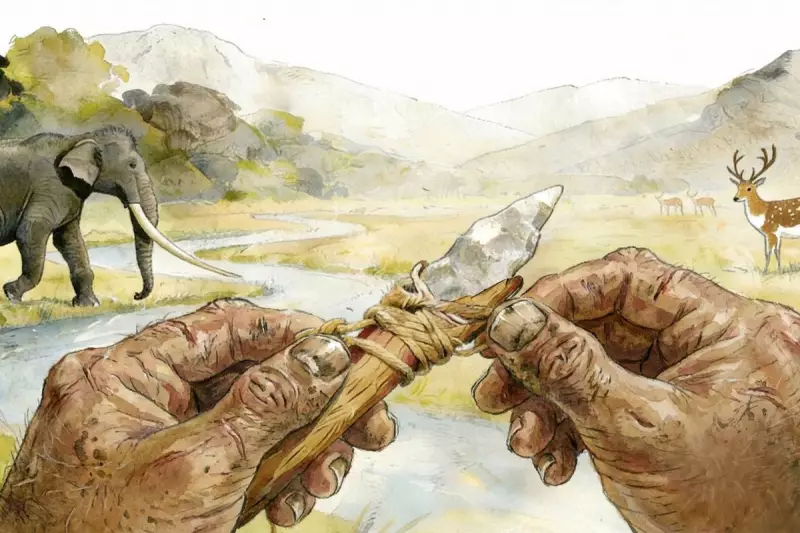
Among the most significant discoveries was a hafted stone tool, representing the earliest confirmed evidence of composite tool use in East Asia. These sophisticated implements combined stone components with handles or shafts, requiring complex planning, skilled craftsmanship, and a sophisticated understanding of how to enhance tool performance through mechanical advantages.
"Their presence indicates the Xigou hominins possessed a high degree of behavioural flexibility and ingenuity," explained study co-author Jian-Ping Yue from the Institute of Vertebrate Paleontology and Paleoanthropology. "This wasn't simple tool use—this was engineered tool creation."
Challenging Decades of Archaeological Consensus
Expedition leader Shixia Yang, another author of the groundbreaking study, highlighted how these findings overturn established academic narratives. "Researchers have argued for decades that while hominins in Africa and western Europe demonstrated significant technological advances, those in East Asia relied on simpler and more conservative stone-tool traditions," Dr. Yang noted. "The Xigou discovery completely disrupts this paradigm."
The findings also illuminate an increasing diversity of ancient human ancestor species in China over a 90,000-year period. Some of these ancestor species identified at related sites like Xujiayao and Lingjing were notably large-brained, providing biological context for the behavioural complexity reflected in the latest discoveries.
Sophisticated Technological Strategies
Detailed analyses from the site reveal that hominin inhabitants employed sophisticated stone toolmaking methods to produce small flakes and tools that were then utilized in diverse activities. According to Michael Petraglia, director of Griffith University's Australian Research Centre for Human Evolution, these technological strategies likely played crucial adaptive roles.
"The technological strategies evident in the stone tools likely played a crucial role in helping hominin populations adapt to the fluctuating environments that characterised the 90,000-year period in Eastern Asia," Dr. Petraglia emphasized.
Richer Technological Landscape Revealed
The study suggests these early human populations possessed cognitive and technical abilities comparable to their contemporaries in Africa and Europe. "Emerging evidence from Xigou and other sites shows early technologies in China included prepared-core methods, innovative retouched tools, and even large cutting tools," Dr. Yang added. "This points to a richer and more complex technological landscape than previously recognised across the region."

These discoveries fundamentally reshape our understanding of human cognitive evolution, demonstrating that technological sophistication emerged independently across multiple regions rather than radiating from a single geographic origin. The Xigou findings stand as testament to the innovative capabilities of our ancient ancestors, whose legacy continues to surprise and inform modern science.





