

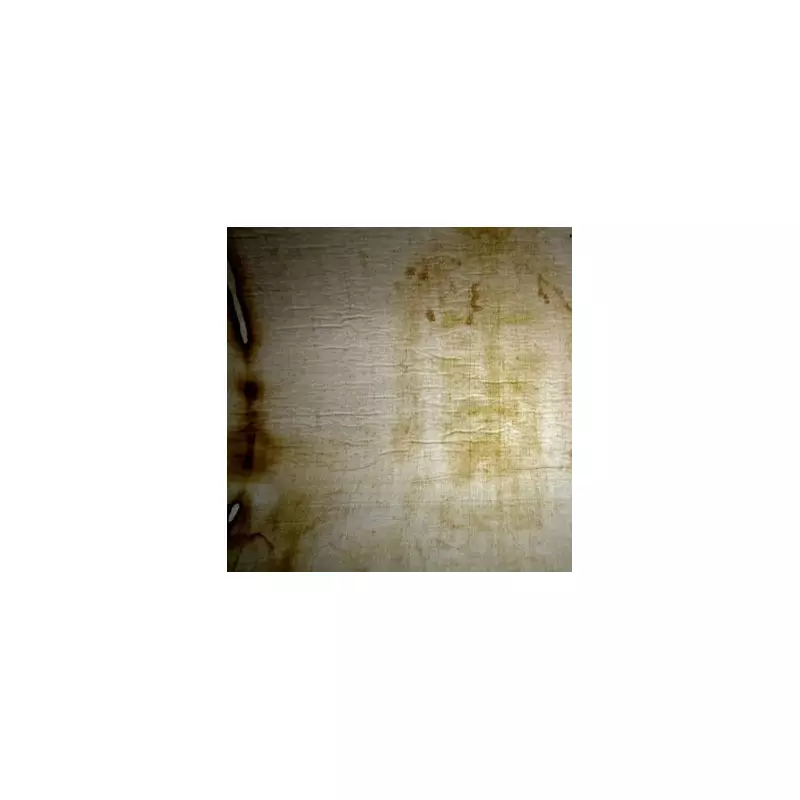
Groundbreaking AI Study Challenges Turin Shroud's Authenticity
In a remarkable development that could reshape centuries of religious debate, new artificial intelligence and sophisticated 3D digital analysis suggest the controversial Turin Shroud was likely created by a medieval artist rather than serving as Jesus Christ's authentic burial cloth. This groundbreaking research challenges deeply held beliefs about one of Christianity's most famous relics.
The Digital Investigation That Revealed an 'Impossible' Discrepancy
Brazilian digital graphics specialist Cicero Moraes conducted the revolutionary analysis using freely available modelling software including MakeHuman, Blender, and Cloud Compare. His methodology involved examining how fabric would react when draped over both a human form and a sculpture created on a flat surface with shallow, elevated sections.
The Turin Shroud, measuring 14.5 feet by 3.7 feet, bears a faint impression of a man with injuries matching crucifixion death. For centuries, it was considered a sacred relic dating back over 2,000 years, believed to have wrapped the body of Jesus Christ following his crucifixion and entombment.

Key Findings from the 3D Analysis
During Moraes' digital examination, the image created when cloth was virtually placed over a 3D human figure differed significantly from the actual shroud. The figure appeared distorted, broader, and misshapen due to what occurs when fabric rests over an actual body - a phenomenon known as the 'Agamemnon Mask effect', named after the broad gold burial mask unearthed at Mycenae.
Conversely, the impression from a low-relief sculpture closely resembled the shape and proportions visible on the Turin Shroud. Moraes explained in his research published in Archaeometry: 'The contact pattern generated by the low-relief model is more compatible with the Shroud's image. It shows less anatomical distortion and greater fidelity to the observed contours.'
How a Medieval Artist Might Have Created the Shroud
Moraes proposed that a shallow sculpture, perhaps crafted from wood, stone, or metal, would probably have acted as a mould to achieve the intended outcome. Subsequently, heat or pigment may have been applied exclusively to the raised portions of the surface to form the outline of Jesus's likeness.
This technique would account for the smooth, flat image of the Shroud, unlike the warped outcome one would encounter by wrapping fabric around an actual human body. The research aligns with historical context - throughout the medieval period, subtle portrayals of religious figures were widespread across Europe, and shallow engravings were frequently utilised by craftsmen of that era.
Supporting Evidence from Previous Research
The AI analysis provides new support for radiocarbon dating tests conducted in 1989, which dated the shroud's origins to the medieval era between 1260 and 1390 CE. While subsequent research challenged these results by proposing that the sample may have originated from a mended portion of the fabric, the initial account has remained widely accepted among many researchers.
Moraes indicated there was only a slight possibility the cloth may have been taken from a genuine covering of a corpse, with his research strongly backing the 1989 carbon testing results. Although he didn't delve into the material itself or the potential techniques employed in detail, he determined the artefact ought to be viewed as a 'masterwork of Christian art' rather than an authentic historical relic.
Implications for Religious and Archaeological Understanding
This creative depiction aligns perfectly with artistic practices of the medieval period. The research represents a significant advancement in applying modern technology to historical and religious artefacts, potentially opening new avenues for investigating other controversial relics.
The findings don't diminish the shroud's importance as a religious symbol but rather recontextualise it as an extraordinary example of medieval Christian artistry. As Moraes' work demonstrates, the intersection of artificial intelligence, digital modelling, and archaeological research continues to provide fresh perspectives on historical mysteries that have captivated humanity for generations.






