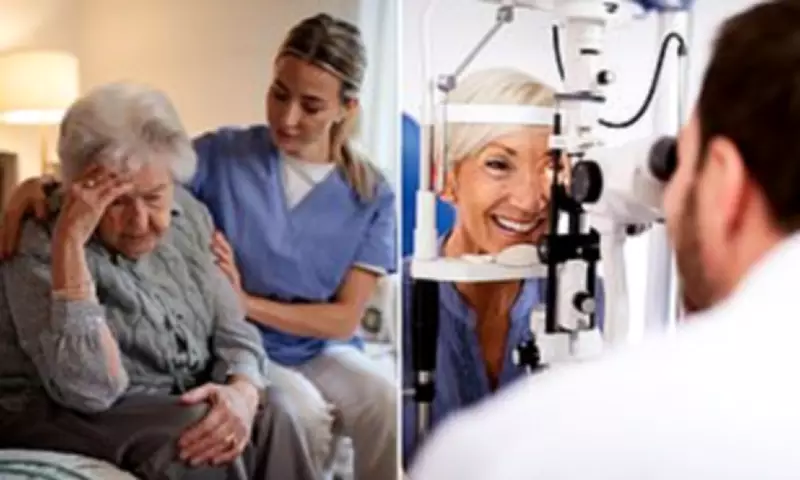
AI-Powered Eye Exams Could Revolutionise Early Alzheimer's Detection
Promising new research indicates that a routine eye test, enhanced by artificial intelligence, might identify signs of Alzheimer's disease years before any symptoms become apparent. Experts from City, University of London and St George's, University of London propose that early-stage cognitive decline could soon be detected through an AI tool deployed in opticians' and ophthalmologists' offices. This innovative technology measures subtle changes to the blood vessels located at the back of the eye, offering a non-invasive window into brain health.
Large-Scale Testing and Retinal Insights
The AI tool is currently undergoing rigorous testing using the anonymised health records of more than 500,000 British citizens. If successful, it could enable the identification and treatment of dementia patients long before the disease inflicts significant, irreversible damage on the brain. This development coincides with pioneering research from scientists in China, which suggests that the thickness of the retina—the light-sensitive tissue lining the back of the eye—could also serve as a predictive biomarker for Alzheimer's.
In the United Kingdom, nearly one million people are currently living with dementia, a figure projected to surge to over 1.4 million by the year 2040. Alzheimer's disease remains the nation's leading cause of death, claiming approximately 76,000 lives annually. The condition, caused by a build-up of proteins or reduced blood flow in the brain, currently has no cure. However, 2024 saw the UK approval of the first medicines capable of slowing Alzheimer's progression: lecanemab and donanemab.

Challenges in Treatment and Diagnosis
Despite this medical advancement, NHS chiefs have declined to fund these costly infusion drugs, citing evidence that they appear to only slow disease progression for less than a year. Nevertheless, experts argue that these medications—and others in development—could prove significantly more effective if administered to patients immediately upon dementia onset, before extensive neurological damage occurs.
For many Britons, however, diagnosis is critically delayed. A recent study from University College London found that patients typically wait roughly 3.5 years from the onset of symptoms to receive a formal dementia diagnosis. This diagnostic lag severely limits treatment windows and impacts care planning.
The Retina-Brain Connection
Researchers at City St George's are pioneering a novel approach by searching for indicators of cognitive decline during standard eye examinations. Annually, thousands of older adults undergo retinal photography to monitor changes in ocular blood vessels. Scientific research has established that these retinal vessels are closely linked to those in the brain and can exhibit signs of neurodegeneration.
Experts theorise the retina may predict Alzheimer's risk because it is an integral part of the central nervous system, directly connected to the brain via the optic nerve. This anatomical link makes the eye susceptible to the same degenerative processes affecting the brain in Alzheimer's, including nerve cell loss, inflammation, and vascular damage. Retinal thinning can also signal broader brain changes, such as reduced brain volume and atrophy.
- A study published earlier this year by scientists at the Jackson Laboratory in the United States found that individuals with alterations in these minute blood vessels were more likely to carry a common genetic mutation known to increase Alzheimer's risk.
- The research also discovered that blood vessels which are more twisted and looped than normal may impair the transport of essential nutrients and oxygen to brain tissue.
AI Analysis and Future Prospects
To analyse thousands of retinal images efficiently, the City St George's research team, funded by the Alzheimer's Society, employed an AI tool capable of measuring the precise width and area of ocular blood vessels. Their findings revealed a strong correlation between changes in retinal vessels and lower scores on cognitive tests.

Misha Ramesh, lead researcher at City St George's, stated: 'This should help to predict neurodegenerative disease before symptoms begin.' This research builds upon other innovative diagnostic approaches, such as a nose swab test reported last year, which University of Southampton scientists are developing to potentially detect dementia decades before symptom manifestation, promising results 'in minutes'.
The integration of AI into routine eye care represents a significant stride forward in the fight against dementia, potentially transforming early detection and enabling timely intervention to improve patient outcomes.