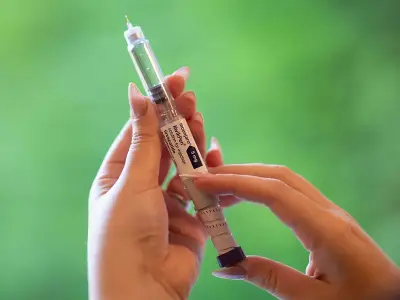
Pharmacist Raj Patel, known online as Pharmacist Health Raj, has warned that certain injectable medications, including Wegovy and Mounjaro, carry a rare risk of sudden, painless vision loss that may be permanent. The condition, affecting fewer than one in 10,000 people, has prompted safety alerts from regulators.
Rare eye condition linked to GLP-1 drugs
Patel explained that one rare cause of vision loss is reduced blood flow to a nerve at the back of the eye. He said: "One rare cause [of vision loss] is reduced blood flow to a nerve at the back of your eye. It can cause lasting sight loss even without pain. America's medicines regulator has ordered a warning about a possible increased risk with GLP1 diabetes and weight loss medicines. These include Ozempic, Wegovy and Mounjaro."
Studies published in JAMA Ophthalmology found a statistical association between glucagon-like peptide-1 (GLP-1) receptor agonists and non-arteritic anterior ischemic optic neuropathy (NAION), a rare condition that affects the optic nerve and may impair vision. Researchers stress that a direct cause-and-effect link has not been proven, and the evidence is mixed. NAION usually causes sudden, painless vision loss, often noticed after waking, and damage to the optic nerve is often permanent and cannot be reversed.
Regulatory warnings in the US and UK
The US Food and Drug Administration (FDA) ordered safety-labelling changes for all GLP-1 receptor agonist medications, including semaglutide (Ozempic and Wegovy) and tirzepatide (Mounjaro). The FDA suggests a potential increase in the risk of rare NAION events and advises patients to immediately report any sudden, painless vision loss or visual disturbances in one eye.
In the UK, the Medicines and Healthcare products Regulatory Agency (MHRA) updated product information specifically for semaglutide products (Wegovy, Ozempic, and Rybelsus), classifying NAION as a "very rare" side effect affecting up to one in 10,000 people. The MHRA alert applies only to semaglutide and not Mounjaro (tirzepatide), though evidence on other drugs in the same class remains under review.
What patients should do
These safety warnings began after a 2024 Harvard study of nearly 17,000 patients noticed higher rates of this eye condition in people taking semaglutide compared to other drugs. Regulators later checked 126 clinical trials involving over 134,000 patients and confirmed that rare cases occurred across the entire GLP-1 drug group. Large-scale studies of everyday patient records also indicated a higher relative risk, though the actual chance of developing the condition remains very small, at roughly one extra case per 10,000 people each year.
Patel advised: "Not every vision change is caused by your medicine. But if you get sudden sight loss or quickly worsening eye symptoms or vision problems, you need to go to casualty or A&E. Don't drive, don't stop the treatment yourself and tell the team what you take." The MHRA advises anyone experiencing sudden vision loss on semaglutide to attend A&E urgently and stop the medicine if NAION is confirmed. Patients should never stop essential medication abruptly without consulting a doctor, and should speak to a GP with any questions or concerns.