A major new study has found that London's ultra low emission zone (Ulez) is linked to healthier lungs for young people, with children's lung size and health accelerating since the scheme was introduced in 2019. The research, by Queen Mary University, monitored more than 3,400 children aged six to nine from 2018 to 2022 and found that kids in London had significantly smaller lungs compared to Luton before Ulez was introduced. By 2022, the lungs of children in the capital had become comparable to those in Luton, which has a similar mix of traffic pollutants but no clean air zone.
Campaigner's reaction
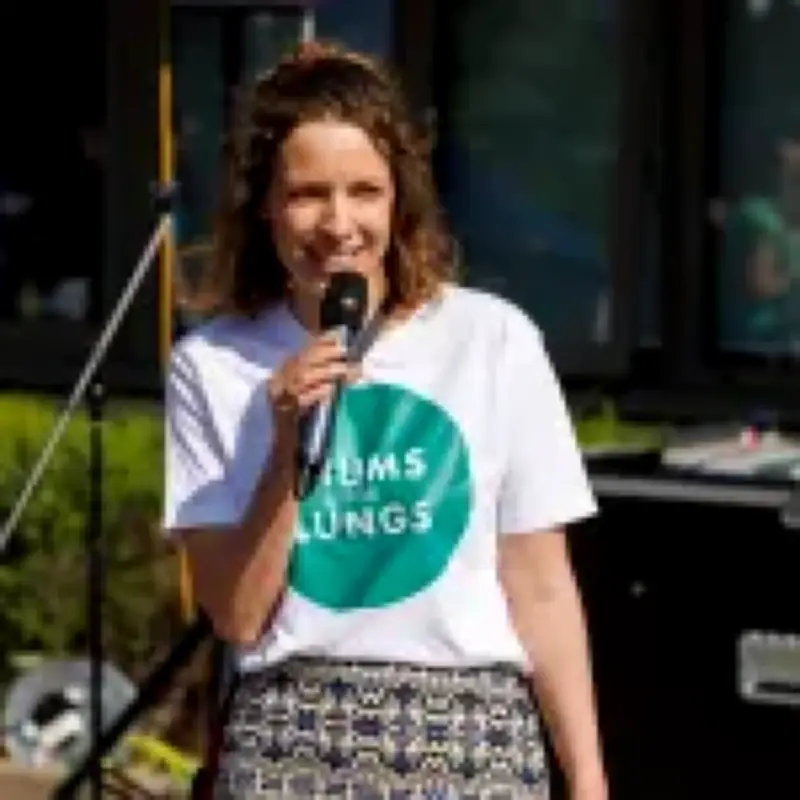
Jemima Hartshorn, who set up Mums for Lungs in London in 2017 after reading how air pollution could stunt the lung growth of her newborn son, said she has been proven right. She told Metro: 'This is fantastic news. It gives me real reassurance that it is never too late to clean up the air.' She added: 'To hear that any damage my children may have had is outweighed by Ulez is such a massive relief.'
Study findings
The scientists found that the boost in lung growth was strongly related to air quality improvements. Within five years of Ulez's introduction, London children's exposure to the car exhaust pollutant NO2 fell twice as fast, and more than twice as much, compared with children in Luton. During that time, children's forced expiratory volume in one second (FEV1) – a key measure of how well lungs and airways work – increased by 10ml per year more in London than in Luton. By the end of the study, London children's FEV1 had caught up to Luton's. The proportion of children with clinically impaired lung function fell from 14% to 9% in London, compared with a fall from 9% to 7% in Luton.

Expert and mayor comments
Chris Griffiths, professor of primary care at the University of Oxford and at Queen Mary University of London and joint senior author of the report, said: 'Traffic pollution in cities damages children's health and development. We provide the strongest evidence yet on how these harms can be prevented. Ambitious clean air zones should be considered a priority for cities globally with traffic-related air pollution.' Ian Mudway, associate professor in the School of Public Health at Imperial College London and joint senior author, said: 'Air pollution is a global issue. If we want to improve the lives of children living in high-traffic urban environments, we need bold and ambitious measures. Our data demonstrates that clean air zones can be an effective public health intervention to prevent damage to developing lungs.'
London Mayor Sadiq Khan, who spearheaded Ulez, said the findings showed the 'extraordinary difference that cleaner air can make'. He told Metro: 'No child should have their future health limited by the air they breathe. Today's landmark independent report provides yet more compelling evidence that the London ULEZ, the world's biggest clean air zone, is working and has been a huge success – showing it's never too late to act against the devastating effects of air pollution.'
Backlash and broader impact
While Ulez has been celebrated by climate campaigners, it has faced backlash from some drivers. Critics argue the daily fee negatively impacts people who rely more on vehicles for transport in outer London boroughs, as well as low-income households, commuters and small businesses using older vans. Khan said he had 'refused to stand by' despite opposition from 'a vocal minority backed by vested interests'. He added: 'This research proves we were right to act and reinforces my decision to extend the benefits of cleaner air to every child in London.'
Experts warn that children who do not have fully developed lungs by early adulthood face higher risks of asthma, cardiovascular and metabolic disease, as well as premature death as adults. Jemima, who has two children aged 7 and 10, said the results were 'super exciting' and showed that 'damage inflicted by air pollution can be compensated by cleaner air.' She added: 'This is more than ever a call to action for city leaders and the new Prime Minister Andy Burnham, who knows that air pollution is stunting children's lungs and stifling our economy. If he wants to truly set Britain on path to growth, we need cleaner air, less diesel, a phase out of domestic burning, and real action to clean out our cities and towns.'