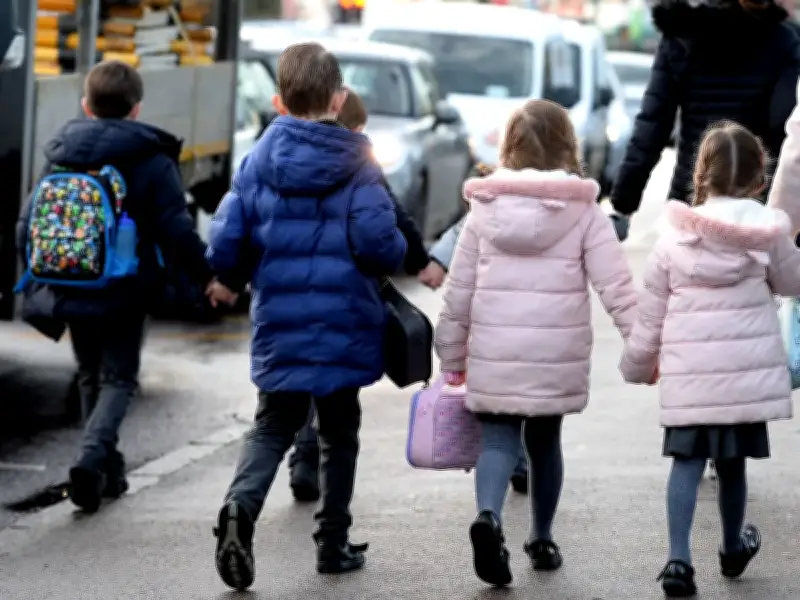
The UK Health Security Agency (UKHSA) has issued advice for parents ahead of children across the UK returning to classrooms next week. The guidance highlights common illnesses that can disrupt schooling during the colder months.
The health agency advises that good hygiene stops infections from spreading, which means less disrupted learning time for students. It said: "Teach your child to wash their hands thoroughly with soap and warm water, use tissues for coughs and sneezes, and stay away from others when sick. Letting in fresh air can also reduce the spread of airborne viruses."
Official guidance on fevers and stomach bugs
Official guidance shared by UKHSA online added: "It's fine to send your child to school or nursery with a minor cough or common cold if they are otherwise well and do not have a high temperature. But if your child has a fever, they should stay home from school or nursery until they feel better, and the fever has resolved."

However, if a child has diarrhoea or vomiting, they should stay home for at least 48 hours after the last episode. If a child has symptoms of measles and has not had both doses of the MMR or MMRV vaccine, they should not attend school until four days after their rash started.
Scarlet fever and measles outbreaks
One illness to look out for in children at this time of year is scarlet fever. It is a contagious infection that mostly affects young children and is easily treated with antibiotics. The most common symptoms include sore throat, fever, swollen neck glands, a bumpy rash on the chest and tummy with a sandpaper-like feel, flushed cheeks and 'strawberry' tongue.
If a parent suspects their child has scarlet fever, they should contact their local GP. Children should stay away from nursery or school for 24 hours after the first dose of antibiotics. Since autumn 2023 there have been a number of major measles outbreaks in the West Midlands, North West and London. In 2024, England saw the highest number of measles cases since 2012. Outbreaks have continued in 2025 and 2026.
Vaccination plea to parents
Viral infections such as chickenpox can also spread in schools at any time of year and are highly contagious. An itchy, spotty rash is the main symptom of chickenpox and can appear anywhere on the body.
UKHSA said: "Vaccines provide the best protection against many common but potentially serious illnesses. Over the past decade, fewer children are getting routine vaccines, putting them at risk of serious disease. This leaves schools vulnerable to outbreaks and increases pressure on the NHS."
It added: "Unvaccinated children are at higher risk of contracting these illnesses and having more severe symptoms than vaccinated classmates. They can also spread diseases to others. Check your child’s red book or contact your GP practice to ensure they are up to date on all vaccines."