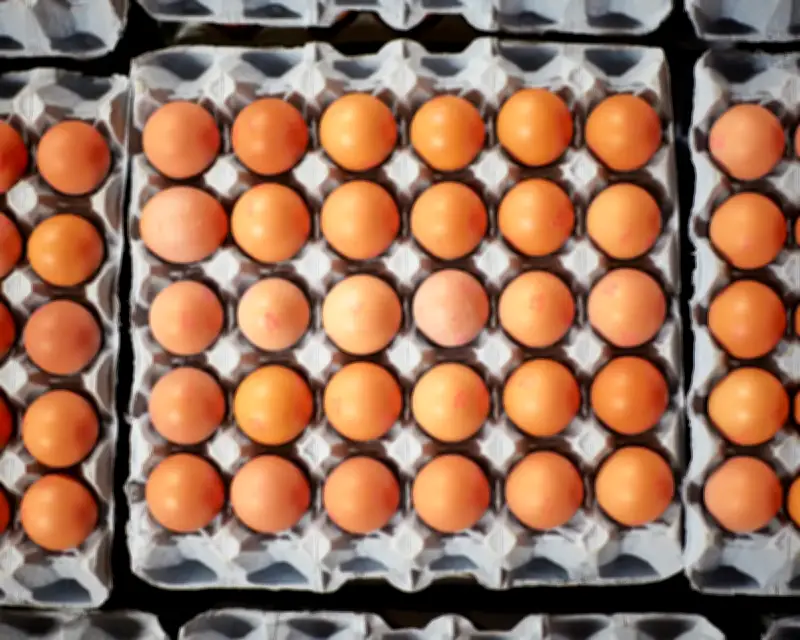
Salmonella cases in the UK are expected to rise until the common source of the current outbreak is identified, according to experts. The UK Health Security Agency (UKHSA) has confirmed 474 cases and one death linked to the outbreak, with investigations suggesting it is associated with eating imported eggs in cafes and restaurants.
Imported Eggs and Catering Link
About 1.6bn eggs are imported to the UK each year, according to the British Egg Industry Council, with the number having risen 60% since 2021. The link to eggs consumed outside the home is consistent with imported eggs commonly being used in catering, according to Prof Paul Wigley, professor of animal microbial ecosystems at the University of Bristol.
Wigley said: “Bought in bulk these eggs are cheaper than UK lion mark eggs and so can end up being used in schools and nursing homes along with cafes, restaurants and takeaways. The eggs may be mixed batches from different batches, but the clustering of cases suggests there may be a single source.”

Challenges in Tracing the Source
Although previous salmonella outbreaks in the UK have been linked to eggs imported from European countries such as Poland, the current source has yet to be identified. Prof Chris Elliott of the School of Biological Sciences at Queen’s University Belfast highlighted the difficulty in tracing origins, especially in food service.
Elliott said: “All we have been told is that the likelihood is that it’s been imported. There is a huge amount of difficulty in tracing the origins of something like this, particularly when it’s food service. Within the UK’s retail industry, they really know their supply chains extremely well. But with food service, less so.”
Experts Call for Patience and Controls
Prof Brad Spiller, head of medical microbiology at Cardiff University, said the common source link was “probably the most concerning aspect” of the cases. Prof Mark Stevens, the chair of microbial pathogenesis at the University of Edinburgh, noted the outbreak was unusual because cases were occurring simultaneously, whereas salmonella cases across the UK were usually more spread out.
Stevens said: “This is obviously a real challenge for the health protection agencies because they have to now identify that source and try to restrict its entry into the food system. It is of concern to have an outbreak of this size. There are thousands of salmonella cases each year, but rarely are they on this scale where hundreds of people are being infected by a common strain.”
Wigley added: “As far as controls and the future, it’s difficult to judge, though identification of the source would help in being able to put specific controls on a producer or country could be put in place. Avoiding runny eggs outside the home, unless lion mark eggs, is perhaps the only step an individual can make.”