High blood pressure affects millions of people in the UK. One neuroscientist says a 'biohack' can help reduce hypertension, and it only takes a couple of minutes.
Janet Peets says she was on two medications 'for years' while trying to lower her blood pressure, but without success. The key is treating the root cause, she says.
The wall sit exercise
Peets says an exercise known as the wall sit can slash blood pressure. It is what is known as an isometric exercise or hold, which trains your blood vessels to 'relax more effectively over time'.
Doing the wall sit involves placing your back against a wall with your knees bent to 90 degrees. Hold that position, ideally in two-minute blocks with two minutes of rest in between. If two minutes is too long per hold, start with 20 or 30 seconds and build from there.
Also known as a wall squat, Puregym says: "Wall sits are an isometric exercise that targets the lower body muscles, particularly the quads. Sometimes called wall squats, this exercise involves maintaining a parallel squat position against the wall for a period of time."
Why it works
"The biohack that's actually shifted things for me: the wall sit. Back against the wall, knees at 90 degrees, hold," Peets said. "The research protocol is four 2-minute holds, 2 minutes of rest between each, three times a week. That's the dose that's been studied — not a rounded-off version of it."
"Why it works: sustained muscle tension trains your blood vessels to relax more efficiently over time. Same family as the handgrip exercises you may have heard of. If four 2-minute holds feels like a lot right now, start with 20-30 seconds and build from there. Small daily inputs, compounding results."
Peets is not the only expert to back isometric exercises like the wall sit. Isometric exercises place a very different stress on the body to aerobic exercise, says study author Dr Jamie O'Driscoll, from Canterbury Christ Church University.
"They increase the tension in the muscles when held for two minutes, then cause a sudden rush of blood when you relax," he says. "This increases the blood flow, but you must remember to breathe."
Other exercises that work
The plank is another popular isometric exercise that helps slash blood pressure. This involves lying on the ground with your elbows beneath your shoulders, keeping your back straight. Hold this position for two minutes, if you can.
Puregym says: "The plank is a popular isometric exercise that works every core muscle, as well as muscles in the back, shoulders, hips, and legs. While most traditional core exercises train the core through movement, the plank trains the core to resist movement by keeping the body stable for a period of time. Known as an anti-core exercise, it builds strength and stability and can improve strength in lifts like squats and bench press."
Variations of the plank include the elbow plank, or forearm plank, where you rest on your elbows and forearms. There is also the full plank, done in a press-up position, and the kneeling plank, done on the knees. The weighted plank involves using weights to increase resistance.
High blood pressure
Hypertension, as it is also known, refers to the pressure under which your blood is pumped around your body. The higher the pressure, the more it pushes against the sides of your blood vessels.
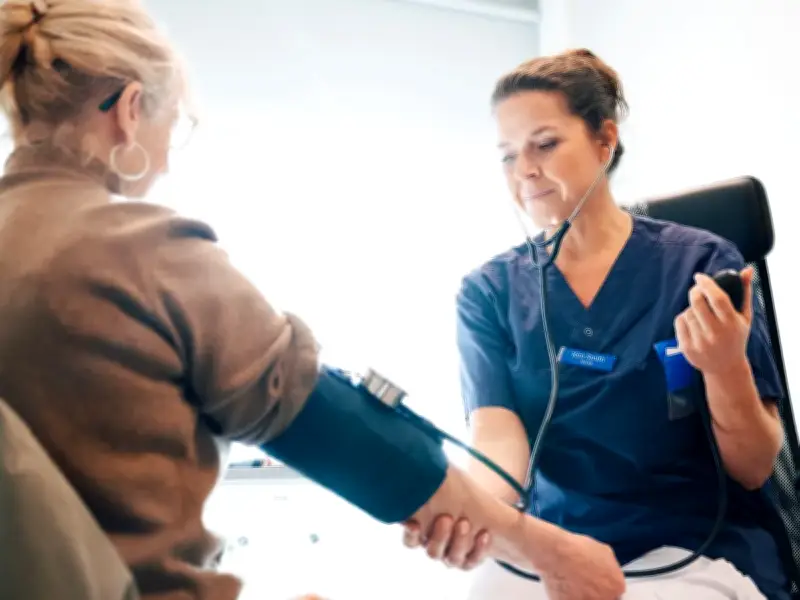
The NHS says that it is 'very common, especially in older adults'. Around 14-16 million people in the UK have high blood pressure, although many do not realise it as it carries no symptoms for many. Blood pressure is measured using two numbers: systolic pressure, the higher number showing pressure against arteries when the heart pumps blood; and diastolic pressure, the lower number showing pressure in arteries when the heart relaxes between beats.
High blood pressure is serious. Arteries can gradually become thinner, tougher, and less flexible, so fatty material can build up. This clogs your arteries and could lead to a heart attack.
A normal, healthy blood pressure is usually between 90/60 mmHg and 130/85 mmHg. Aging, smoking, drinking too much, too much salt, and not enough exercise can all be contributing factors. Many people also have it running in their family. People of Black African or Black Caribbean descent are also at a higher risk.
Eating a balanced diet, with lots of vegetables, fruit, legumes, oily fish, and grains can help cut blood pressure. Being more active, drinking less, and not smoking also help. There are also medications that can cut blood pressure which your doctor can prescribe.