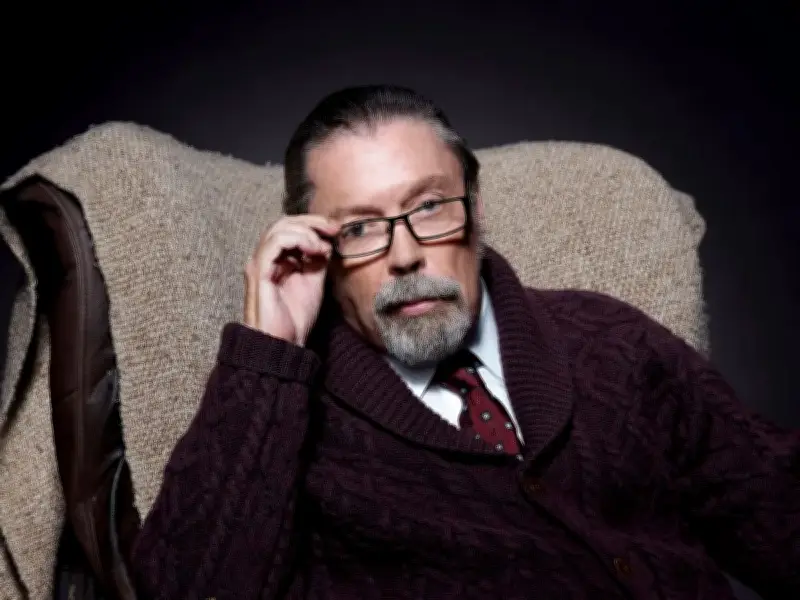
Tim Curry, the actor known for The Rocky Horror Picture Show, It, and Home Alone 2, has died aged 80 at his Los Angeles home, according to his long-time manager and friend Marcia Hurwitz. A cause of death was not confirmed, but Curry had suffered a major stroke in 2012 that left his left side paralysed.
Career and tributes
Curry's versatile career spanned stage and screen, with notable credits including It (1990), Muppet Treasure Island (1996), and Annie (1982). He also appeared opposite Macaulay Culkin in Home Alone 2: Lost In New York as the personal concierge for the Plaza Hotel, with Schneider playing fellow employee Cedric The Bellman.
Curry originated the Rocky Horror character on stage in London before taking the show to Broadway, and later reprised the role in the film, which became a cult classic. He also starred in the 1982 musical film Annie opposite Carol Burnett as Miss Hannigan, playing her con-artist brother. Known for his wit and gift with voices, Curry was renowned for his portrayals of villains, including Stephen King's antagonist Dancing Clown Pennywise in the film adaptation of It.

Stroke and recovery
Curry suffered a stroke in July 2012 while getting a massage, but explained in his memoir, Vagabond, that he had no idea how seriously ill he was at the time. He said he felt “a little out of sorts,” but thought he was fine. His massage therapist believed something much more serious was wrong and called an ambulance.
Curry wrote: “I probably owe my life to the fact that he ignored me, went with his instinct and called an ambulance.” He underwent emergency surgery to relieve pressure on his brain, with part of his skull removed, and later wrote: “It turned out that my brain was inflamed enough, or filled with enough blood that bone from my skull had to be removed and implanted into my abdomen to keep my brain, and me, alive. When I emerged from the hospital, I had to wear a sort of protective helmet as my brain was literally exposed to the elements.”
He had suffered a major ischemic stroke caused by blood clots blocking blood flow and oxygen to his brain. He wrote: “After regaining consciousness, I could comprehend words but they did not register or settle without effort. Life was exceedingly dull, monotonous, and uncertain for a long while.” He spent months in the hospital and rehabilitation and never regained full mobility.
Stroke awareness and signs
The F.A.S.T. acronym aims to remind people that the key signs of stroke are a face that has fallen on one side (F), arm weakness (A), and slurred speech (S) – which indicate that it’s time (T) to call 999. Stroke is the fourth highest cause of death in the UK.
The NHS has been reminding the public to get help by calling 999 in a life-threatening emergency, such as stroke, or going to NHS 111 online as the first port of call for non-urgent health needs. Around 100,000 people have a stroke each year in England, Scotland and Wales, which is approximately one stroke every five minutes, with around 33,000 stroke-related deaths a year. Early recognition of stroke symptoms can give patients extra precious minutes, enabling faster access to specialist treatment and increasing the chances of a better outcome.
Some other signs that may be due to a stroke or mini stroke include:
- Sudden loss of vision or blurred vision in one or both eyes
- Sudden weakness or numbness on one side of your body (including in your leg)
- Sudden memory loss or confusion
- Sudden dizziness, unsteadiness or a sudden fall, especially with any of the other signs
- Call 999 immediately if you notice any single one of the signs of stroke
There are three different types of stroke: ischaemic stroke, caused by a blockage cutting off the blood supply to the brain; haemorrhagic stroke, caused by bleeding in or around the brain; and transient ischaemic attack (TIA), also known as a mini-stroke, where a blockage temporarily stops blood getting to the brain.

Juliet Bouverie OBE, Chief Executive of the Stroke Association, said: “Stroke is when a blockage or a bleed stops blood getting to your brain and your brain starts to die. We know that despite its debilitating and deadly consequences, strokes are still largely misunderstood. Stroke is a medical emergency and time lost is brain lost. This is why it’s incredibly important that you act FAST. It is our responsibility to know the signs and be on the lookout for stroke. Acting FAST saves lives. We’ve seen impressive results from previous Act FAST campaigns. This one little thing could save a life.”