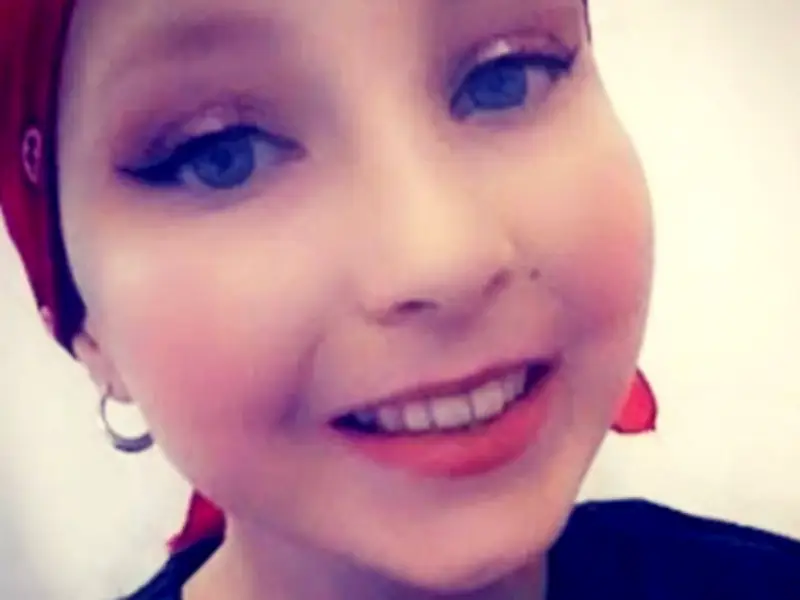
Chloe Venton, a 15-year-old girl, died of cancer after doctors repeatedly misdiagnosed her symptoms as a urinary tract infection (UTI) and prescribed ibuprofen. For months, Chloe woke up screaming in pain at night, but doctors insisted it was a UTI.
Mother's persistence led to cancer diagnosis
Her mother, Joanne Venton, 42, refused to leave the GP surgery until further tests were ordered. Scans at Great Western Hospital revealed a tumour on Chloe's spine. She was then referred to John Radcliffe Hospital in Oxford, where doctors diagnosed Ewing sarcoma, an aggressive bone cancer. Two years later, Joanne and Chloe's father Gary, 43, had to fight again for a diagnosis of leukaemia, which ultimately led to Chloe's death at age 17.
Joanne said: “It breaks my heart to think Chloe may still be here if they hadn't misdiagnosed her at first and then missed the leukaemia. Her first symptoms were waking up in the middle of the night screaming in agony and sweating buckets and constantly needing to go to the toilet.”
Symptoms dismissed as UTI
Chloe had a history of UTIs, so doctors brushed off her symptoms and gave antibiotics. Over seven months, the family returned multiple times as antibiotics failed. One day, Chloe called from college saying she almost wet herself. The GP again dismissed it as a UTI. Chloe's pain radiated to her hips, she became numb in her lower body, and lost bladder control. Joanne refused to leave the GP's office, leading to a hospital referral. Scans revealed the tumour.
Joanne said: “When your kids are so young you presume it's something not as sinister, you think it may be an injury or anything else.”
Cancer treatment and secondary leukaemia
In May 2018, Chloe began chemotherapy at John Radcliffe Hospital. After ten cycles of chemo, proton therapy, and five more cycles, she became ill again with a rash. Doctors said it was a side effect, but Joanne insisted something was wrong. The rash was leukaemia cutis, and Chloe was diagnosed with acute myeloid leukaemia, a blood cancer.
Chloe died unexpectedly in July 2020 at age 17. Due to COVID-19 restrictions, the family held a socially distanced funeral. Joanne said: “We weren't allowed funeral cars so I had to drive myself behind my own daughter's coffin, it was horrific.”
Broader impact of misdiagnosis
A 2023 study by the British Medical Journal (BMJ) estimated that misdiagnoses affect about 1 in 18 patients in primary and secondary care. Misdiagnosed cancers, strokes, and heart attacks are among the most serious cases, often leading to life-altering consequences or death.
Joanne added: “I want to talk about it so other people don't get missed in the system and end up losing their daughter like that. Chloe’s laugh was infectious, her smile was amazing, she had the biggest heart.”